
What Are Flashes and Floaters?
Flashes and floaters are among the most common reasons patients seek urgent retina evaluation. While many flashes and floaters are caused by normal age-related changes inside the eye, sudden symptoms can sometimes signal serious retinal conditions such as retinal tears or retinal detachment.
At NH Eye Associates, our doctors provide comprehensive retina evaluations using advanced retinal imaging and expert retinal care to determine whether symptoms are harmless or require urgent treatment.
If you notice new flashes, floaters, shadows, or sudden changes in vision, early evaluation can help protect your sight.
Floaters
Floaters are small moving shapes that drift through vision. Patients commonly describe:
- Cobwebs
- Black dots
- Strings
- Smoke-like shadows
- Transparent squiggles
- “Gnats” or “bugs”
They may move when you move your eyes and seem to “float away” when you try to look directly at them. Floaters are usually caused by natural changes in the vitreous gel inside the eye.


Flashes
Flashes are brief streaks or flickers of light that may appear:
- In your side vision
- At night
- In dark rooms
- During eye movement
Many people describe flashes as:
- Lightning streaks
- Camera flashes
- Sparkles
- Flickering lights
Flashes often occur when the vitreous gel pulls on the retina.
What Is the Vitreous?
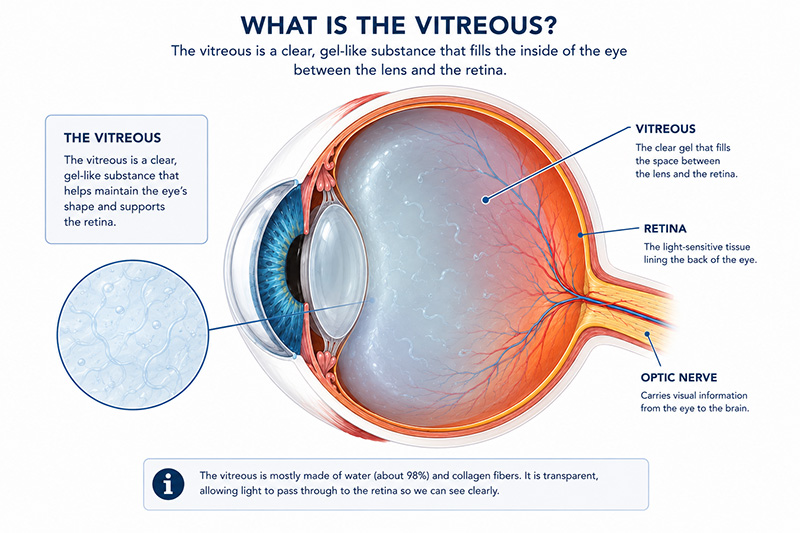
Inside the eye is a clear gel called the vitreous.
The vitreous:
- Fills the center of the eye
- Helps maintain eye shape
- Is attached to the retina
When we are younger, the vitreous has a firm gel-like consistency.
Why Do Flashes and Floaters Happen?
Floaters
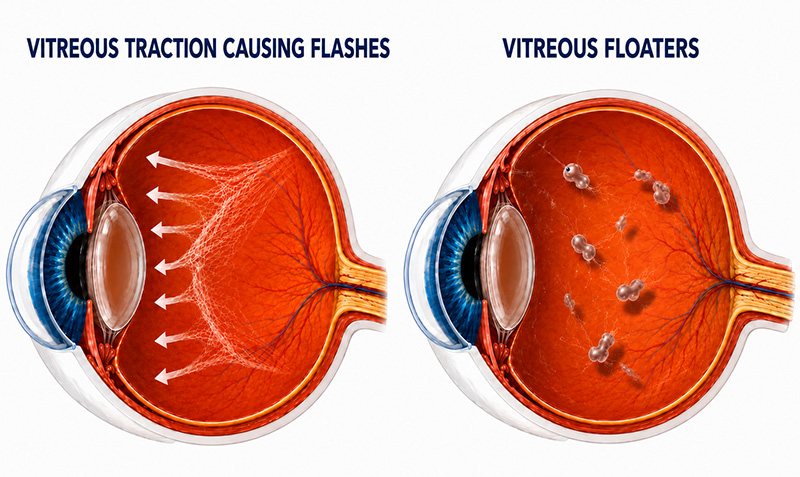
Floaters are usually caused by natural changes in the eye. As we age, the gel-like vitreous inside the eye begins to shrink or change, leading to tiny clumps or strands that cast shadows on the retina. These shadows are what we see as floaters.
Flashes
Flashes happen when the vitreous gel pulls or tugs causing traction on the retina, especially during sudden eye movement or in low light. While often harmless, sudden or worsening symptoms may be a sign of a more serious eve condition.
Are Flashes & Floaters Dangerous?
Sometimes they are harmless. Sometimes they are not.
Many people develop mild floaters as part of normal aging. However, sudden new symptoms can indicate:
- Posterior vitreous detachment (PVD)
- Retinal tears
- Retinal detachment
- Vitreous hemorrhage
- Other retinal conditions
Because retinal tears and detachments can threaten vision, new symptoms should always be evaluated promptly.
Warning Signs That Need Urgent Attention
Seek prompt retina evaluation if you experience:
- Sudden increase in floaters
- New flashing lights
- Curtain or shadow in vision
- Peripheral vision loss
- Sudden blurry vision
- Symptoms after eye trauma
Retina Evaluation & Testing
A retina examination may include:
- Dilated retinal examination
- OCT imaging
- Widefield retinal photography
- Ultrasound imaging
- Peripheral retinal evaluation
At NH Eye Associates, advanced retinal imaging technology is used to carefully evaluate flashes, floaters, and sudden visual symptoms.
What Happens If a Retinal Tear or Detachment Is Found?
Treatment depends on the severity of the retinal condition.
Options may include:
- Retinal laser treatment
- Cryotherapy
- Vitrectomy surgery
- Pneumatic retinopexy
- Scleral buckle surgery
- Monitoring and follow-up
Early diagnosis significantly improves visual outcomes.
How We Diagnose Flashes & Floaters
A retina evaluation often includes:
- Dilated retinal examination
- Widefield retinal photography
- Ultrasound imaging when necessary
These tests help us identify retinal tears, detachments, vitreous changes, and other retinal conditions.
How We Diagnose Flashes & Floaters
A retina evaluation often includes:
- Dilated retinal examination
- Widefield retinal photography
- Ultrasound imaging when necessary
These tests help us identify retinal tears, detachments, vitreous changes, and other retinal conditions.
When Should You See a Retina Specialist?
You should schedule an evaluation if you experience:
- Sudden new floaters
- Flashing lights
- Changes in peripheral vision
- A curtain or shadow in vision
- New visual disturbances
- Symptoms after eye trauma
Early diagnosis can help protect your vision.
Frequently Asked Questions About Flashes & Floaters
Are flashes and floaters a medical emergency?
Not always — but they can be. Many floaters occur from normal aging changes inside the eye. However, sudden new flashes, a large increase in floaters, a curtain or shadow in vision, or loss of side vision may indicate a retinal tear or retinal detachment and should be evaluated urgently.
What causes flashes and floaters in the eye?
Flashes and floaters are often caused by changes in the vitreous gel inside the eye. As the vitreous naturally shrinks or changes with age, it can create small shadows (floaters) or pull on the retina, leading to flashes of light.
Do flashes and floaters go away?
Some floaters become less noticeable over time as the brain adapts to them or as they settle within the eye. Flashes related to vitreous changes may also decrease. However, persistent, worsening, or sudden symptoms should still be examined by an eye doctor.
Can stress or lack of sleep cause eye floaters?
Stress and fatigue do not typically cause true vitreous floaters, but they may make existing visual symptoms more noticeable. New or sudden floaters should not be assumed to be stress-related without a retina evaluation.
Why do I see flashes of light at night or in dark rooms?
Flashes are often more noticeable in low-light environments. They commonly occur when the vitreous gel pulls on the retina during eye movement. While this can happen with normal vitreous changes, flashes should still be evaluated if they are new or worsening.
Are floaters a normal part of aging?
Yes. Mild floaters commonly develop with age as the vitreous gel inside the eye changes consistency. However, a sudden increase in floaters, especially when accompanied by flashes or visual shadows, warrants prompt examination.
Can flashes and floaters happen after eye trauma?
Yes. Eye injuries can increase the risk of vitreous changes, retinal tears, bleeding inside the eye, or retinal detachment. Any new flashes, floaters, or vision changes following trauma should be evaluated promptly.
How are flashes and floaters diagnosed?
Diagnosis typically involves a dilated retinal examination and may include advanced retinal imaging such as OCT scans, widefield retinal photography, ultrasound imaging, or peripheral retinal evaluation to look for retinal tears, detachment, or other retinal conditions.
What treatments are available for flashes and floaters?
Treatment depends on the underlying cause. Some cases require observation only, while retinal tears or detachments may need laser treatment, cryotherapy, vitrectomy surgery, pneumatic retinopexy, or scleral buckle surgery.
When should I schedule an eye exam for flashes or floaters?
You should seek evaluation promptly if you notice sudden new floaters, flashing lights, a shadow or curtain in vision, loss of peripheral vision, sudden blurry vision, or symptoms after eye trauma. Early diagnosis can help protect vision.
Patient Testimonials
Schedule a Retina Evaluation
At NH Eye Associates, we provide: comprehensive retina evaluations, advanced retinal imaging, expert retina specialists, same-day urgent evaluations when needed, and personalized treatment and monitoring plans.
Our goal is to provide clear answers, peace of mind, and prompt treatment when necessary.