
Posterior Vitreous Detachment (PVD)
Symptoms, Causes, Risks, and Retina Evaluation
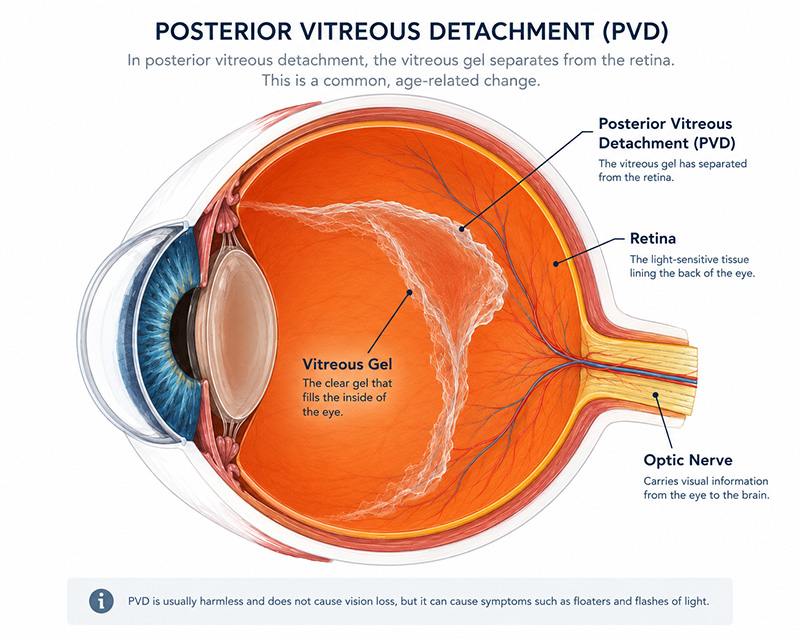
Posterior vitreous detachment, commonly called PVD, is one of the most common causes of flashes and floaters. A PVD occurs when the vitreous gel inside the eye separates from the retina as part of the natural aging process. In many cases, a PVD is harmless. However, during the separation process, the vitreous can occasionally pull hard enough on the retina to create a retinal tear or retinal detachment.
At NH Eye Associates, our retina specialists evaluate flashes, floaters, and posterior vitreous detachment using advanced retinal imaging and comprehensive retina examinations. Because new symptoms can sometimes signal serious retinal conditions, prompt evaluation is important.
What Is a Posterior Vitreous Detachment?
Inside the eye is a clear gel called the vitreous. The vitreous fills the center of the eye and helps maintain the eye’s shape.
When we are younger:
- The vitreous is firm and attached to the retina
Over time:
- The vitreous becomes more liquid
- The gel shrinks and changes consistency
- The vitreous separates from the retina
This separation is called a posterior vitreous detachment (PVD).
PVD is extremely common and usually part of normal aging.
What Causes PVD?
PVD is most commonly caused by age-related vitreous changes.
As the vitreous ages:
- Collagen fibers clump together
- The gel becomes more watery
- Traction develops between the vitreous and retina
- The vitreous eventually separates
Most people develop some degree of vitreous degeneration over time.
Symptoms of Posterior Vitreous Detachment
Common symptoms include:
- Sudden floaters
- Flashing lights
- Cobweb-like vision
- Small drifting spots
- Peripheral flashes
- “Spider webs” in vision
- Moving shadows
Patients commonly describe:
- “Gnats floating around”
- “Clear worms”
- “Smoke drifting across vision”
- “Lightning flashes in side vision”
Symptoms often appear suddenly.
Why Does PVD Cause Flashes?
Flashes occur when the vitreous pulls on the retina during separation.
The retina interprets this traction as light, causing:
- Flickering lights
- Lightning streaks
- Peripheral flashes
Flashes are often:
- More noticeable at night
- Seen in dark rooms
- Triggered by eye movement
Why Does PVD Cause Floaters?
As the vitreous changes:
- Tiny collagen clumps form inside the gel
- These clumps cast shadows on the retina
- The shadows appear as floaters
Floaters may:
- Drift through vision
- Move with eye movement
- Become more noticeable against bright backgrounds
Is PVD Dangerous?
Most PVDs are not dangerous.
However, during vitreous separation, traction can occasionally create:
- Retinal tears
- Retinal holes
- Vitreous hemorrhage
- Retinal detachment
This is why sudden flashes and floaters should always be evaluated.
Warning Signs That May Indicate a Retinal Tear
Seek prompt evaluation if you experience:
- Sudden increase in floaters
- New flashing lights
- A curtain or shadow in vision
- Peripheral vision loss
- Blurry vision
- A “shower” of black spots
These symptoms may indicate retinal tearing or detachment.
Who Is at Higher Risk for PVD?
PVD becomes increasingly common with age, but certain patients may develop symptoms earlier or have greater retinal risk.
Risk factors include:
- Age over 50
- High myopia (nearsightedness)
- Previous cataract surgery
- Eye trauma
- Diabetes
- Previous retinal tears or detachment
Many younger highly nearsighted patients discuss early PVD symptoms online and on Reddit forums.
Can PVD Cause Retinal Detachment?
Yes, in some cases. As the vitreous separates, it can pull strongly enough to tear the retina. Fluid can then pass underneath the retina, causing retinal detachment. Retinal detachment is a serious vision-threatening condition that requires urgent treatment.
How Is PVD Diagnosed?
A retina specialist may perform:
- Dilated retinal examination
- OCT imaging
- Widefield retinal photography
- Ultrasound imaging if needed
These tests help evaluate:
- Vitreous separation
- Retinal traction
- Retinal tears
- Retinal detachment
- Vitreous hemorrhage
At NH Eye Associates, advanced retinal imaging is used to carefully examine the retina and vitreous.
How Is PVD Treated?
Most PVDs do not require treatment.
Instead, patients are monitored for:
- Retinal tears
- Worsening symptoms
- Retinal detachment
Floaters often become less noticeable over time as the brain adapts.
Treatment is only needed if complications develop.
How Long Do PVD Symptoms Last?
Symptoms vary from person to person.
Flashes
Flashes often improve over:
- Weeks
- Months
Floaters
Floaters may:
- Become less noticeable
- Drift out of central vision
- Persist long term in some patients
Many Reddit discussions focus on how long floaters last and whether they ever fully disappear.
Can PVD Cause Blindness?
PVD itself usually does not cause blindness.
However, complications such as:
- Retinal tears
- Retinal detachment
can threaten vision if not diagnosed and treated promptly.
This is why early evaluation is important.
Retina Evaluations at NH Eye Associates
At NH Eye Associates, our retina specialists provide:
- Comprehensive retina evaluations
- Advanced retinal imaging
- Same-day urgent appointments when appropriate
- Monitoring for retinal tears and detachment
- Personalized treatment recommendations
Our goal is to identify retinal complications early and help protect your vision.
Frequently Asked Questions
Is PVD dangerous?
Usually not, but it can occasionally lead to retinal tears or retinal detachment.
Does PVD go away?
The vitreous separation itself does not reverse, but symptoms often improve over time.
How long do PVD symptoms last?
Flashes often improve over weeks to months. Floaters may persist but become less noticeable.
Can PVD cause blindness?
PVD itself usually does not, but retinal complications can threaten vision.
Is PVD common?
Yes. PVD is extremely common, especially over age 50.
What do PVD floaters look like?
Patients commonly describe cobwebs, drifting spots, smoke, or transparent strings.
Why do flashes happen with PVD?
Flashes occur when the vitreous pulls on the retina during separation.
Can young people get PVD?
Yes, especially highly nearsighted patients.
Will I need surgery for PVD?
Most patients do not require surgery unless complications develop.
Should I get checked if symptoms suddenly worsen?
Absolutely. Sudden worsening may indicate retinal tearing or detachment.
Patient Testimonials
Schedule a Retina Evaluation
If you are experiencing sudden flashes, floaters, or changes in vision, prompt evaluation matters. Contact NH Eye Associates to schedule a comprehensive retina examination with our experienced retina specialists.