
Unequal Pupils (Anisocoria)
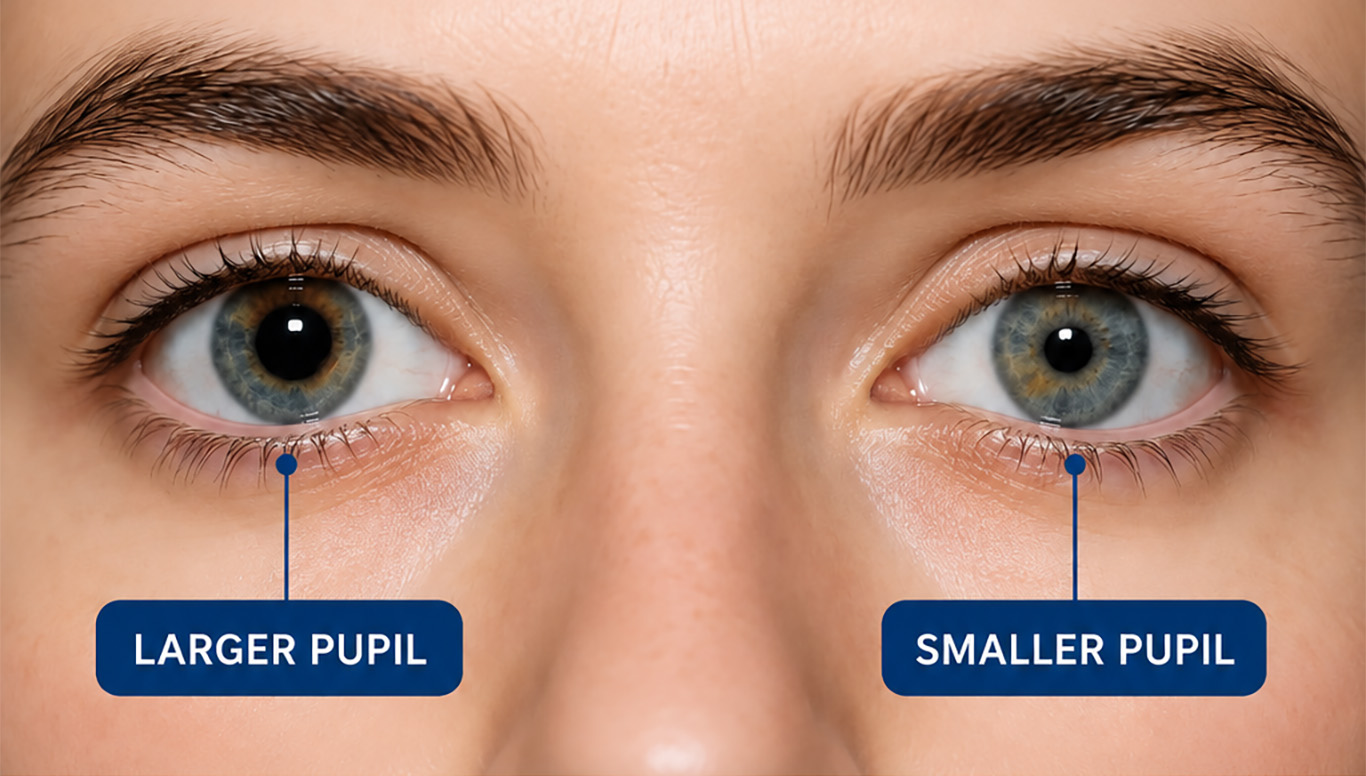
Unequal pupils, medically known as anisocoria, occur when one pupil is larger or smaller than the other. In many people, a slight difference in pupil size is completely normal and has been present for years without affecting vision or eye health. However, unequal pupils that develop suddenly or occur along with other symptoms can be a sign of a serious neurological or eye condition requiring prompt medical evaluation.
Because the pupil controls how much light enters the eye, changes in pupil size can provide important clues about the health of the eye, optic nerve, and brain. A comprehensive eye examination can help determine whether anisocoria is harmless or requires urgent treatment.
Have you noticed one pupil is larger than the other? Schedule a comprehensive eye examination with NH Eye Associates to determine the cause.
What Do Unequal Pupils Look Like?
People may notice:
- One pupil appears larger than the other
- One pupil appears smaller than the other
- Unequal pupils in photographs
- Unequal pupils after using eye drops
- One eye responds differently to light
- Changes that appear only in darkness
- Changes that appear only in bright light
Sometimes family members notice the difference before the patient does.
Symptoms That May Occur Along With Unequal Pupils
Depending on the cause, anisocoria may occur with:
- Blurry vision
- Double vision
- Eyelid drooping (ptosis)
- Eye pain
- Headache
- Neck pain
- Light sensitivity
- Difficulty focusing
- Facial sweating changes
- Eye redness
- Nausea
- Loss of vision
- Weakness or numbness
- Difficulty speaking
- Difficulty moving one eye
These accompanying symptoms help determine whether the condition is an emergency.
What Causes Unequal Pupils?
There are numerous causes of anisocoria ranging from completely harmless to potentially life-threatening.
Physiologic Anisocoria
The most common cause is physiologic anisocoria, a normal variation found in approximately 15–30% of healthy people.
Features include:
- Usually less than 1 mm difference
- Present for years
- No vision changes
- Normal eye examination
- Pupils react normally to light
No treatment is required.
Eye Drops or Medications
Certain medications can temporarily enlarge or constrict one pupil.
Examples include:
- Dilating drops
- Glaucoma medications
- Motion sickness patches
- Certain inhalers
- Plant exposure (such as angel's trumpet or jimsonweed)
Your eye doctor will ask about recent medications and exposures.
Eye Injury
Trauma to the eye may damage the muscles that control the pupil.
This may occur after:
- Sports injuries
- Blunt trauma
- Penetrating injuries
- Previous eye surgery
Some traumatic pupil changes become permanent.

Third Cranial Nerve Palsy
A third nerve palsy can cause:
- One large pupil
- Eyelid drooping
- Double vision
- Difficulty moving the eye
Although some cases are related to diabetes or other medical conditions, others may result from a brain aneurysm, making immediate evaluation essential.
Horner Syndrome
Horner syndrome occurs when part of the sympathetic nerve pathway is disrupted.
Symptoms may include:
- One smaller pupil
- Mild eyelid drooping
- Reduced facial sweating
- Difference becomes more noticeable in dim light
Possible causes range from benign conditions to carotid artery dissection, tumors, or neurological disorders.
Adie's Tonic Pupil
Adie's pupil usually affects young adults.
Characteristics include:
- One larger pupil
- Slow reaction to light
- Better reaction during near focusing
- Mild blurred vision
- Light sensitivity
Although usually benign, evaluation is important to confirm the diagnosis.
Acute Angle-Closure Glaucoma
One enlarged, poorly reactive pupil accompanied by:
- Severe eye pain
- Eye redness
- Blurred vision
- Halos around lights
- Nausea
- Vomiting
This is an eye emergency requiring immediate treatment.
Uveitis
Inflammation inside the eye can alter pupil function.
Symptoms include:
- Eye pain
- Light sensitivity
- Blurred vision
- Redness
Inflammation may cause the pupil to become irregular or smaller than normal.

Previous Eye Surgery
Cataract surgery, glaucoma surgery, iris surgery, or trauma repair can permanently change pupil size or shape.
Neurological Disorders
Less commonly, unequal pupils may result from:
- Stroke
- Brain tumors
- Multiple sclerosis
- Brain injury
- Aneurysm
- Cranial nerve disorders
Prompt neurological evaluation may be necessary.
Is Anisocoria Ever Normal?
Yes. Many healthy people naturally have a small difference in pupil size.
This type of anisocoria:
- Does not affect vision
- Does not change over time
- Does not cause headaches
- Has normal pupil reactions
- Usually measures less than 1 mm
Your eye doctor can determine whether the difference represents a normal finding or a medical problem.
When Are Unequal Pupils an Emergency?
Seek emergency medical attention immediately if unequal pupils develop suddenly or occur with:
- Severe headache
- Double vision
- Eyelid drooping
- Difficulty moving the eye
- Eye pain
- Vision loss
- Confusion
- Weakness
- Numbness
- Difficulty speaking
- Recent head injury
- Neck pain
- Loss of consciousness
These symptoms may indicate a neurological emergency.
How Are Unequal Pupils Diagnosed?
Your eye doctor will perform a comprehensive examination to determine:
- Which pupil is abnormal
- Whether the pupils react normally
- Whether the difference changes in light or darkness
- Whether other neurological findings are present
Testing may include:
Vision Testing
Measures whether vision has changed.
Pupil Examination
Evaluates:
- Size
- Shape
- Light reaction
- Near response
- Speed of constriction
Slit Lamp Examination
Examines:
- Iris
- Cornea
- Lens
- Signs of inflammation
- Trauma
Eye Movement Testing
Determines whether cranial nerves controlling eye movement are functioning normally.
Eyelid Examination
Looks for ptosis that may suggest Horner syndrome or third nerve palsy.
Dilated Eye Examination
Allows examination of the retina and optic nerve.
Pharmacologic Testing
Special diagnostic eye drops may be used when Horner syndrome or Adie's pupil is suspected.
Imaging Studies
Some patients require:
- MRI
- CT scan
- CT angiography
- MRI angiography
These tests help rule out aneurysm, stroke, tumors, or nerve compression.
How Are Unequal Pupils Treated?
Treatment depends entirely on the underlying cause.
Management may include:
- Observation for physiologic anisocoria
- Treating inflammation
- Adjusting medications
- Treating glaucoma
- Repairing eye injuries
- Neurological evaluation
- Emergency treatment for aneurysm or stroke
- Cataract or iris surgery when appropriate
Many patients require no treatment once a harmless cause is confirmed.
Why Choose NH Eye Associates?
Our ophthalmologists and optometrists perform comprehensive evaluations for patients with changes in pupil size and can identify both common and uncommon causes of anisocoria. Using advanced diagnostic technology and close collaboration with neurological specialists when needed, we help determine whether unequal pupils represent a normal variation or a condition requiring urgent treatment.
Frequently Asked Questions
Is it normal to have one pupil slightly larger than the other?
Yes. Up to one-third of healthy people have mild physiologic anisocoria that causes no health problems.
Can stress cause unequal pupils?
Stress typically enlarges both pupils equally. Persistent unequal pupils should be evaluated by an eye doctor.
Can unequal pupils cause blurry vision?
Some conditions affecting the pupil can also cause blurred vision, particularly if inflammation, glaucoma, or nerve disorders are present.
Why are my pupils different sizes after eye drops?
Dilating eye drops or certain medications may temporarily affect one pupil more than the other.
Can migraines cause unequal pupils?
Occasionally, migraines may cause temporary pupil abnormalities, but new anisocoria should never be assumed to be migraine-related until more serious causes have been excluded.
Can unequal pupils be a sign of stroke?
Yes. Sudden unequal pupils accompanied by weakness, numbness, speech changes, confusion, or difficulty walking may indicate a stroke or another neurological emergency.
Can unequal pupils be a sign of stroke?
Yes. Sudden unequal pupils accompanied by weakness, numbness, speech changes, confusion, or difficulty walking may indicate a stroke or another neurological emergency.
Can cataract surgery change pupil size?
Yes. Some patients have a slightly irregular or differently sized pupil following cataract surgery or other intraocular procedures.
What is Horner syndrome?
Horner syndrome is a neurological condition that causes one small pupil, mild eyelid drooping, and decreased facial sweating because of disruption of sympathetic nerve pathways.
What is Adie's pupil?
Adie's pupil is usually a benign neurological condition in which one pupil remains larger than normal and reacts slowly to light.
When should I worry about unequal pupils?
Seek immediate medical attention if unequal pupils appear suddenly or occur with double vision, drooping eyelid, severe headache, eye pain, vision loss, weakness, numbness, confusion, or after head trauma.
Patient Testimonials
Schedule an Eye Examination
Most cases of unequal pupils are harmless, but some require immediate medical attention. Because it is impossible to determine the cause based on appearance alone, a comprehensive eye examination is the safest way to protect your vision and overall health.
If you notice new unequal pupils or experience eye pain, vision changes, double vision, drooping eyelids, or severe headache, contact NH Eye Associates immediately or seek emergency medical care.