
Dermatochalasis (Excess Eyelid Skin)
Excess or Heavy Eyelid Skin Can Affect More Than Your Appearance
Dermatochalasis is the medical term for loose, excessive, or sagging eyelid skin. It most commonly affects the upper eyelids and often develops gradually as the tissues around the eyes change with age.
For some people, dermatochalasis creates a hooded, heavy, or tired appearance. In more advanced cases, the excess skin can hang over the eyelid crease or eyelashes and interfere with peripheral or upper vision.
At NH Eye Associates, our eye care team can determine whether excess eyelid skin is primarily cosmetic or whether it is contributing to a functional vision problem.
Concerned about heavy or excess eyelid skin?
What Is Dermatochalasis?
Dermatochalasis is excess, loose eyelid skin caused primarily by loss of skin elasticity and age-related changes around the eyes. Although it can involve both the upper and lower eyelids, it is particularly noticeable in the upper eyelids. The skin may begin to fold over the natural eyelid crease and, in more advanced cases, extend toward or over the eyelashes.
Dermatochalasis may cause:
- Hooded upper eyelids
- Heavy-feeling eyelids
- Excess folds of skin
- A tired or aged appearance
- Difficulty applying eye makeup
- Skin resting on or near the eyelashes
- Reduced upper or peripheral vision
Dermatochalasis is different from ptosis, in which the eyelid itself sits lower because of problems involving the structures responsible for lifting the eyelid.
Normal Eyelid vs. Dermatochalasis
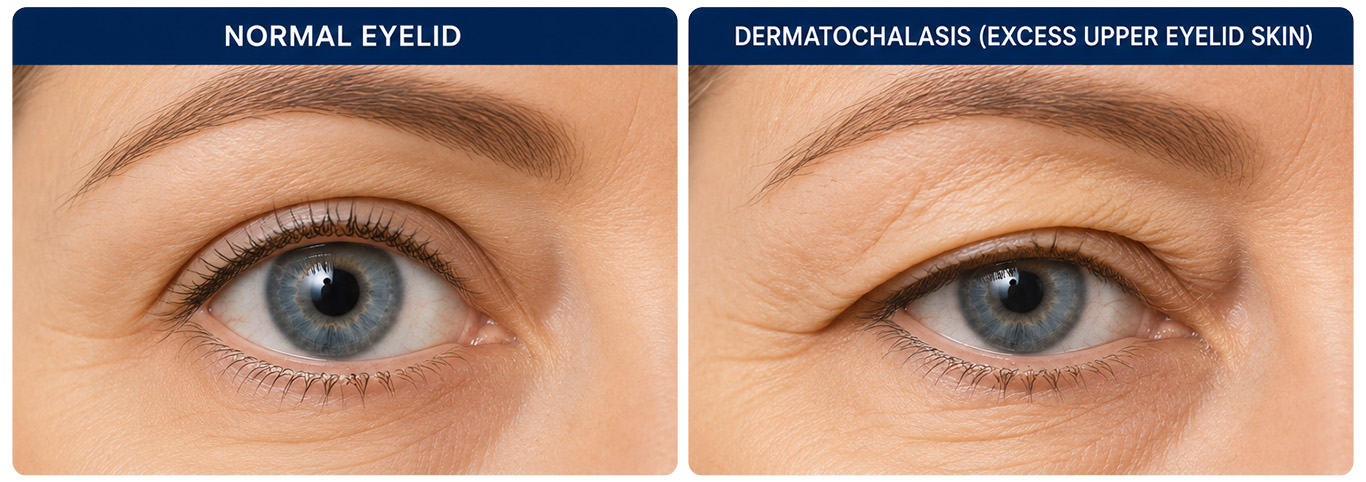
What Does Dermatochalasis Look Like?
Dermatochalasis typically appears as loose or folded skin above the upper eyelid crease.
Patients may notice that:
- The natural eyelid crease becomes difficult to see
- Upper eyelid skin rests on the eyelashes
- One eye appears more hooded than the other
- The eyes appear smaller or more tired
- The outer portion of the upper eyelid feels especially heavy
- Raising the eyebrows makes it easier to see
Some patients unconsciously compensate by continually lifting their eyebrows or forehead.
What Causes Excess Eyelid Skin
Aging Is the Most Common Cause
The skin around the eyes is extremely thin. Over time, collagen and elasticity decrease and supporting tissues around the eyelids change. This can allow the upper eyelid skin to become progressively looser. Dermatochalasis is therefore especially common in middle-aged and older adults. Other factors may influence how early or prominently it develops, including:
Genetics
Some people naturally develop hooded or excess eyelid skin earlier than others.
Changes in Eyelid and Facial Tissues
Age-related changes in the structures surrounding the eye may contribute to both excess skin and puffiness.
Protruding Eyelid Fat
Fat surrounding the eye can become more prominent with age, producing fullness or bulging beneath the eyelid skin. Patients may therefore have both excess eyelid skin and prominent eyelid fat.
Sun Exposure
Years of ultraviolet exposure contribute to skin aging and loss of elasticity.
Can Dermatochalasis Affect Vision?
Yes. Significant upper eyelid dermatochalasis can obstruct part of the superior or peripheral visual field. The problem typically develops gradually. Patients sometimes notice difficulty with:
- Seeing objects above them
- Reading
- Driving
- Watching television
- Performing tasks requiring a wide field of view
Others simply describe their eyelids as feeling increasingly heavy or tired later in the day. Some people compensate by continuously raising their eyebrows, which may contribute to forehead fatigue. If excess eyelid skin interferes with vision, the condition may be considered functional rather than purely cosmetic.
Dermatochalasis vs. Ptosis: What Is the Difference?
Although both conditions can create the appearance of a droopy eyelid, they are not the same problem.
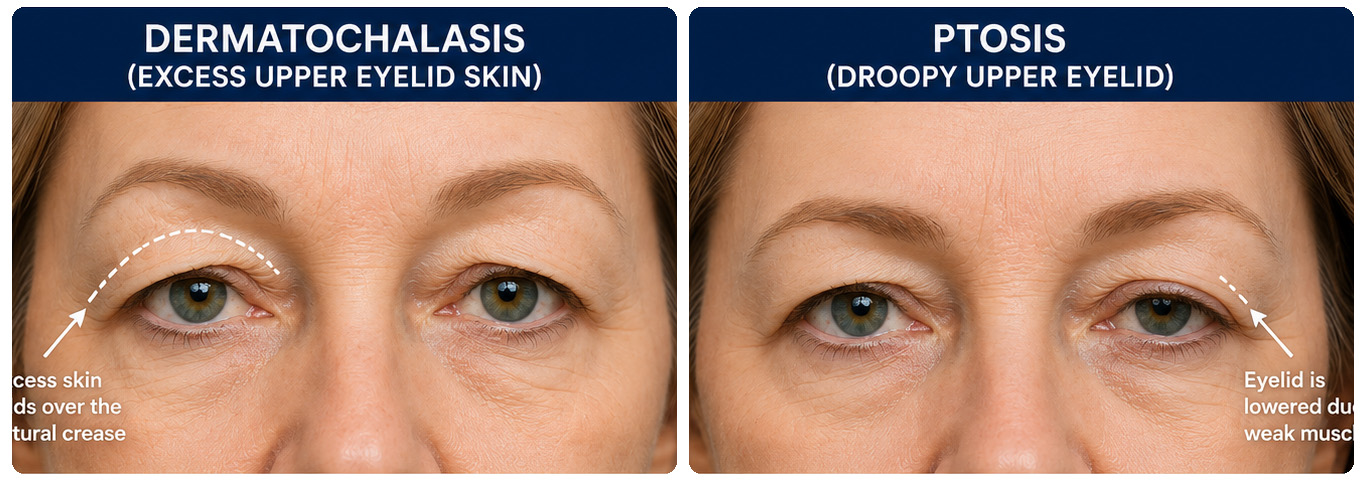
Dermatochalasis
The primary problem is excess eyelid skin. The eyelid margin itself may remain in a relatively normal position.
Ptosis
The actual upper eyelid margin sits too low, potentially covering part of the pupil. Ptosis frequently results from changes in the structures responsible for lifting the eyelid.
Can You Have Both?
Yes. Some patients have both:
Dermatochalasis + Ptosis
This distinction is important because removing excess skin alone may not completely correct an eyelid that is truly drooping. Your ophthalmologist or oculoplastic surgeon will evaluate both conditions during your examination.
Dermatochalasis vs. Brow Ptosis
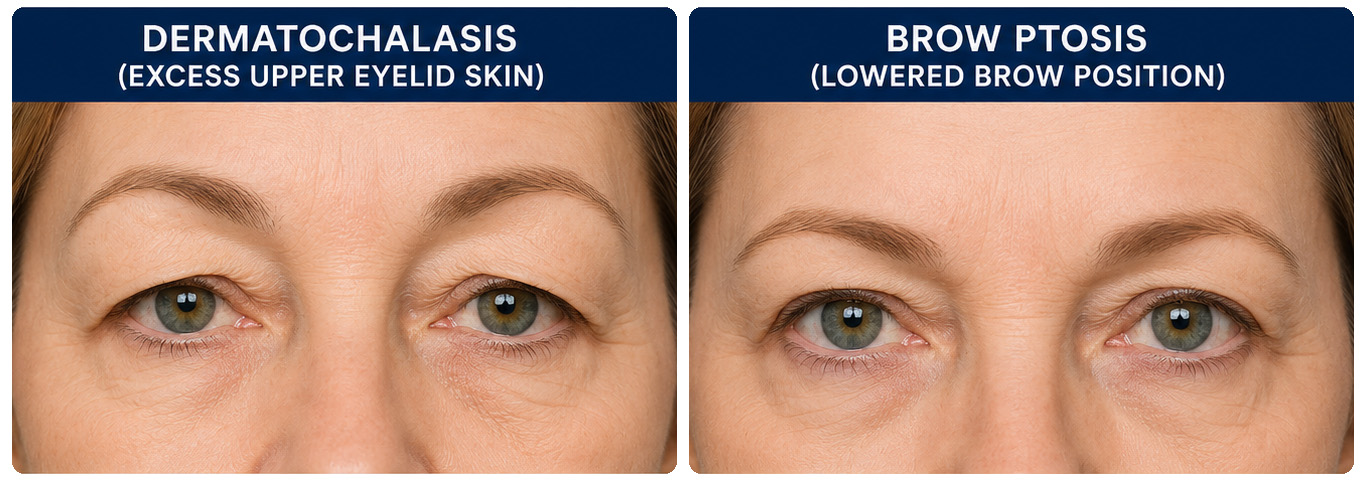
When the eyebrow descends, additional skin can be pushed downward toward the upper eyelid. Some patients therefore have:
- Dermatochalasis
- Brow ptosis
- Ptosis
or a combination of these conditions. Determining exactly which structures are causing the heaviness is an important part of planning treatment.
How Is Dermatochalasis Diagnosed?
Dermatochalasis is usually diagnosed during a comprehensive eyelid examination.
Your doctor may evaluate:
- Amount of excess upper eyelid skin
- Eyelid position
- Eyebrow position
- Eyelid symmetry
- Eyelid fat prominence
- Tear film and ocular surface
- Peripheral and superior vision
- Whether skin extends onto the eyelashes
Photographs may also be obtained to document eyelid position and excess skin. When vision is affected, additional testing such as visual field testing may be performed.
Treatment for Dermatochalasis
Treatment depends on how much excess eyelid skin is present and whether the condition is affecting vision or primarily causing cosmetic concerns.
Mild Dermatochalasis
Mild excess skin that does not cause symptoms may simply be monitored. No treatment is required unless the patient is bothered by its appearance.
Significant Dermatochalasis
When excess skin becomes bothersome or interferes with vision, upper eyelid blepharoplasty is the most common treatment.
Blepharoplasty for Excess Eyelid Skin
What Is Blepharoplasty?
Blepharoplasty is eyelid surgery used to remove carefully measured amounts of excess eyelid skin and, when appropriate, address excess fat or other tissues. For upper eyelid dermatochalasis, an incision is generally positioned within the natural upper eyelid crease so that the resulting scar can become less noticeable as it heals.
Blepharoplasty may:
- Remove excess upper eyelid skin
- Reduce eyelid heaviness
- Improve upper visual field obstruction
- Create a more open eyelid contour
- Address selected areas of excess eyelid fat
- Produce a more rested or refreshed appearance
For patients whose vision is obstructed by redundant upper-eyelid skin, blepharoplasty can provide functional as well as cosmetic improvement.
Functional vs. Cosmetic Blepharoplasty
One of the most common questions patients ask is whether eyelid surgery is considered medical or cosmetic.
Functional Blepharoplasty
Blepharoplasty may be considered functional when excessive upper eyelid skin significantly interferes with vision or daily activities. Documentation requirements vary by insurance company and individual policy.
Evaluation may include:
- Clinical examination
- Eyelid photographs
- Documentation of symptoms
- Visual field testing when appropriate
Cosmetic Blepharoplasty
When eyelid surgery is performed primarily to improve appearance without documented functional impairment, it is generally considered cosmetic. Your physician can determine which category best describes your condition. Insurance coverage is determined by your individual insurance plan and medical necessity requirements.
Can Dermatochalasis Come Back?
Blepharoplasty removes excess eyelid skin present at the time of surgery, but it does not stop the normal aging process. Additional changes in skin, eyebrows, eyelids, and surrounding tissues can gradually develop over time. Results are therefore typically long-lasting but cannot permanently prevent future age-related changes.
When Should You See an Eye Doctor for Excess Eyelid Skin?
Consider scheduling an evaluation when:
- Eyelid skin rests on your eyelashes
- Your eyelids constantly feel heavy
- You frequently raise your eyebrows to see better
- Your upper or peripheral vision seems restricted
- Your eyes appear increasingly hooded
- One eyelid looks different from the other
- You are considering blepharoplasty
- You are uncertain whether you have dermatochalasis or ptosis
A thorough examination can determine exactly which eyelid structures are responsible.
Dermatochalasis Treatment in New Hampshire
NH Eye Associates provides evaluation and treatment of eyelid conditions including excessive eyelid skin, droopy eyelids and other disorders affecting eyelid position and function.
Our ophthalmology team can determine whether your symptoms are caused by:
- Dermatochalasis
- Ptosis
- Brow ptosis
- Eyelid fat protrusion
- Another eyelid condition
When surgery is appropriate, treatment can be individualized to your anatomy and goals.
Who Treats Dermatochalasis?
Dermatochalasis is commonly treated by an oculoplastic surgeon, an ophthalmologist with specialized training in surgery involving the eyelids, tear drainage system, eye socket, and surrounding facial structures.
At NH Eye Associates, patients with excessive eyelid skin can receive comprehensive evaluation and treatment within an ophthalmology practice where both eyelid function and eye health can be considered.
Frequently Asked Questions About Dermatochalasis
What is dermatochalasis?
Dermatochalasis is the medical term for loose, redundant, or excessive eyelid skin. It most commonly affects the upper eyelids and becomes increasingly common with aging.
Is dermatochalasis the same as droopy eyelids?
Not exactly. Dermatochalasis involves excess skin, while ptosis occurs when the actual upper eyelid margin sits too low. Some patients have both conditions.
Can excess eyelid skin block my vision?
Yes. Significant upper eyelid skin can extend downward and obstruct part of the superior or peripheral visual field.
What is the treatment for dermatochalasis?
The primary surgical treatment for significant dermatochalasis is blepharoplasty, which removes carefully measured excess eyelid skin and may address excess fat when appropriate.
Does blepharoplasty treat ptosis?
Not necessarily. Blepharoplasty removes excess skin. Ptosis involves abnormal eyelid position and may require a separate ptosis repair. Some patients require both procedures.
Can dermatochalasis cause heavy eyelids?
Yes. Patients commonly describe their eyelids as heavy, tired, hooded, or difficult to keep open, particularly when excess skin becomes substantial.
What causes dermatochalasis?
Aging and loss of skin elasticity are the primary causes. Genetics and other changes in the tissues around the eyes can also influence its development.
Is dermatochalasis only cosmetic?
No. Mild dermatochalasis may primarily affect appearance, while more advanced dermatochalasis can interfere with peripheral or upper vision.
Does insurance cover blepharoplasty?
Insurance may cover upper eyelid blepharoplasty when specific medical-necessity requirements are met and excess skin causes documented functional impairment. Requirements vary by insurance plan.
What is the difference between dermatochalasis and hooded eyes?
“Hooded eyes” is a descriptive term patients often use when upper eyelid skin folds over the eyelid crease. Dermatochalasis is the medical term used when there is redundant or excessive eyelid skin.
Should I see an ophthalmologist or plastic surgeon for dermatochalasis?
Because excess eyelid skin may coexist with ptosis, dry eye, brow position abnormalities or other eye conditions, evaluation by a physician experienced in eyelid anatomy and ocular health can be particularly helpful.
Patient Testimonials
Are Heavy Eyelids Affecting Your Vision?
You do not have to assume that heavy or hooded eyelids are simply part of getting older.
An eyelid evaluation can determine whether your symptoms are caused by dermatochalasis, ptosis, brow descent, protruding eyelid fat, or a combination of these conditions.