
Retina Eye Care
Your retina is the light-sensitive tissue at the back of the eye that allows you to see clearly. Problems affecting the retina can threaten vision and often require prompt diagnosis and treatment.
Our Retina Eye Care provides comprehensive evaluation and advanced treatment for a wide range of retinal conditions, including age-related macular degeneration (AMD), diabetic retinopathy, retinal tears, retinal detachment, flashes and floaters, macular holes, retinal vein occlusions, and more.
Explore the topics below to learn about common retinal conditions, symptoms, diagnostic testing, and the latest treatment options available.
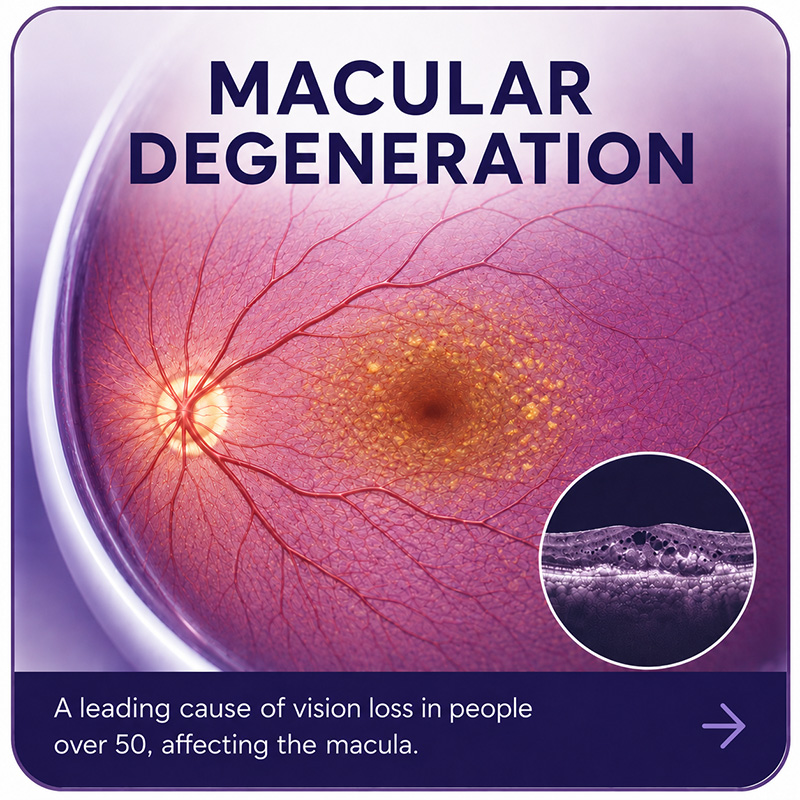
Macular Degeneration
A leading cause of vision loss in people over 50, affecting the macula.
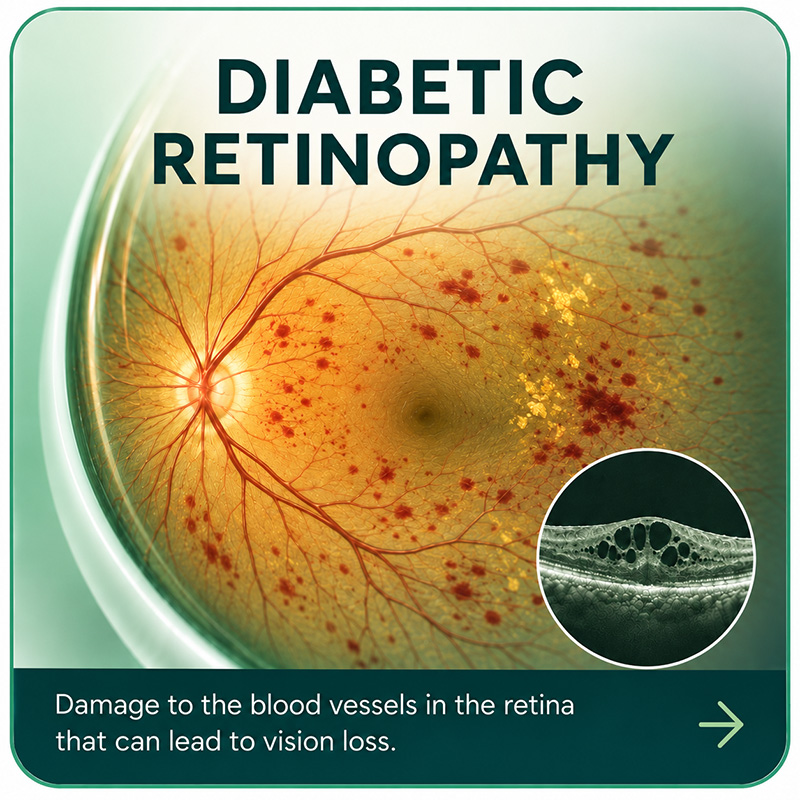
Diabetic Retinopathy
Damage to the blood vessels in the retina that can lead to vision loss.
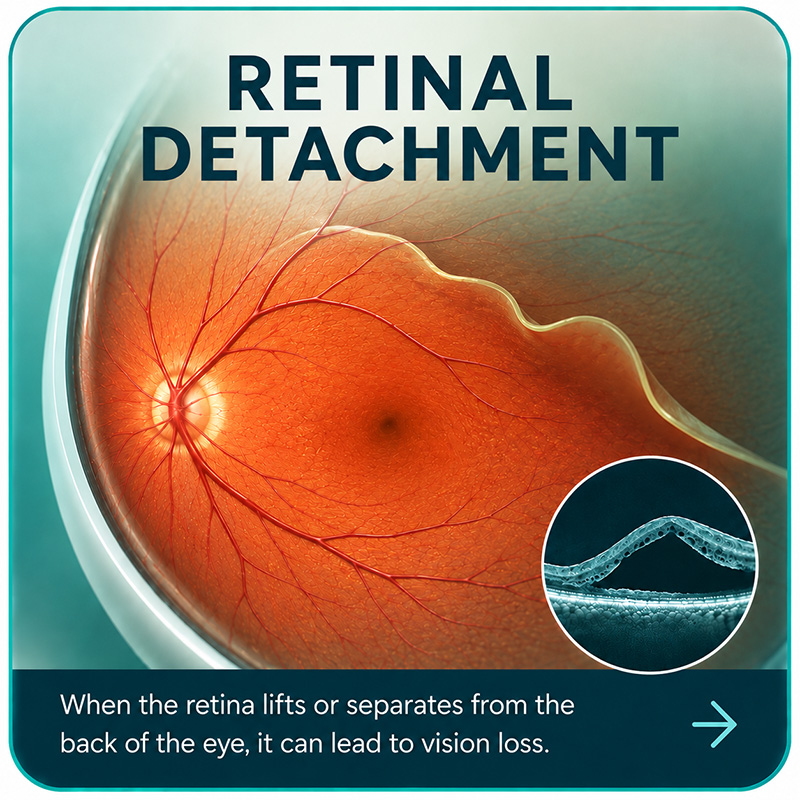
Retinal Detachment
When the retina lifts or separates from the back of the eye, it can lead to vision loss.
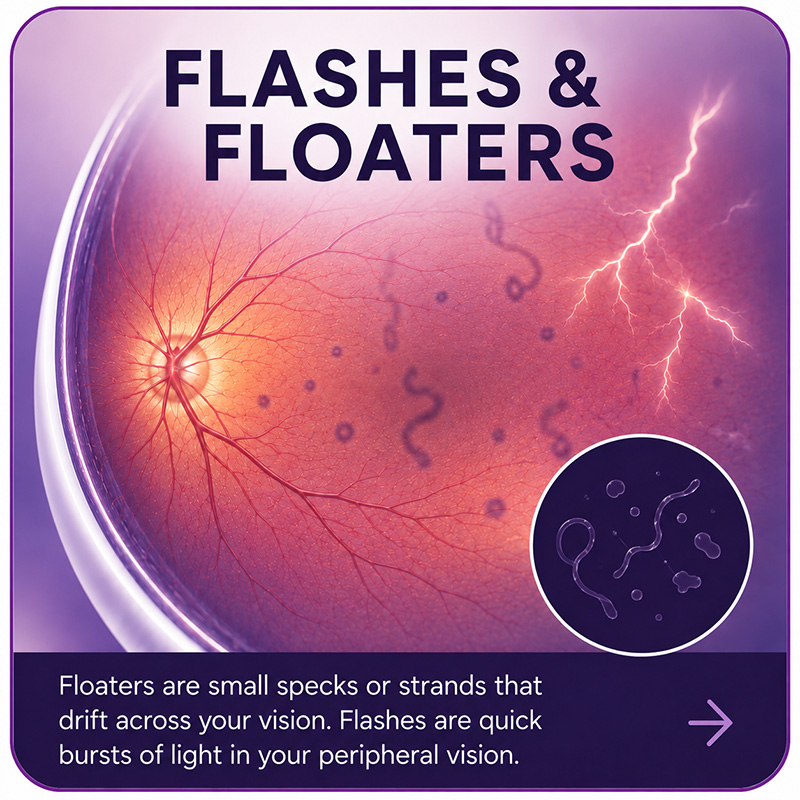
Flashes & Floaters
Floaters are small specks or strands that drift across your vision. Flashes are quick bursts of light in your peripheral vision.
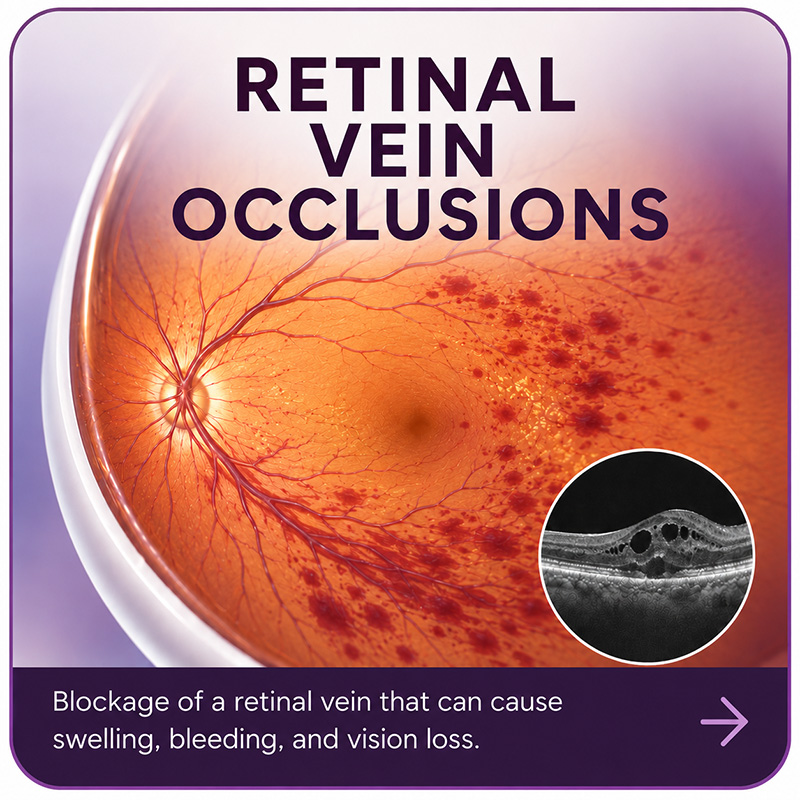
Retinal Vein Occlusions
Blockage of a retinal vein that can cause swelling, bleeding, and vision loss.
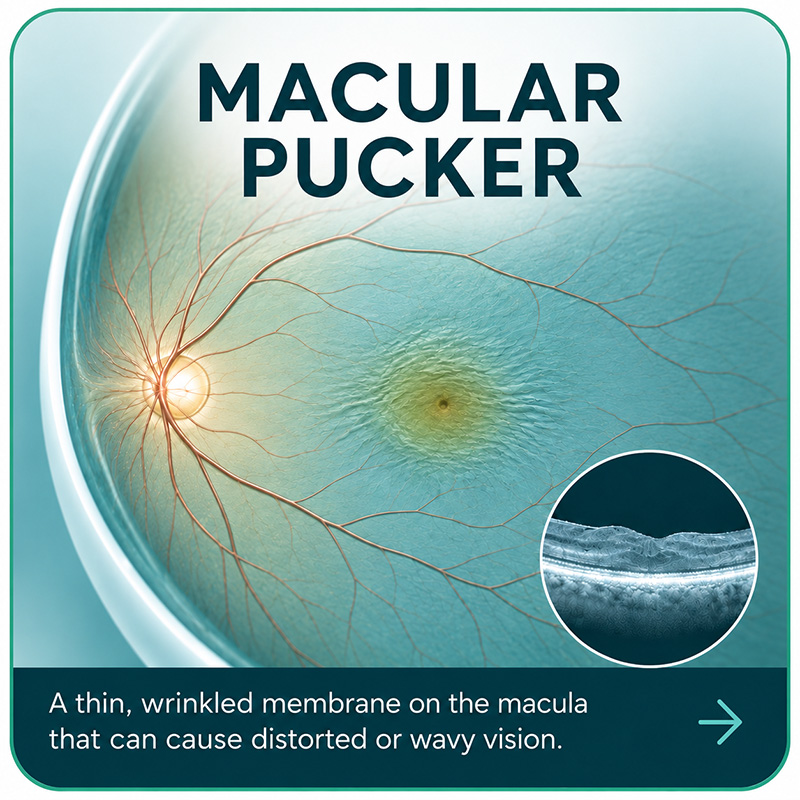
Macular Pucker
A thin, wrinkled membrane on the macula that can cause distorted or wavy vision.
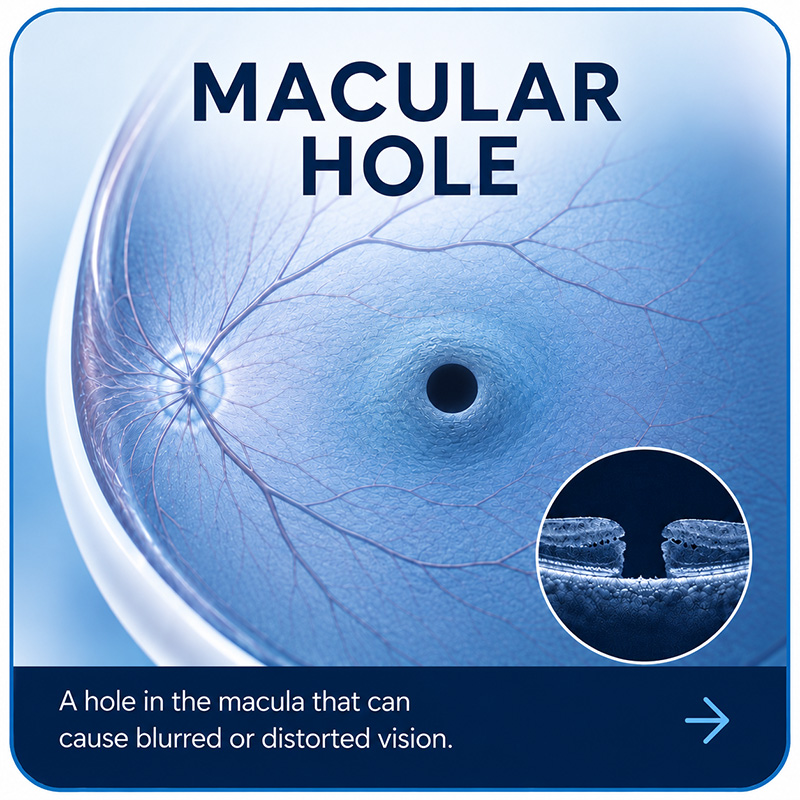
Macular Hole
A hole in the macula that can cause blurred or distorted vision.
Sudden Vision Changes?
New flashes, a shower of floaters, or a dark curtain over your vision may be signs of a retinal emergency. Contact us immediately for urgent evaluation.
Frequently Asked Questions
What is the retina?
The retina is the thin, light-sensitive layer lining the back of the eye. It converts light into electrical signals that are sent to the brain, allowing you to see.
What symptoms could indicate a retinal problem?
Common symptoms include:
- Flashes of light
- New floaters
- Blurred or distorted vision
- Dark spots in your vision
- Loss of side vision
- A curtain or shadow over your vision
- Sudden vision loss
Any sudden change in vision should be evaluated promptly.
What conditions affect the retina?
Common retinal conditions include:
- Age-related macular degeneration (AMD)
- Diabetic retinopathy
- Diabetic macular edema
- Retinal tears
- Retinal detachment
- Posterior vitreous detachment
- Macular holes
- Macular pucker
- Retinal vein occlusion
- Vitreous hemorrhage
Are flashes and floaters always serious?
Not always. Many people develop flashes and floaters as part of the normal aging process. However, a sudden increase in flashes or floaters can be a sign of a retinal tear or retinal detachment and should be evaluated as soon as possible.
How are retinal diseases diagnosed?
Our specialists use advanced diagnostic technology that may include:
- Dilated retinal examination
- Optical coherence tomography (OCT)
- Wide-field retinal imaging
- Fluorescein angiography
- Ocular ultrasound
- Fundus photography
Can retinal diseases be treated?
Many retinal conditions can be successfully managed when detected early. Treatments may include intravitreal injections, laser procedures, medications, or retinal surgery depending on the diagnosis.
What is a retinal detachment?
A retinal detachment occurs when the retina separates from the back of the eye. It is a medical emergency that requires prompt treatment to help preserve vision.
What is age-related macular degeneration (AMD)?
AMD affects the central portion of the retina called the macula and is one of the leading causes of vision loss in older adults. Early diagnosis and treatment can help slow progression.
How does diabetes affect the retina?
Diabetes can damage the small blood vessels within the retina, leading to diabetic retinopathy and diabetic macular edema. Regular diabetic eye exams are essential for detecting changes before vision is affected.
When should I see a retina specialist?
You should seek evaluation if you experience:
- Sudden flashes or floaters
- Distorted or wavy vision
- Central vision loss
- A curtain or shadow in your vision
- Blurred vision related to diabetes
- Vision changes that do not improve
Do all retinal conditions require surgery?
No. Many retinal diseases are treated with medications or laser therapy. Surgery is recommended only when it offers the best chance to preserve or restore vision.
Why is early diagnosis important?
Many retinal diseases cause little or no pain and may not produce symptoms until vision has already been affected. Early detection allows treatment to begin sooner and can significantly improve the chances of preserving vision.
Schedule a Retina Evaluation
Experiencing flashes, floaters, blurred vision, or vision loss? Our retina specialists provide prompt evaluations using advanced imaging technology.