
Retinal Detachment
Symptoms, Warning Signs, Diagnosis, and Treatment
A retinal detachment is a serious eye condition that occurs when the retina separates from the back of the eye. Because the retina is responsible for capturing visual information, retinal detachment can lead to permanent vision loss if not treated promptly. Early diagnosis and treatment are critical.
At NH Eye Associates, our retina specialists provide urgent retinal evaluations, advanced retinal imaging, and treatment for retinal tears and retinal detachment. If you experience sudden flashes, floaters, shadows, or vision loss, prompt evaluation is important.
What Is Retinal Detachment?
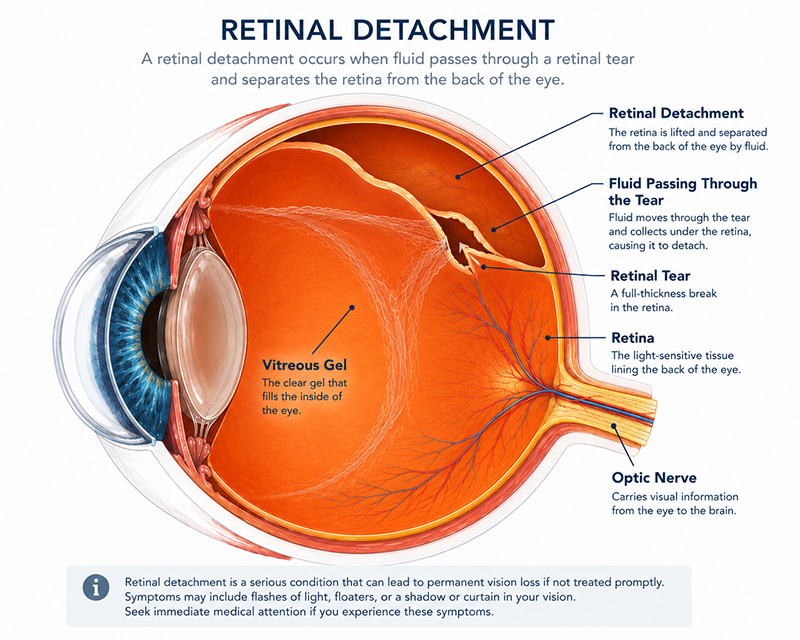
Retinal detachment occurs when the retina pulls away from the back wall of the eye.
Once detached:
- The retina loses access to nutrients and oxygen
- Vision becomes distorted or lost
- Permanent damage can occur without treatment
Retinal detachment is considered a medical emergency.
What Causes Retinal Detachment?
The most common cause is a retinal tear. A retinal tear may allow fluid to pass underneath the retina, causing separation.
Retinal detachment is often associated with:
- Posterior vitreous detachment (PVD)
- Vitreous traction
- High myopia (nearsightedness)
- Eye trauma
- Previous cataract surgery
- Diabetes
- Previous retinal tears
Symptoms of Retinal Detachment
Common symptoms include:
- Sudden flashes of light
- Sudden increase in floaters
- Curtain or shadow in vision
- Peripheral vision loss
- Blurry vision
- Distorted vision
- Missing vision
- Sudden decrease in vision
Patients often describe:
- “A curtain coming over my eye”
- “A shadow from the side”
- “Part of my vision disappeared”
- “Blackness moving across my vision”
Symptoms are usually painless.
What Does a Retinal Detachment Look Like?
Many patients notice:
- A gray curtain
- A dark veil
- A shadow moving across vision
- Missing side vision
The location of the detachment often affects where the shadow appears. Retinal detachment can worsen quickly, making early treatment extremely important.
Warning Signs That Need Urgent Evaluation
Seek immediate retina evaluation if you experience:
- Sudden flashes
- New floaters
- Curtain or shadow in vision
- Sudden blurry vision
- Peripheral vision loss
- Symptoms after eye trauma
Prompt treatment can significantly improve visual outcomes.
Who Is at Higher Risk?
Risk factors for retinal detachment include:
- Age over 50
- High myopia (nearsightedness)
- Previous retinal tears
- Family history of retinal detachment
- Previous cataract surgery
- Diabetes
- Eye trauma
Many younger highly myopic patients discuss retinal detachment fears online and on Reddit due to increased retinal risk.
How Is Retinal Detachment Diagnosed?
A retina specialist may perform:
- Dilated retinal examination
- OCT imaging
- Widefield retinal photography
- Ultrasound imaging
- Peripheral retinal evaluation
These tests help determine:
- Whether detachment is present
- Severity and location
- Whether retinal tears are present
- Whether urgent surgery is needed
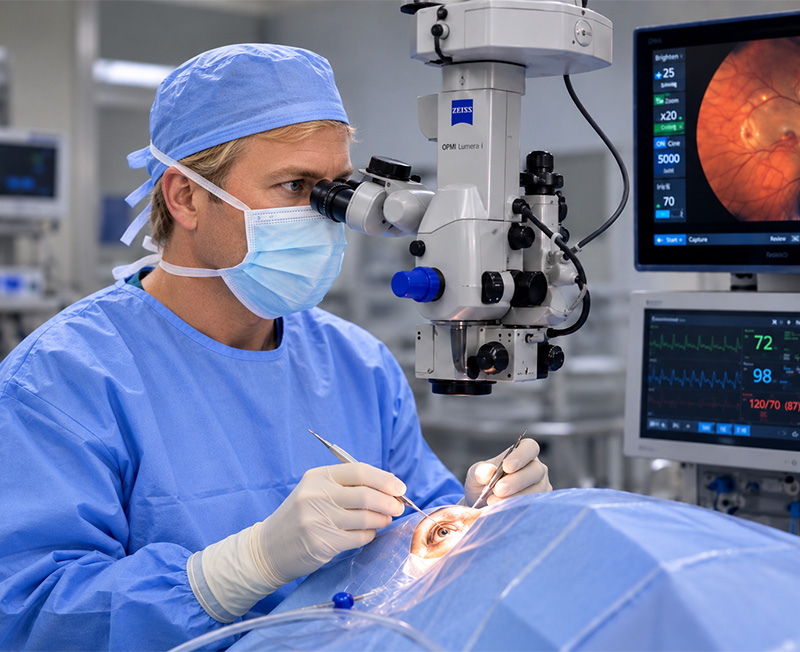
At NH Eye Associates, advanced retinal imaging technology is used to carefully evaluate retinal conditions and guide treatment decisions.
How Is Retinal Detachment Treated?
Treatment depends on:
- Size of the detachment
- Location
- Severity
- Presence of retinal tears
- Macular involvement
Common treatment options include:
- Vitrectomy
- Pneumatic retinopexy
- Scleral buckle surgery
- Laser treatment
- Cryotherapy
Your retina specialist will recommend the most appropriate treatment plan.
Vitrectomy
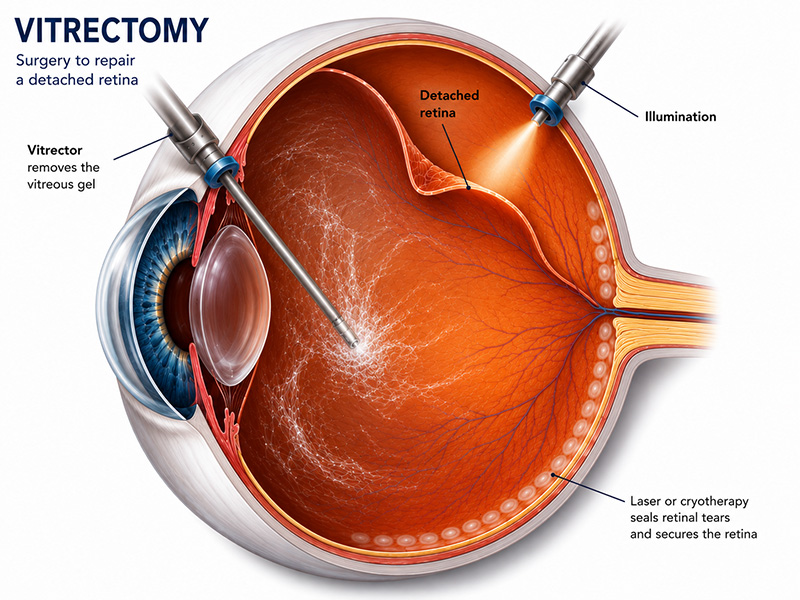
Vitrectomy surgery involves removing the vitreous gel and repairing the retina internally.
This procedure may include:
- Laser treatment
- Gas bubble placement
- Silicone oil placement
Vitrectomy is one of the most common retinal detachment surgeries.
Pneumatic Retinopexy
Pneumatic retinopexy involves:
- Injecting a gas bubble into the eye
- Positioning the bubble against the retinal tear
- Using laser or cryotherapy to seal the retina
This procedure may be appropriate in selected cases.
Scleral Buckle Surgery
A scleral buckle is a silicone band placed around the eye to reduce retinal traction and support retinal reattachment.
Some retinal detachments are treated using:
- Scleral buckle alone
- Combined scleral buckle and vitrectomy
Can Vision Be Restored?
Visual recovery depends on:
- How quickly treatment occurs
- Whether the macula detached
- Severity of the detachment
- Overall retinal health
Earlier treatment generally leads to better outcomes.
Some patients recover excellent vision, while others may experience permanent visual changes.
What Happens If Retinal Detachment Is Not Treated?
Untreated retinal detachment can lead to:
- Permanent vision loss
- Severe visual impairment
- Blindness
This is why sudden symptoms should never be ignored.
What Is Recovery Like After Surgery?
Recovery depends on:
- Type of surgery
- Extent of detachment
- Healing response
Patients may require:
- Activity restrictions
- Special head positioning
- Follow-up examinations
- Temporary vision limitations
Your retina specialist will review recovery instructions carefully.
Retina Evaluations at NH Eye Associates
At NH Eye Associates, our retina specialists provide:
- Comprehensive retina evaluations
- Advanced retinal imaging
- Same-day urgent appointments when appropriate
- Diagnosis and treatment of retinal tears and detachment
- Personalized surgical and monitoring plans
Our goal is to diagnose retinal detachment early and help preserve vision.
Frequently Asked Questions
What are early signs of retinal detachment?
Flashes, floaters, curtains, shadows, and loss of side vision are common warning signs.
Can retinal detachment be fixed?
Yes. Many retinal detachments can be repaired surgically.
How fast does retinal detachment progress?
Progression varies but can occur rapidly.
Is surgery always required?
Most retinal detachments require surgery or urgent retinal treatment.
Can you recover vision after retinal detachment?
Earlier treatment generally leads to better visual outcomes.
Are retinal detachments painful?
Most retinal detachments are painless.
What does a retinal detachment look like?
Patients commonly describe curtains, shadows, or missing vision.
Can retinal detachment cause blindness?
Yes. Delayed treatment may lead to permanent vision loss.
Am I at higher risk if I’m highly nearsighted?
Yes. High myopia significantly increases retinal detachment risk.
Is it better to get checked early?
Absolutely. Early diagnosis and treatment are critical for protecting vision.
Patient Testimonials
Schedule a Retina Evaluation
If you are experiencing flashes, floaters, curtains, shadows, or sudden vision loss, prompt evaluation matters. Contact NH Eye Associates to schedule a comprehensive retina examination with our experienced retina specialists.