
Flashes & Floaters
Symptoms, Warning Signs, Retina Conditions, and When to Seek Care
Flashes and floaters are among the most common reasons patients seek urgent retina evaluation. While many flashes and floaters are caused by normal age-related changes inside the eye, sudden symptoms can sometimes signal serious retinal conditions such as retinal tears or retinal detachment.
At NH Eye Associates, our doctors provide comprehensive retina evaluations using advanced retinal imaging and expert retinal care to determine whether symptoms are harmless or require urgent treatment.
If you notice new flashes, floaters, shadows, or sudden changes in vision, early evaluation can help protect your sight.

What Are Flashes and Floaters?
Floaters are small, shadowy shapes that drift across your field of vision. They may look like dots, strings, or cobwebs and are caused by tiny clumps of gel inside the eye casting shadows on the retina.
Flashes are brief streaks or sparks of light in your vision. They are usually caused by the vitreous gel pulling on the retina, especially in low light or during sudden eye movement.
Both are usually harmless and common, especially with age. However, new or sudden symptoms could signal an eye problem that needs attention.
When to Worry About Flashes and Floaters
Most flashes and floaters are harmless and part of normal aging. However, sudden or worsening symptoms can be a warning sign of a serious eye condition that needs prompt medical attention.
Seek prompt retina evaluation if you experience a sudden increase in floaters, new flashing lights, a curtain or shadow in vision, peripheral vision loss, sudden blurry vision, or symptoms after eye trauma.
Knowing the difference between common and concerning symptoms can help protect your vision. Learn the warning signs to watch for and when to seek care right away.
Conditions Associated with Flashes and Floaters
Flashes and floaters are usually caused by age-related changes in the vitreous. However, they can sometimes be signs of other eye conditions that require attention.
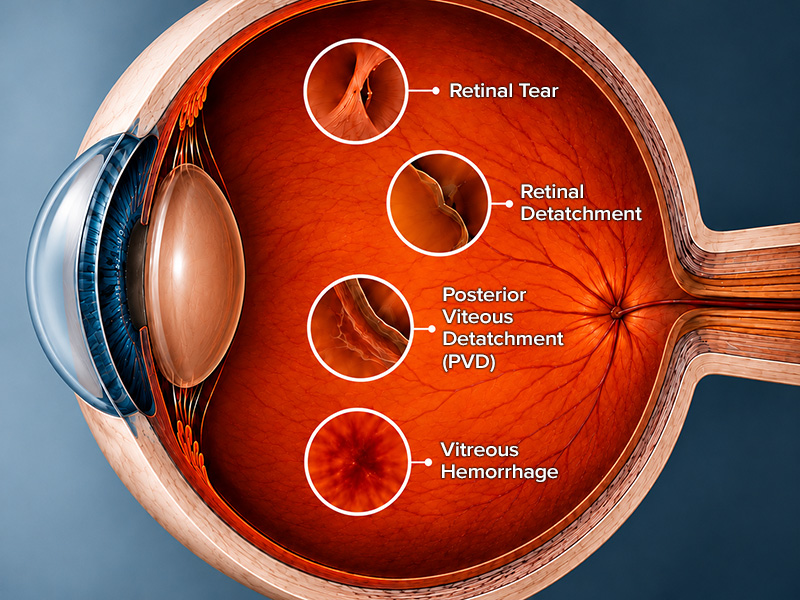
These conditions include posterior vitreous detachment (PVD), retinal tears, retinal detachment, and vitreous hemorrhage. Prompt evaluation helps protect your vision and prevents complications.
Diagnosis and Testing for Flashes and Floaters
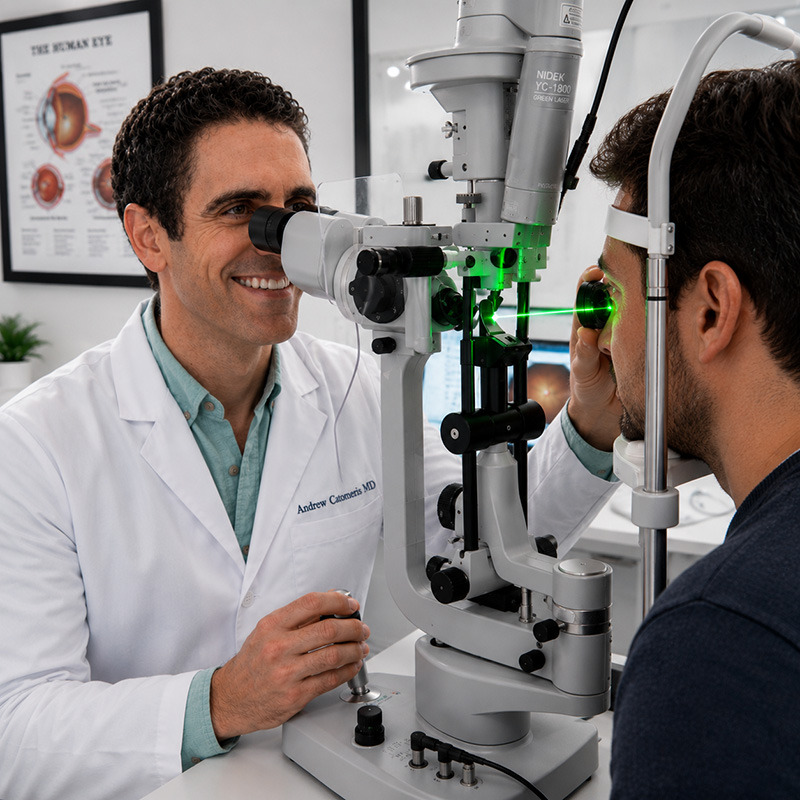
A comprehensive eye exam is the key to determining the cause of flashes and floaters and ruling out serious conditions. Your eye doctor will dilate your pupils to get a clear view of the retina and vitreous.
Tests may include a dilated eye exam with a careful peripheral retinal evaluation, along with imaging such as wide-field retinal photography and ultrasound. These tests help detect retinal tears, retinal detachment, and other eye conditions early-when treatment is most effective.
Early diagnosis provides peace of mind and helps protect your vision.
What Happens If a Retinal Tear or Detachment Is Found?
Treatment depends on the severity of the retinal condition.
Options may include:
- Retinal laser treatment
- Cryotherapy
- Vitrectomy surgery
- Pneumatic retinopexy
- Scleral buckle surgery
- Monitoring and follow-up
Early diagnosis significantly improves visual outcomes.
Who Is at Higher Risk?
Certain patients have increased retinal risk, including:
- Adults over age 50
- Highly nearsighted individuals
- Patients after cataract surgery
- Patients with diabetes
- Individuals with eye trauma
- Patients with previous retinal tears or detachment
Many highly myopic patients discuss flashes and floaters online and on Reddit due to increased retinal concerns.
Why Early Evaluation Matters
Retinal tears and retinal detachment are often painless.
Many patients delay care because:
- Symptoms seem mild initially
- Vision remains mostly normal
- Floaters appear harmless
However, retinal problems can worsen quickly.
Prompt retina evaluation is one of the best ways to:
- Preserve vision
- Prevent retinal detachment
- Reduce the need for more extensive surgery
Retina Care at NH Eye Associates
At NH Eye Associates, our retina specialists provide:
- Comprehensive retina evaluations
- Advanced retinal imaging
- Same-day urgent appointments when appropriate
- Treatment for retinal tears and detachment
- Personalized monitoring and treatment plans
Our goal is to provide clear answers, expert retinal care, and peace of mind.
Frequently Asked Questions
Are flashes and floaters normal?
What causes flashes in the eye?
What do floaters look like?
Can flashes and floaters go away?
Some symptoms become less noticeable over time, but sudden symptoms still require evaluation.
When are flashes and floaters an emergency?
Curtains, shadows, sudden floaters, flashes, or vision loss may indicate retinal detachment and require urgent evaluation.
Can retinal detachment cause blindness?
Yes. Untreated retinal detachment can permanently damage vision.
Are retinal tears painful?
Most retinal tears are painless.
Should I go to the ER for flashes and floaters?
Urgent retina evaluation is important. Retina specialists are often best equipped to diagnose retinal conditions.
Can stress or anxiety cause floaters?
Stress does not directly create floaters, but anxiety may increase awareness of existing symptoms.
Is it better to get checked early?
Absolutely. Early diagnosis is critical for protecting vision.
Patient Testimonials
Schedule a Retina Evaluation
If you are experiencing flashes, floaters, or sudden changes in vision, early evaluation matters.
Contact NH Eye Associates to schedule a comprehensive retina examination with our experienced retina specialists.