
Common Conditions Associated with Flashes & Floaters
Understanding What May Be Causing Your Symptoms
Flashes and floaters are common visual symptoms that can occur for many different reasons. In some cases, they are related to normal aging changes inside the eye. In other situations, they may signal a retinal condition that requires urgent treatment.
At NH Eye Associates, our retina specialists evaluate flashes, floaters, and sudden visual changes using advanced retinal imaging and comprehensive retinal examinations.
Understanding the possible causes of flashes and floaters can help patients recognize when symptoms may require prompt medical attention.
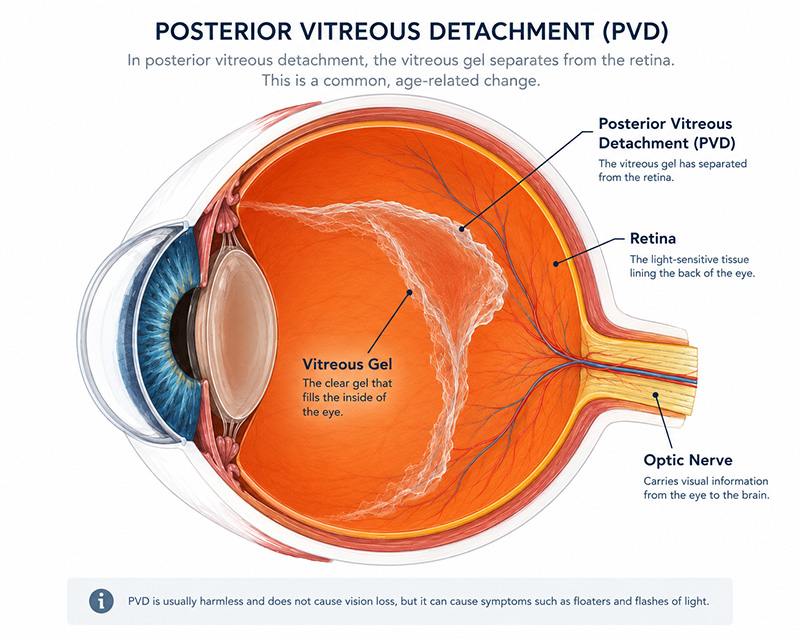
Posterior Vitreous Detachment (PVD)
Posterior vitreous detachment, or PVD, is one of the most common causes of flashes and floaters.
Inside the eye is a clear gel called the vitreous. As we age, the vitreous becomes more liquid and can separate from the retina.
Symptoms of PVD may include:
- Sudden floaters
- Flashing lights
- Cobweb-like vision
- Peripheral flashes
A PVD is often part of normal aging, but in some cases it can lead to retinal tears.
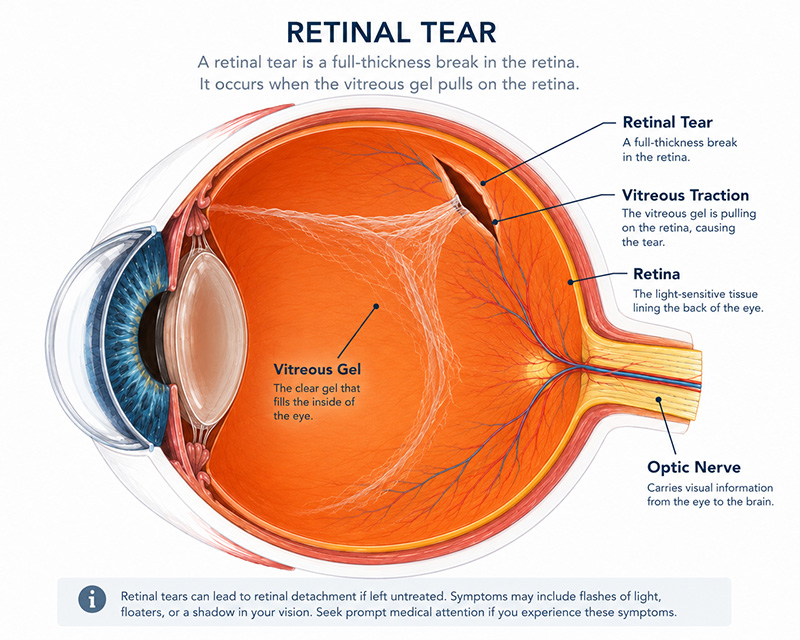
Retinal Tears
A retinal tear occurs when the vitreous pulls hard enough to create a small break in the retina.
Symptoms may include:
- Sudden new floaters
- Flashing lights
- Increased floaters
- Peripheral flashes
- Blurry vision
Retinal tears are important because they can progress to retinal detachment if untreated.
Many retinal tears can be treated with in-office laser procedures.
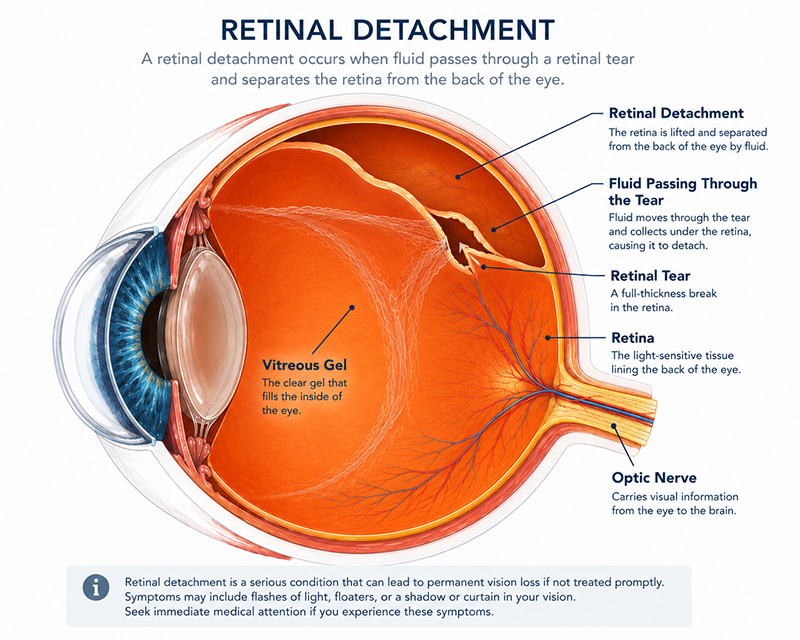
Retinal Detachment
Retinal detachment occurs when the retina separates from the back of the eye.
This is a vision-threatening emergency.
Symptoms may include:
- Curtain or shadow in vision
- Peripheral vision loss
- Sudden increase in floaters
- Flashing lights
- Blurry or distorted vision
Prompt diagnosis and treatment are critical.
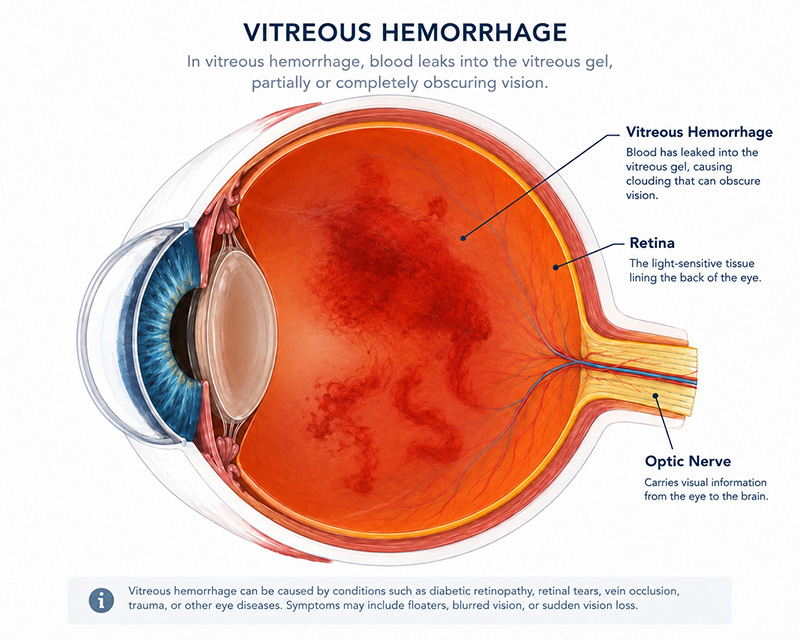
Vitreous Hemorrhage
A vitreous hemorrhage occurs when bleeding develops inside the vitreous gel.
Patients may describe:
- Dark floaters
- Smoke-like vision
- Hazy vision
- Sudden blurry vision
- Black spots drifting through vision
Common causes include:
- Diabetes
- Retinal tears
- Trauma
- Retinal blood vessel disease
Ocular Migraine
Some flashing visual symptoms are caused by ocular migraine or migraine aura rather than retinal disease.
Migraine-related visual symptoms may include:
- Zig-zag lights
- Shimmering patterns
- Expanding blind spots
- Temporary flashing lights
These symptoms often affect both eyes and may last 15–30 minutes.
A retina examination may still be important to rule out retinal causes.
Diabetic Retinopathy
Diabetic eye disease can sometimes cause:
- Bleeding inside the eye
- Floaters
- Blurry vision
- Sudden vision changes
Patients with diabetes should take sudden floaters seriously.
Retinal Holes
Retinal holes are small openings in the retina that may occasionally be discovered during a dilated retina examination. Some retinal holes cause symptoms while others do not. Depending on location and appearance, monitoring or treatment may be recommended.
Vitreoretinal Traction
Sometimes the vitreous remains partially attached to the retina and pulls on retinal tissue.
This traction may lead to:
- Flashes
- Distortion
- Floaters
- Retinal tears
Inflammatory Conditions
Inflammation inside the eye can produce inflammatory debris that appears as floaters.
These conditions may also cause:
- Eye redness
- Light sensitivity
- Blurry vision
- Eye discomfort
Age-Related Vitreous Changes
Not all flashes and floaters are dangerous.
Many patients experience harmless age-related vitreous degeneration that causes:
- Mild floaters
- Occasional flashes
- Stable symptoms over time
However, new or changing symptoms should still be evaluated.
Which Symptoms Are Most Concerning?
Symptoms that may require urgent evaluation include:
- Sudden increase in floaters
- Flashing lights
- Curtain or shadow in vision
- Loss of side vision
- Sudden blurry vision
- Symptoms after trauma
These symptoms may indicate retinal tearing or detachment.
Who Is at Higher Risk?
Certain patients have a higher risk of retinal conditions associated with flashes and floaters, including:
- Adults over age 50
- Highly nearsighted patients
- Patients after cataract surgery
- Patients with diabetes
- Individuals with eye trauma
- Patients with previous retinal tears or detachment
- Those with a family history of retinal detachment
How Are These Conditions Diagnosed?
A retina evaluation may include:
- Dilated retinal examination
- OCT imaging
- Widefield retinal photography
- Ultrasound imaging
- Evaluation for retinal tears and detachment
At NH Eye Associates, our retina specialists use advanced imaging technology to identify retinal conditions and determine whether treatment is needed.
Retina Evaluations at NH Eye Associates
Our retina specialists provide:
- Comprehensive retinal evaluations
- Advanced retinal imaging
- Same-day urgent appointments when appropriate
- Personalized monitoring and treatment plans
- Treatment for retinal tears and retinal detachment
Our goal is to identify retinal problems early and help protect your vision.
Frequently Asked Questions
What is the most common cause of flashes and floaters?
Posterior vitreous detachment (PVD) is the most common cause.
Can migraines cause flashing lights?
Yes. Ocular migraines can create temporary flashing visual symptoms.
What’s the difference between PVD and retinal detachment?
PVD is usually a normal aging change, while retinal detachment is a serious vision-threatening condition.
Can diabetes cause floaters?
Yes. Bleeding from diabetic retinopathy can create floaters and blurry vision.
What does retinal detachment look like?
Patients often describe a curtain, shadow, or missing side vision.
Are retinal tears painful?
Most retinal tears are painless.
Can trauma cause flashes and floaters?
Yes. Eye injuries can increase the risk of retinal tears and vitreous bleeding.
Can floaters be harmless?
Yes. Many floaters are related to normal aging changes inside the eye.
Can symptoms come and go?
Yes. Some flashes and floaters may be intermittent.
Is it better to get checked early?
Absolutely. Early detection helps protect vision and may prevent retinal detachment.
Patient Testimonials
Schedule a Retina Evaluation
If you are experiencing flashes, floaters, shadows, or sudden changes in vision, prompt evaluation matters. Contact NH Eye Associates to schedule a comprehensive retina examination with our experienced retina specialists.