
Vision Changes
Vision changes can happen gradually or suddenly and may affect one or both eyes. Symptoms such as blurry vision, double vision, distorted vision, cloudy vision, difficulty seeing at night, or sudden vision loss can be caused by a wide range of eye conditions. While some changes are temporary or easily corrected with glasses, others may signal a serious eye disease that requires prompt evaluation.
Explore the topics below to learn more about your symptoms, possible causes, and when it's time to schedule an eye exam.
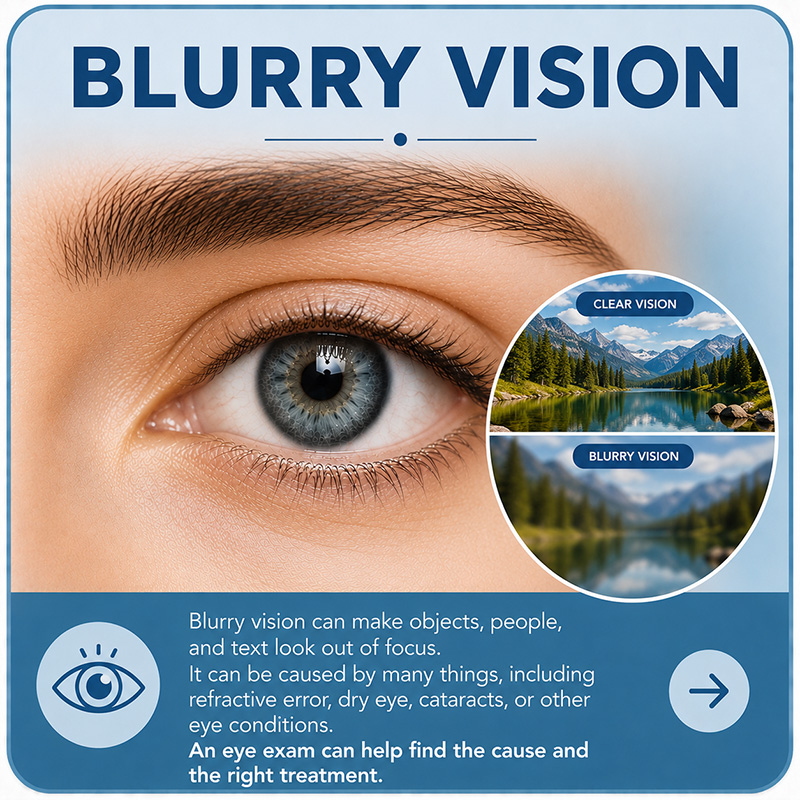
Blurry Vision
Blurry vision can make objects, people, and text look out of focus. It can be caused by many things, including refractive error, dry eye, cataracts, or other eye conditions. An eye exam can help find the cause and the right treatment.
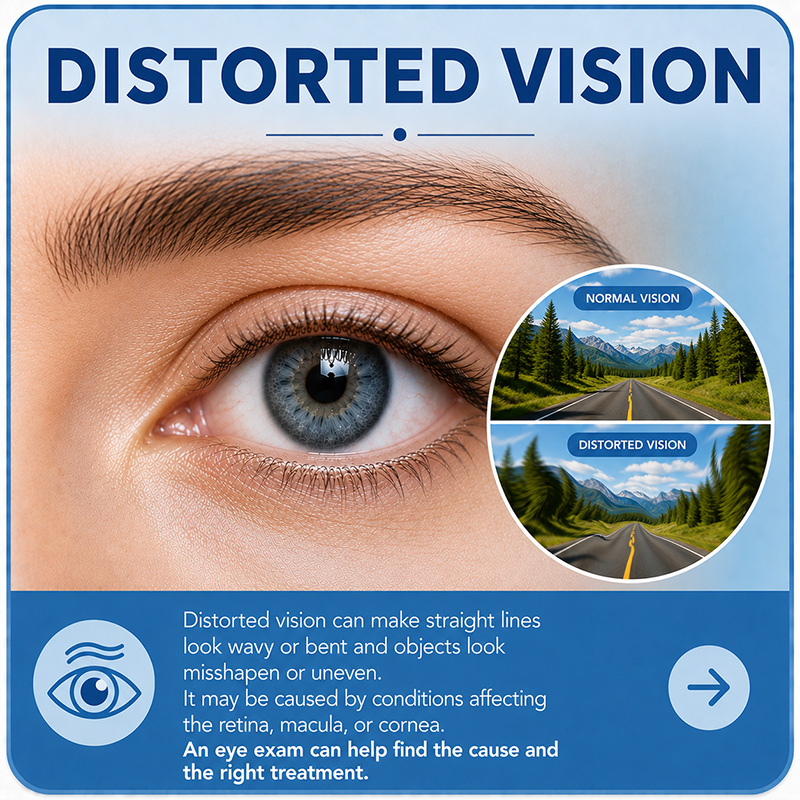
Distorted Vision
Distorted vision can make straight lines look wavy or bent and objects look misshapen or uneven. It may be caused by conditions affecting the retina, macula, or cornea. An eye exam can help find the cause and the right treatment.
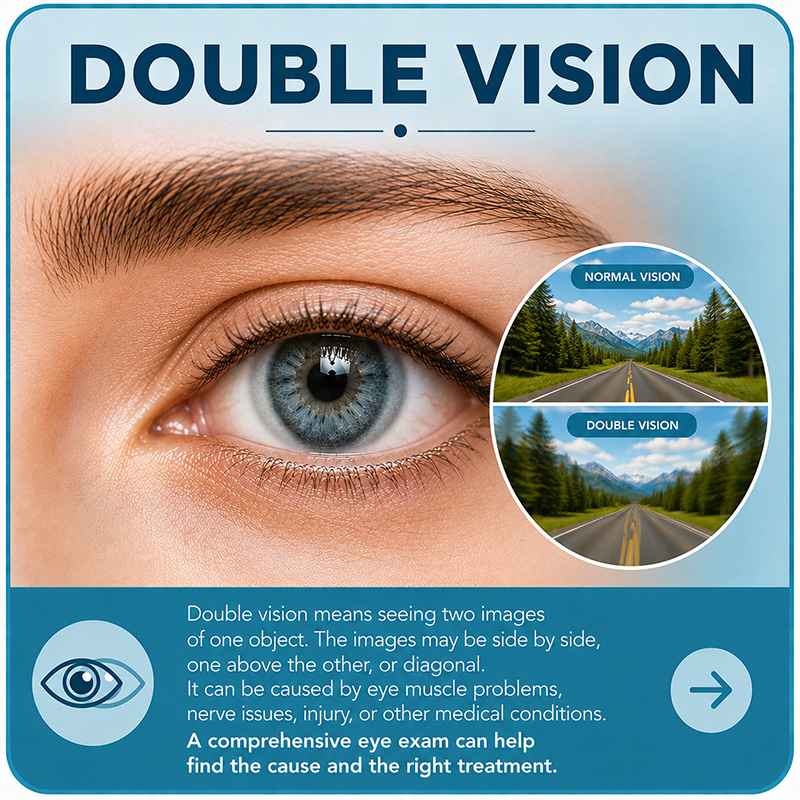
Double Vision
Double vision means seeing two images of one object. The images may be side by side, one above the other, or diagonal. It can be caused by eye muscle problems, nerve issues, injury, or other medical conditions. A comprehensive eye exam can help find the cause and the right treatment.
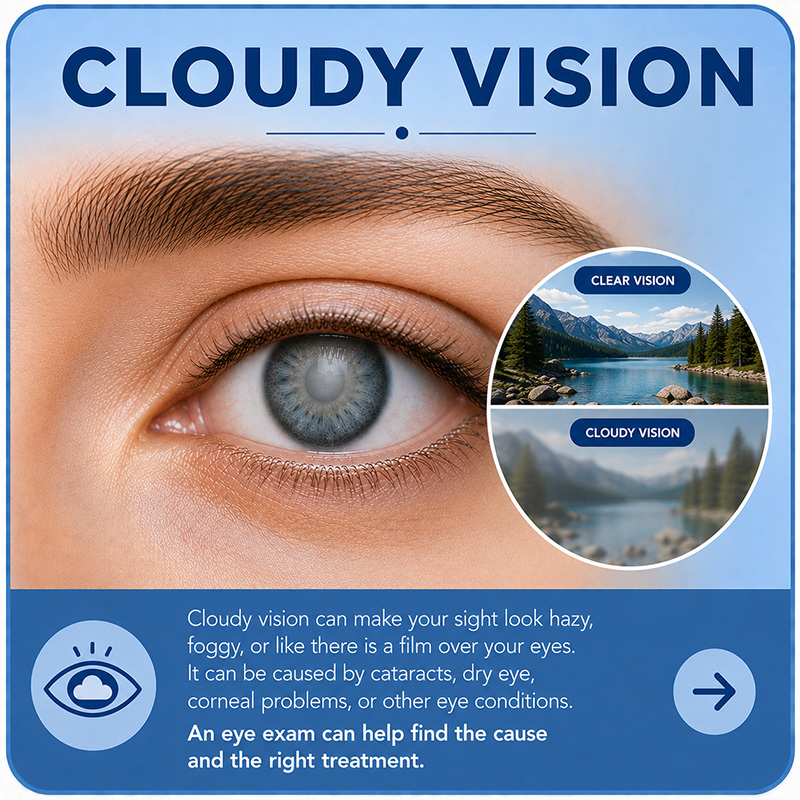
Cloudy Vision
Cloudy vision can maek your sight look hazy, foggy ot like there is a film over yout eyes. It can be caused by cataracts, dry eye, corneal problems, or other eye conditions. An eye exam can help find the cause and the right treatment.
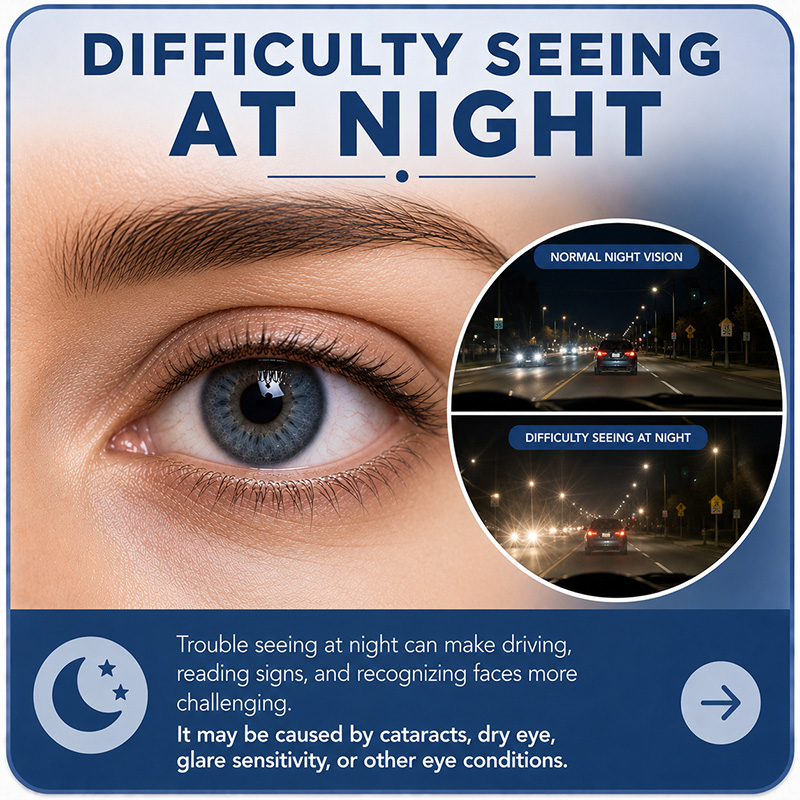
Difficulty Seeing at Night
Trouble seeing at night can make driving, reading signs, and recognizing faces more challenging. It may be caused by cataracts, dry eye, glare sensitivity, or other eye conditions.
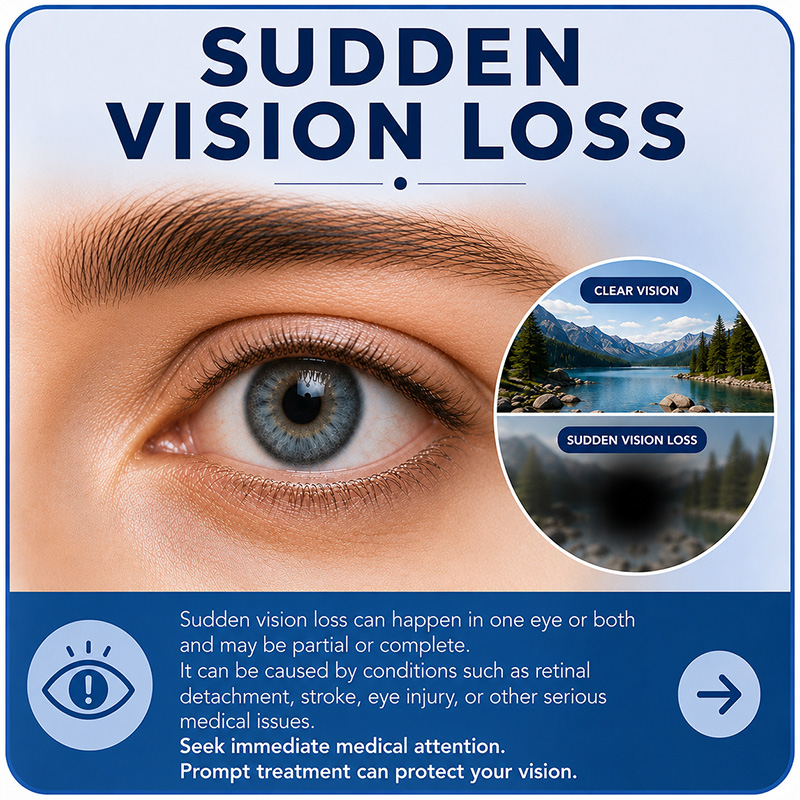
Sudden Vision Loss
Sudden vision loss can happen in one eye or both and may be partial or complete. It can be caused by conditions such as retinal detachment, stroke, eye injury, or other serious medical issues. Seek immediate medical attention. Prompt treatment can protect your vision.
Concerned About Changes in Your Vision?
Whether your symptoms started gradually or suddenly, our experienced eye doctors can identify the cause and recommend the most appropriate treatment.
Frequently Asked Questions
What causes vision changes?
Vision changes may result from refractive errors, cataracts, dry eye disease, glaucoma, macular degeneration, diabetic eye disease, retinal conditions, or neurological disorders. A comprehensive eye examination is the best way to determine the cause.
When should I be concerned about vision changes?
You should seek prompt evaluation if you experience:
- Sudden vision loss
- Double vision
- New flashes or floaters
- A curtain or shadow in your vision
- Sudden distortion of straight lines
- Eye pain with decreased vision
These symptoms can indicate serious eye conditions requiring urgent treatment.
Can blurry vision be corrected with glasses?
Sometimes. Blurry vision caused by nearsightedness, farsightedness, or astigmatism is often corrected with glasses or contact lenses. However, blurry vision caused by cataracts, retinal disease, glaucoma, or other medical conditions requires treatment of the underlying problem.
Is cloudy vision the same as blurry vision?
Not always. Cloudy vision often feels as though you're looking through fog or a dirty window and is commonly associated with cataracts. Blurry vision typically means objects simply are not in focus.
Why is my vision worse at night?
Difficulty seeing at night may be caused by cataracts, uncorrected vision, dry eyes, glaucoma, vitamin deficiencies, or certain retinal disorders. An eye examination can identify the underlying cause.
Can vision changes come and go?
Yes. Temporary vision changes may occur from dry eyes, migraines, blood sugar fluctuations, fatigue, or eye strain. However, recurring or persistent symptoms should always be evaluated.
Can diabetes cause vision changes?
Yes. Diabetes can affect the retina and cause diabetic retinopathy or diabetic macular edema, both of which may lead to blurred or fluctuating vision. Routine diabetic eye exams are essential.
How are vision changes diagnosed?
Your eye doctor may perform:
- Visual acuity testing
- Refraction
- Dilated eye examination
- Retinal imaging
- OCT (Optical Coherence Tomography)
- Visual field testing
- Eye pressure measurement
- Additional testing based on your symptoms
Can vision changes be prevented?
Not all vision changes can be prevented, but regular comprehensive eye exams, controlling diabetes and blood pressure, wearing UV protection, maintaining a healthy lifestyle, and seeking prompt care for new symptoms can help protect your vision.
Need Immediate Eye Care?
Sudden vision loss, new flashes and floaters, or a dark curtain over your vision can be signs of an eye emergency. Contact our office immediately for prompt evaluation.