
Retinal Tears
Symptoms, Causes, Diagnosis, and Treatment
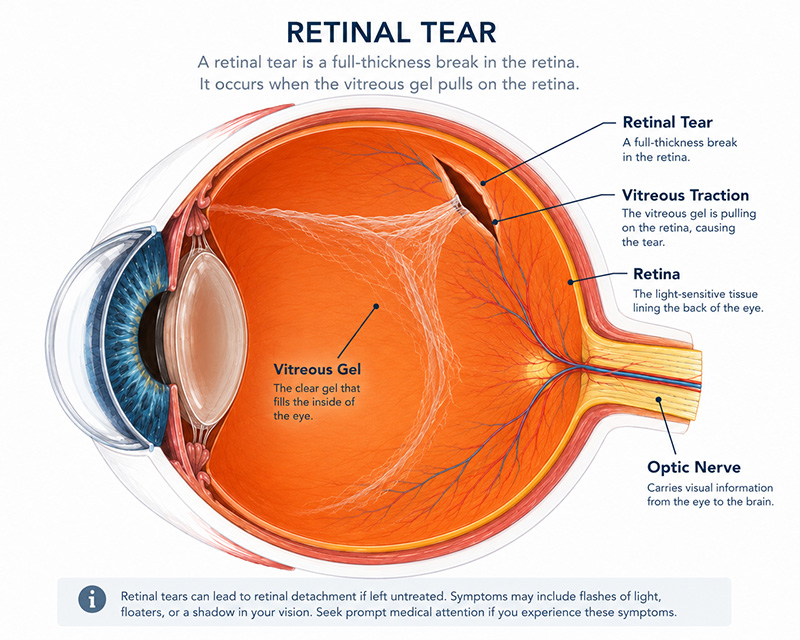
A retinal tear is a small break in the retina that can occur when the vitreous gel inside the eye pulls on retinal tissue. Retinal tears are important because they can sometimes progress to retinal detachment — a serious vision-threatening condition.
Early diagnosis and treatment can often prevent retinal detachment and help protect vision.
At NH Eye Associates, our retina specialists evaluate retinal tears using advanced retinal imaging and comprehensive retina examinations. Many retinal tears can be treated with in-office laser procedures before more serious complications develop.
What Is a Retinal Tear?
The retina is the light-sensitive tissue lining the back of the eye.
A retinal tear occurs when traction from the vitreous gel creates a small opening or break in the retina.
Most retinal tears occur during:
- Posterior vitreous detachment (PVD)
- Age-related vitreous changes
- Vitreoretinal traction
Retinal tears are often painless but can produce sudden visual symptoms.
What Causes Retinal Tears?
The most common cause is posterior vitreous detachment (PVD).
As the vitreous gel separates from the retina:
- Traction develops
- The retina may stretch
- A tear can form
Other causes and risk factors include:
- High myopia (nearsightedness)
- Eye trauma
- Previous cataract surgery
- Previous retinal tears
- Family history of retinal detachment
- Diabetes and retinal disease
Symptoms of a Retinal Tear
Symptoms may include:
- Sudden floaters
- Flashing lights
- A sudden increase in floaters
- Peripheral flashes
- Cobweb-like vision
- Dark spots drifting through vision
- Blurry vision
Many patients describe:
- “A shower of black spots”
- “Lightning flashes”
- “Gnats floating around”
- “Smoke drifting across vision”
Retinal tears usually do not cause pain.
Why Do Retinal Tears Cause Flashes and Floaters?
Flashes
Flashes occur when vitreous traction pulls on the retina.
Patients may see:
- Lightning streaks
- Flickering lights
- Peripheral flashes
- Brief sparks of light
Floaters
Floaters may develop due to:
- Vitreous changes
- Tiny amounts of bleeding
- Inflammatory debris
- Symptoms often appear suddenly.
Why Retinal Tears Matter
A retinal tear can allow fluid to pass underneath the retina.
This may lead to: Retinal Detachment
Retinal detachment occurs when the retina separates from the back of the eye and becomes a medical emergency. Not every retinal tear leads to detachment, but prompt treatment significantly lowers the risk.
Warning Signs That Need Urgent Attention
Seek prompt retina evaluation if you experience:
- Sudden flashes
- New floaters
- Increasing floaters
- A curtain or shadow in vision
- Peripheral vision loss
- Sudden blurry vision
- Symptoms after trauma
Early evaluation is one of the best ways to prevent vision loss.
Who Is at Higher Risk for Retinal Tears?
Patients at increased risk include:
- Adults over age 50
- Highly nearsighted individuals
- Patients after cataract surgery
- Patients with previous retinal tears
- Individuals with eye trauma
- Patients with family history of retinal detachment
Many Reddit discussions related to retinal tears involve younger highly myopic patients concerned about flashes and sudden floaters.
How Are Retinal Tears Diagnosed?
A retina specialist may perform:
- Dilated retinal examination
- OCT imaging
- Widefield retinal photography
- Peripheral retinal evaluation
- Ultrasound imaging when needed
These tests help identify:
- Retinal tears
- Retinal traction
- Retinal detachment
- Vitreous hemorrhage
At NH Eye Associates, advanced retinal imaging technology is used to carefully examine the retina and vitreous.
How Are Retinal Tears Treated?
Many retinal tears can be treated before retinal detachment develops.
Treatment options may include:
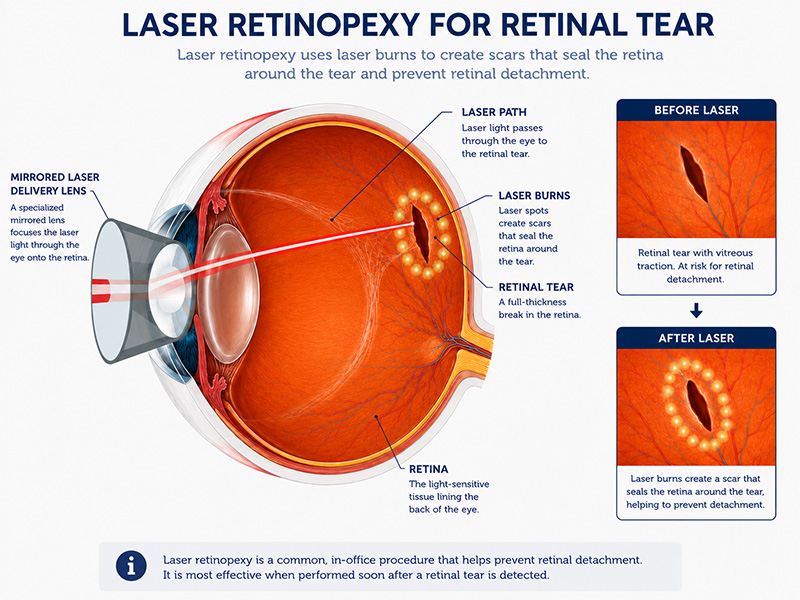
- Laser retinopexy (retinal laser treatment)
- Cryotherapy (freezing treatment)
- Monitoring in selected cases
Treatment creates a protective seal around the tear to reduce retinal detachment risk.
What Is Laser Retinopexy?
Laser retinopexy is one of the most common treatments for retinal tears.
The laser creates small burns around the tear that form scar tissue and help secure the retina.
The procedure is typically:
- Performed in-office
- Quick
- Well tolerated by most patients
Many patients are surprised to learn retinal laser treatment usually does not require surgery.
What Happens If Retinal Detachment Develops?
If retinal detachment occurs, surgical treatment may be necessary.
Treatment options may include:
- Vitrectomy
- Scleral buckle
- Pneumatic retinopexy
Early treatment greatly improves the chance of preserving vision.
What Is Recovery Like After Retinal Tear Treatment?
Recovery varies depending on:
- Tear size
- Tear location
- Presence of retinal detachment
- Treatment type
Many patients return to normal activities relatively quickly after laser treatment.
Your retina specialist may recommend:
- Follow-up examinations
- Activity restrictions
- Monitoring for new symptoms
Can Retinal Tears Heal on Their Own?
Some retinal tears may remain stable, but many tears require treatment to reduce retinal detachment risk.
A retina specialist can determine whether:
- Treatment is needed
- Monitoring is appropriate
- Additional follow-up is required
Retina Evaluations at NH Eye Associates
At NH Eye Associates, our retina specialists provide:
- Comprehensive retinal evaluations
- Advanced retinal imaging
- Same-day urgent appointments when appropriate
- In-office retinal laser treatment
- Personalized monitoring and treatment plans
Our goal is to diagnose retinal tears early and help prevent retinal detachment.
Frequently Asked Questions
Can a retinal tear heal on its own?
Some tears may remain stable, but many require treatment to reduce retinal detachment risk.
What does laser treatment feel like?
Most patients tolerate retinal laser treatment well.
How urgent is a retinal tear?
Prompt treatment helps reduce the risk of retinal detachment and permanent vision loss.
Can retinal tears cause floaters?
Yes. Sudden floaters are one of the most common symptoms.
Are retinal tears painful?
Most retinal tears are painless.
What do retinal flashes look like?
Patients commonly describe lightning streaks or flickering peripheral lights.
Can retinal tears cause blindness?
Untreated retinal tears can sometimes progress to retinal detachment and vision loss.
Will I need surgery?
Many retinal tears can be treated in-office without surgery.
Can retinal tears come back?
Some patients remain at increased risk for future retinal tears.
Is it better to get checked early?
Absolutely. Early diagnosis and treatment are critical for protecting vision.
Patient Testimonials
Schedule a Retina Evaluation
If you are experiencing flashes, floaters, or sudden changes in vision, prompt evaluation matters. Contact NH Eye Associates to schedule a comprehensive retina examination with our experienced retina specialists.