
When to worry about Flashes & Floaters
What’s Normal and What May Be Serious
Flashes and floaters can appear in many different ways. Some symptoms are common and related to normal aging changes inside the eye, while others may signal a retinal tear or retinal detachment that requires urgent treatment.
At NH Eye Associates, our retina specialists evaluate flashes, floaters, and sudden visual changes using advanced retinal imaging and comprehensive eye examinations.
Understanding the warning signs can help protect your vision.
Common Symptoms of Floaters
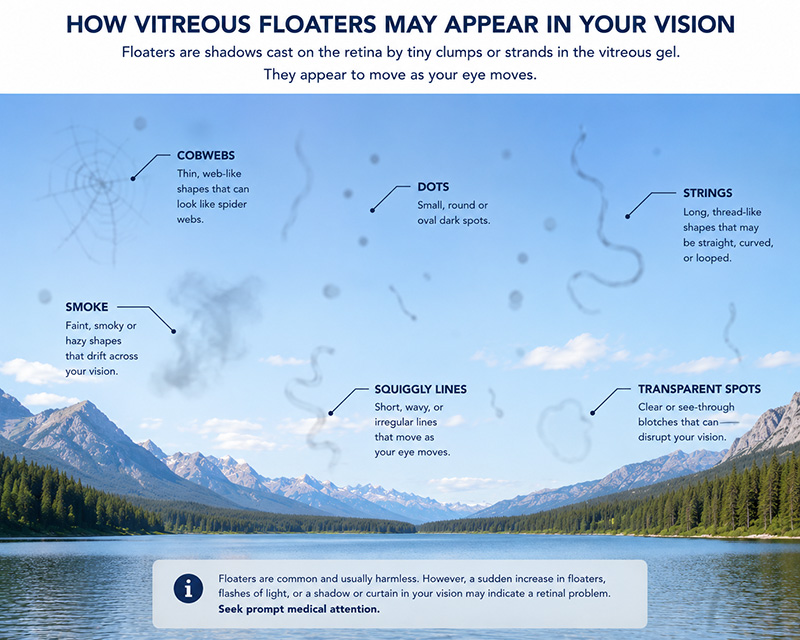
Floaters are small moving shapes that drift through your vision. They may appear as:
- Black dots
- Cobwebs
- Strings
- Smoke-like shadows
- Transparent circles
- Squiggly lines
- Tiny specks
- “Gnats” or “bugs”
Many patients say floaters:
- Move when the eyes move
- Drift away when trying to look directly at them
- Are more noticeable outside or against bright backgrounds
- Become easier to see when looking at the sky or computer screens
Floaters may affect:
- One eye
- Both eyes
- Central vision
- Peripheral vision
Common Symptoms of Flashes
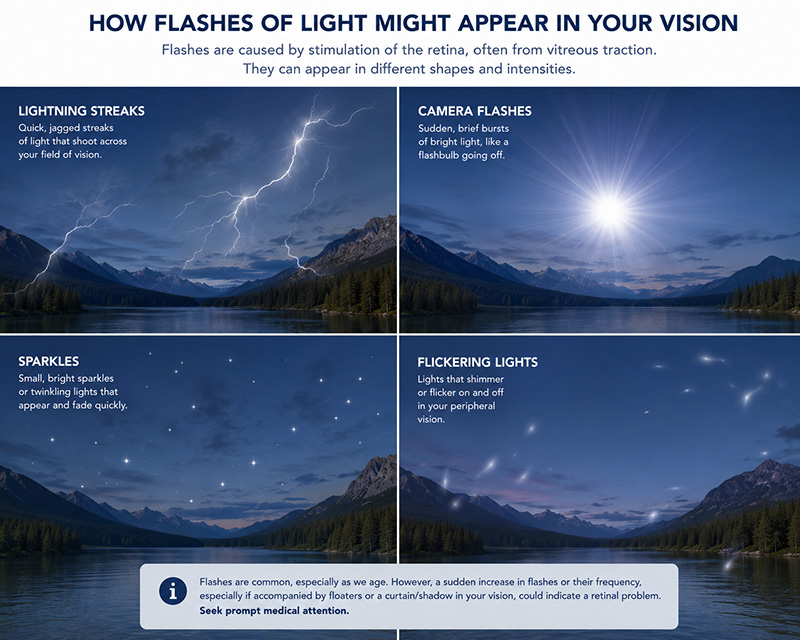
Flashes are brief bursts or streaks of light that may appear:
- In side vision
- In dark environments
- During eye movement
- With blinking
- At night
Patients commonly describe flashes as:
- Lightning streaks
- Camera flashes
- Sparkles
- Flickering lights
- Brief arcs of light
Flashes often occur when the vitreous gel pulls on the retina.
Symptoms That May Be Normal
Some symptoms are commonly associated with normal aging changes inside the eye.
These may include:
- Small stable floaters
- Mild intermittent floaters
- Occasional flashes without vision loss
- Floaters that slowly become less noticeable over time
Even common symptoms should still be evaluated if they are new or changing.
Symptoms That May Be Serious
Certain symptoms may indicate a retinal tear, retinal detachment, or bleeding inside the eye.
Seek prompt evaluation if you notice:
- Sudden onset of floaters
- A large increase in floaters
- New flashing lights
- A shower of black spots
- A dark curtain or shadow in vision
- Loss of peripheral vision
- Blurry or distorted vision
- Sudden decrease in vision
- Symptoms after trauma or injury
These symptoms should never be ignored.
What Does a Retinal Tear Feel Like?
Many retinal tears cause:
- Sudden flashes
- New floaters
- Increased floaters
- Peripheral flashes of light
Some retinal tears cause no pain at all.
Because retinal tears can progress to retinal detachment, early diagnosis is extremely important.
What Does Retinal Detachment Look Like?
Patients with retinal detachment often describe:
- A curtain coming over vision
- A shadow in peripheral vision
- Missing side vision
- Sudden increase in floaters
- Flashing lights
- Distorted or blurry vision
Retinal detachment is a medical emergency.

Why Are Floaters More Noticeable Outside?
Many people notice floaters more:
- Looking at the sky
- At the beach
- In snow
- Against white walls
- On bright computer screens
Bright backgrounds make the shadows from floaters easier to see.
Why Do Flashes Happen More at Night?
Flashes are often easier to notice:
- In dark environments
- Before sleep
- With eyes closed
- During sudden eye movement
The increased contrast makes retinal flashes more visible.
Symptoms in One Eye vs. Both Eyes
One Eye
Sudden flashes or floaters in one eye may suggest:
- Posterior vitreous detachment (PVD)
- Retinal tear
- Retinal detachment
- Vitreous hemorrhage
Both Eyes
Symptoms affecting both eyes simultaneously may sometimes be related to:
- Migraine aura
- Neurologic visual symptoms
- Other non-retinal causes
A comprehensive eye examination can help determine the cause.
Symptoms After Cataract Surgery or LASIK
Some patients notice floaters more after eye surgery because:
- Vision becomes clearer
- Pre-existing floaters become easier to see
- Vitreous changes continue naturally with aging
New flashes or floaters after surgery should still be evaluated promptly.
When Should You See a Retina Specialist?
You should seek prompt evaluation if:
- Symptoms are sudden
- Floaters rapidly increase
- Flashes become frequent
- You notice shadows or curtains
- Vision changes occur
- Symptoms follow trauma
At NH Eye Associates, our retina specialists provide:
- Comprehensive retinal examinations
- Advanced retinal imaging
- Same-day urgent evaluations when needed
- Personalized treatment recommendations
How Are These Symptoms Evaluated?
A retina examination may include:
- Dilated retinal examination
- OCT imaging
- Retinal photography
- Ultrasound imaging
- Evaluation for retinal tears or detachment
These tests help identify whether symptoms are related to normal vitreous changes or more serious retinal conditions.
Frequently Asked Questions
What do retinal flashes look like?
Patients often describe flashes as lightning streaks, sparkles, or brief flickers of light in peripheral vision.
What do dangerous floaters look like?
A sudden shower of floaters, dark spots, or smoke-like vision may indicate bleeding or retinal tearing.
Is one floater normal?
A stable floater may be harmless, but sudden new floaters should be evaluated.
Why do I see floaters when looking at the sky?
Bright backgrounds make vitreous shadows easier to notice.
Can flashes happen without floaters?
Yes. Some patients experience flashes before floaters appear.
What does a retinal detachment look like?
Patients commonly describe a curtain, shadow, or loss of side vision.
Are flashes more noticeable at night?
Yes. Dark environments make flashes easier to see.
Can anxiety make floaters worse?
Anxiety does not create floaters directly but may increase awareness of them.
Are retinal tears painful?
Most retinal tears are painless.
Should I go to the ER for flashes and floaters?
Urgent evaluation is important. Retina specialists are often best equipped to diagnose retinal conditions.
Patient Testimonials
Schedule a Retina Evaluation
If you are experiencing new flashes, floaters, or sudden changes in vision, early evaluation matters. Contact NH Eye Associates to schedule a comprehensive retina examination with our experienced retina specialists.