
Eyelid Problems
Your eyelids do much more than protect your eyes—they help keep the surface of the eye healthy, comfortable, and well-lubricated. Changes in the eyelids can lead to irritation, tearing, redness, blurred vision, or even interfere with your vision. Whether you're dealing with a stye, drooping eyelids, twitching, swelling, or an eyelid growth, our eye care specialists can diagnose the cause and recommend the most appropriate treatment.
Explore the conditions below to learn more about common eyelid problems, their symptoms, and available treatment options.
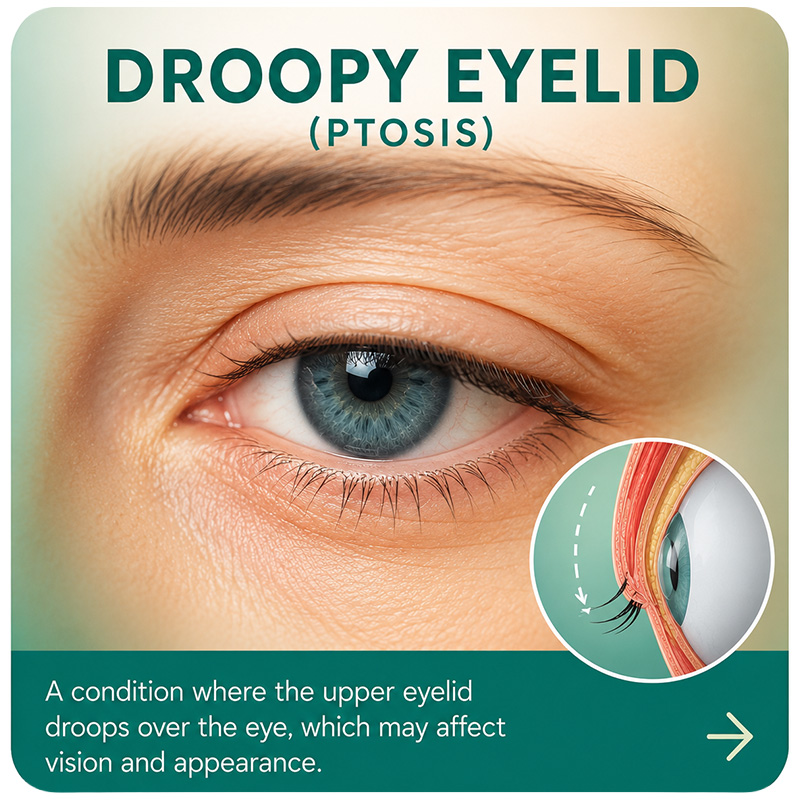
Droopy Eyelids
(Ptosis)
A condition where the upper eyelid droops over the eye, which may affect vision and appearance.
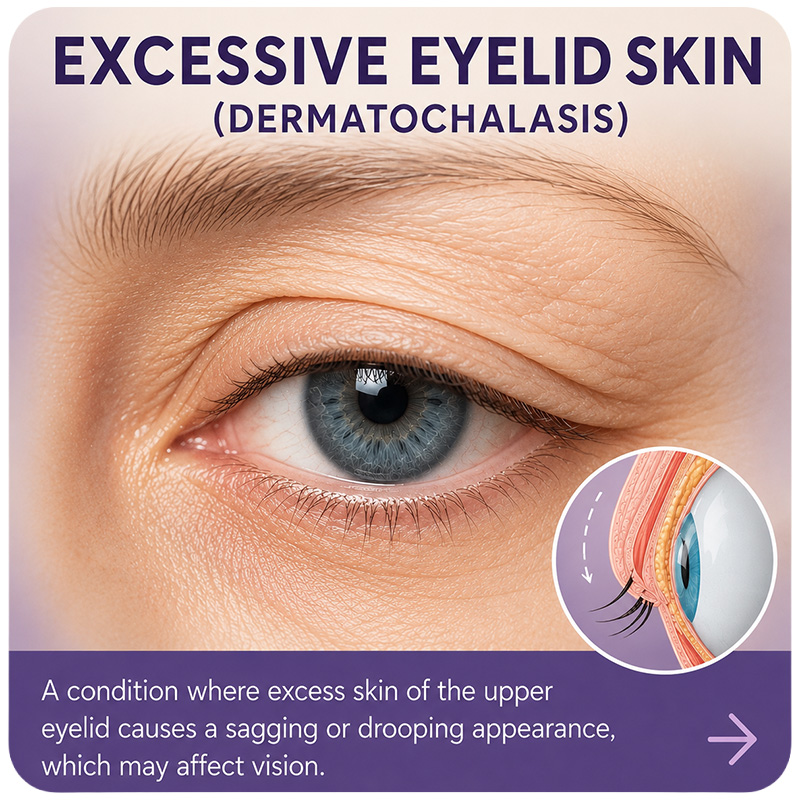
Excessive Eyelid Skin
(Dermatochalasis)
A condition where excess skin of the upper eyelid causes a sagging or drooping appearance, which may affect vision.
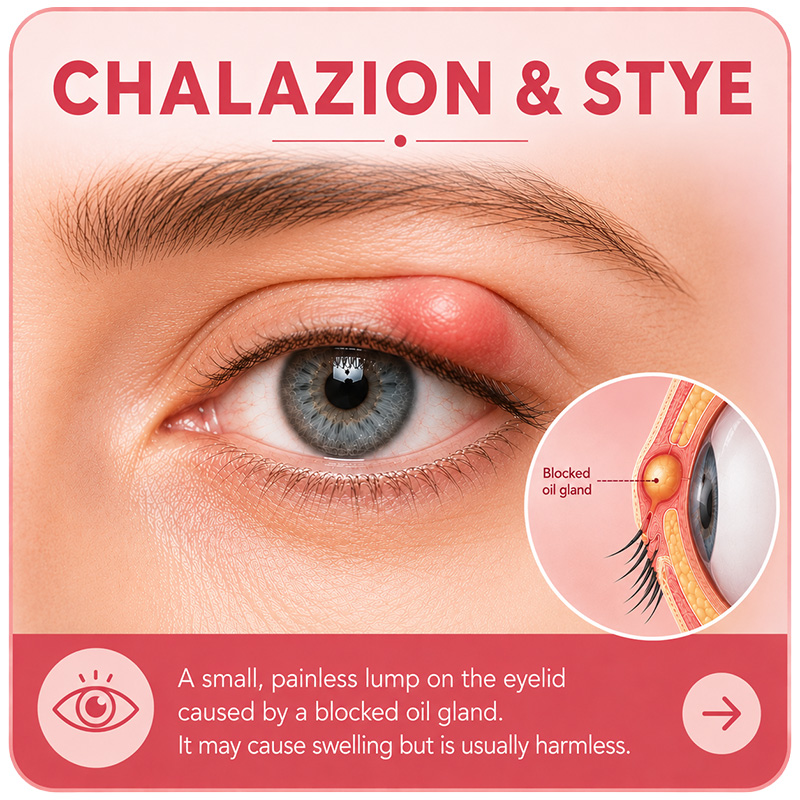
Chalazion & Stye
A small, painless lump on the eyelid caused by a blocked oil gland. It may cause swelling but is usually harmless.
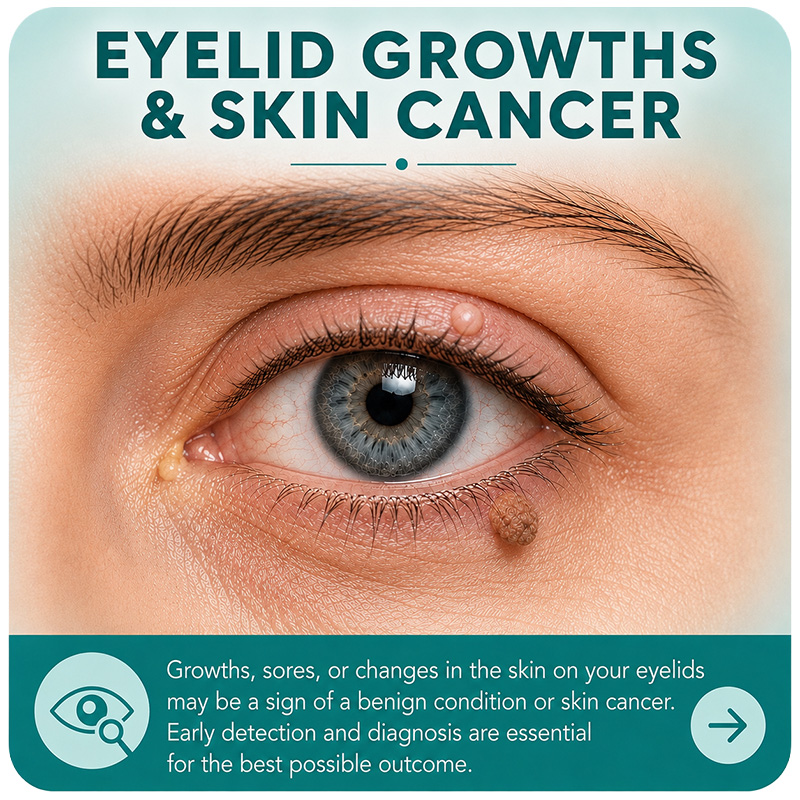
Eyelid Growth & Skin Cancer
Growths, sores, or changes in the skin on your eyelids may be a sign of a benign condition or skin cancer. Early detection and diagnosis are essential for the best possible outcome.
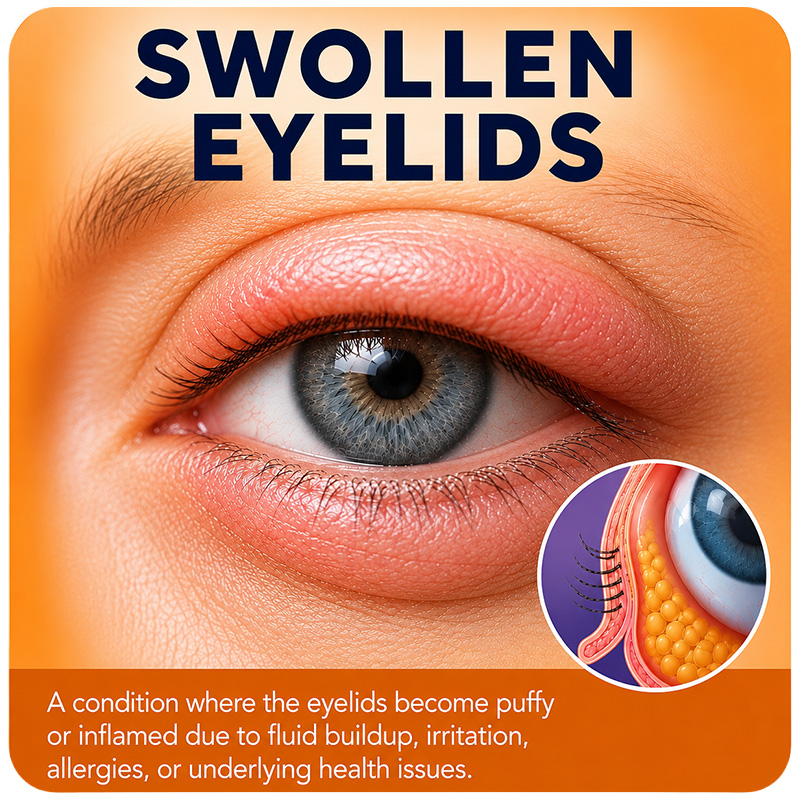
Swollen Eyelids
A condition where the eyelids become puffy or inflamed due to fluid buildup, irritation, allergies, or underlying health issues.
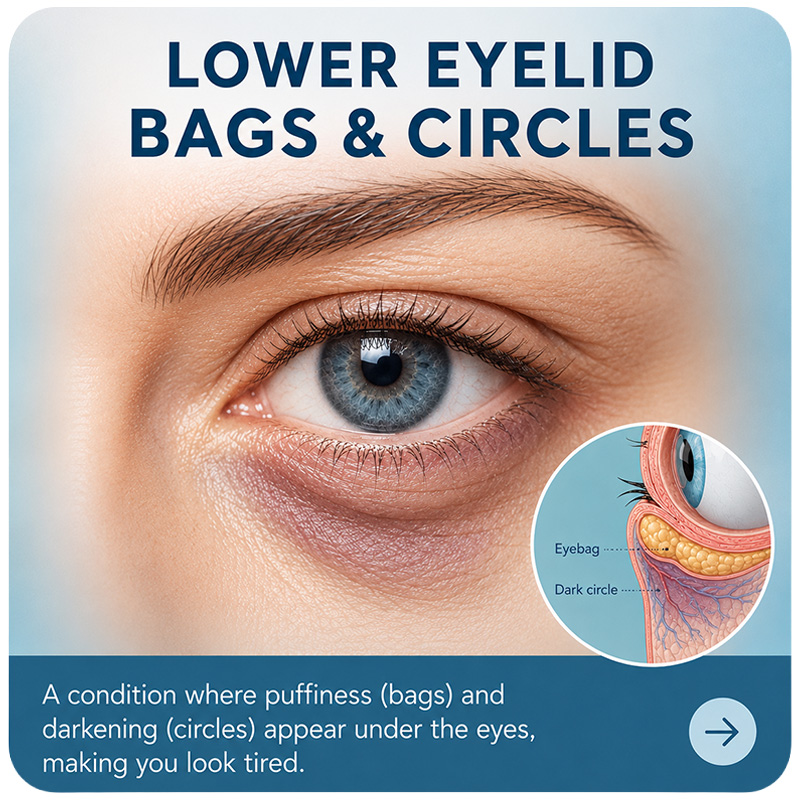
Lowere Eyelid Bags & Circles
A condition where puffiness (bags) and darkening (circles) appear under the eyes, making you look tired.
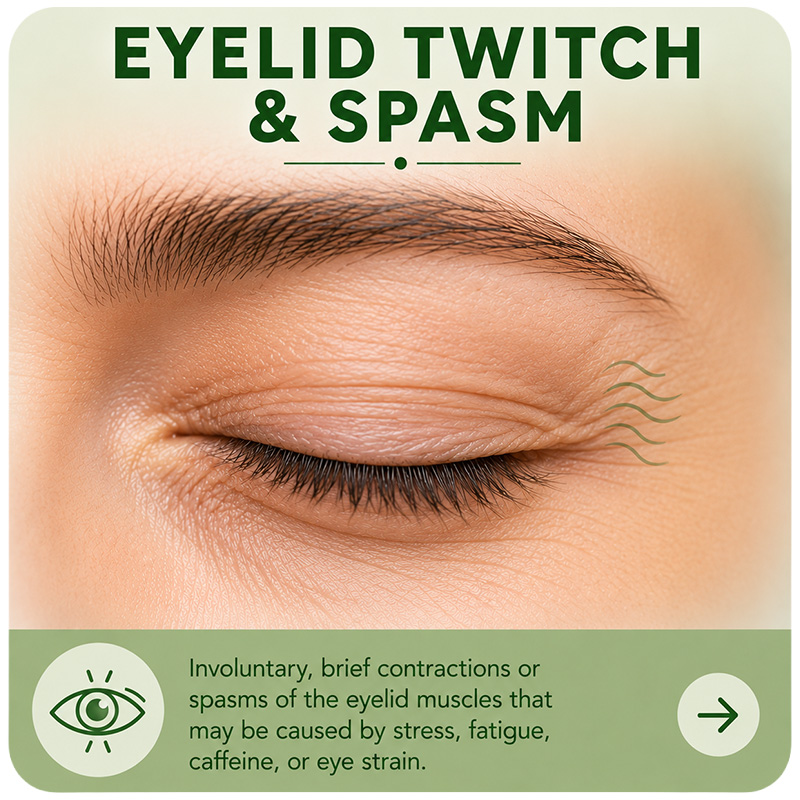
Eyelid Twitch & Spasm
Involuntary, brief contractions or spasms of the eyelid muscles that may be caused by stress, fatigue, caffeine, or eye strain.
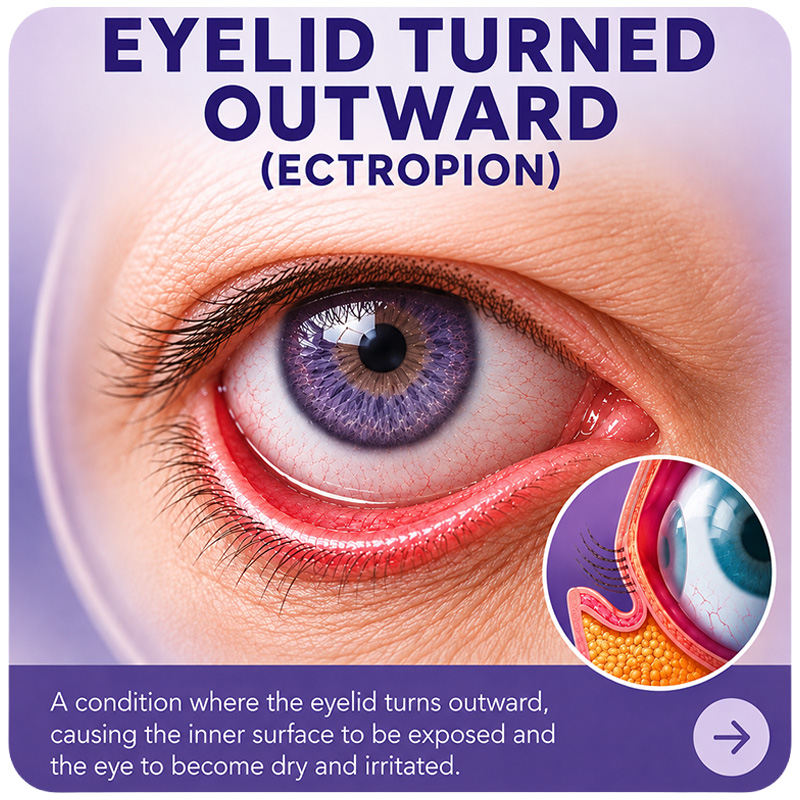
Eyelid Turned Outward (Ectropion)
A condition where the eyelid turns outward, causing the inner surface to be exposed and the eye to become dry and irritated.
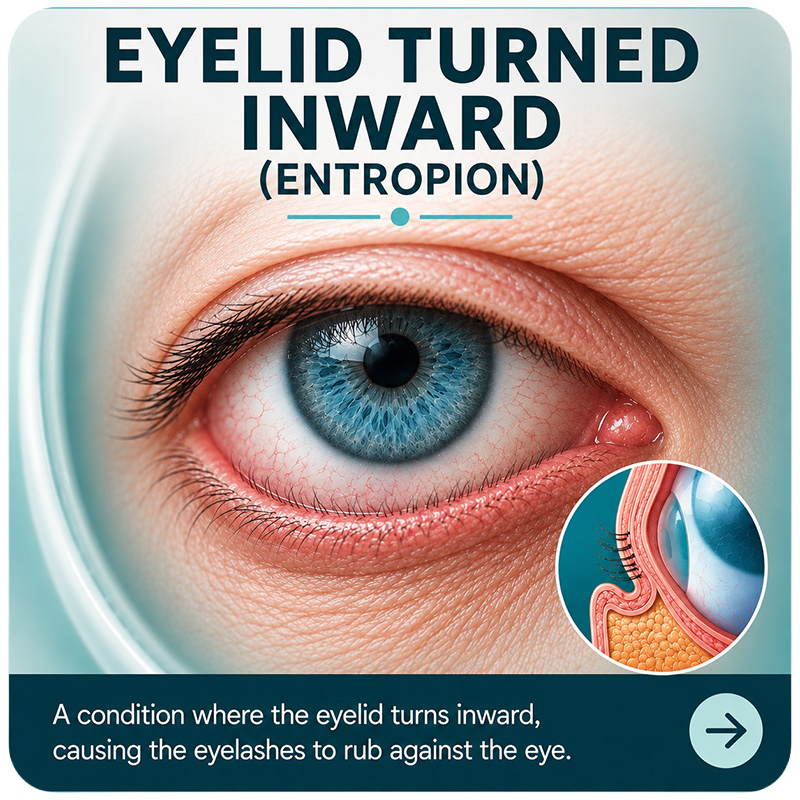
Eyelid Turned Inward (Entropion)
A condition where the eyelid turns inward, causing the eyelashes to rub against the eye.
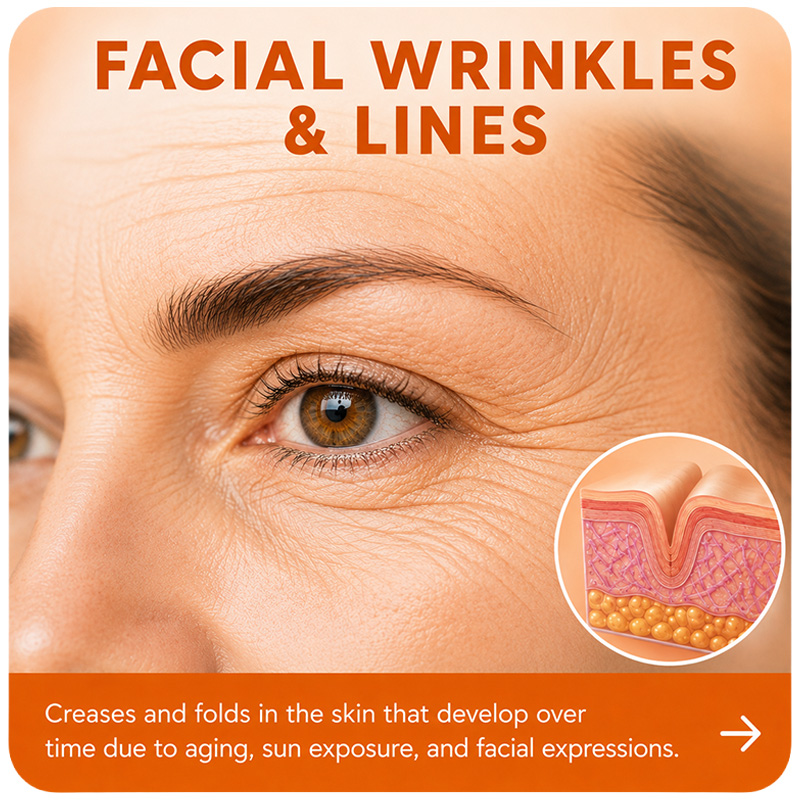
Facial Wrinkles & Lines
Creases and folds in the skin that develop over time due to aging, sun exposure, and facial expressions.
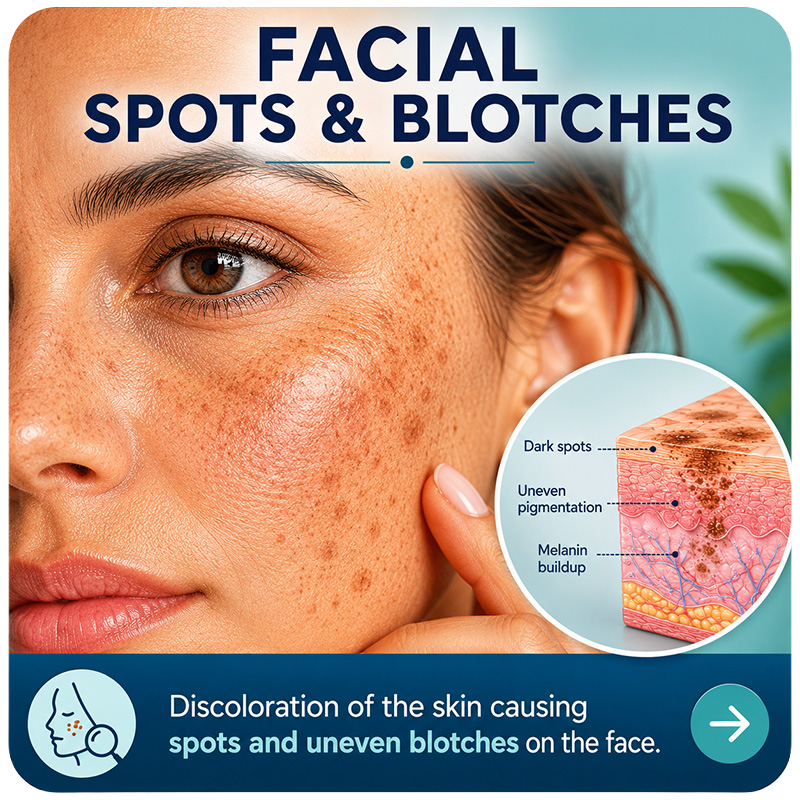
Facial Spots & Blotches
Discoloration of the skin causing spots and uneven blotches on the face.
Concerned About an Eyelid Growth?
While many eyelid bumps are harmless, some growths require prompt evaluation. Early diagnosis can help protect your vision and overall eye health.
Frequently Asked Questions
What are the most common eyelid problems?
Common eyelid conditions include styes, chalazia, drooping eyelids (ptosis), eyelid twitching, swollen eyelids, blepharitis, excess eyelid skin (dermatochalasis), entropion, ectropion, eyelid growths, and blocked tear ducts.
When should I see an eye doctor for an eyelid problem?
You should schedule an eye exam if you develop persistent eyelid swelling, redness, pain, a lump that doesn't improve, eyelid drooping, excessive tearing, vision changes, or an eyelid growth that changes in size, color, or appearance.
Can eyelid problems affect my vision?
Yes. Some conditions, such as ptosis, significant eyelid swelling, or excess eyelid skin, can partially block your vision. Others may cause blurred vision by affecting the tear film or irritating the surface of the eye.
Are eyelid bumps always styes?
No. While many eyelid bumps are styes or chalazia, other possibilities include cysts, benign growths, skin cancers, or inflammatory conditions. A proper examination is important if the bump persists or changes.
Are eyelid bumps always styes?
No. While many eyelid bumps are styes or chalazia, other possibilities include cysts, benign growths, skin cancers, or inflammatory conditions. A proper examination is important if the bump persists or changes.
Why are my eyelids swollen?
Swollen eyelids can result from allergies, infections, blocked oil glands, trauma, inflammation, or underlying medical conditions. The appropriate treatment depends on the underlying cause.
Why do my eyelids keep twitching?
Most eyelid twitching is harmless and is commonly triggered by stress, fatigue, caffeine, or eye strain. Persistent or severe twitching should be evaluated by an eye care professional.
Can droopy eyelids be treated?
Yes. Treatment depends on the cause and severity. Mild cases may simply be monitored, while more significant ptosis may be corrected with eyelid surgery to improve vision and appearance.
Are eyelid growths cancerous?
Most eyelid growths are benign, but some may represent skin cancer. Any new, enlarging, bleeding, or non-healing lesion should be evaluated promptly.
Can allergies cause eyelid problems?
Yes. Eye allergies commonly cause itching, swelling, redness, and puffy eyelids. Treating the underlying allergy often improves these symptoms.
What should I do if I develop a painful eyelid lump?
A painful lump may be a stye or another infection. Warm compresses can help in some cases, but persistent pain, worsening swelling, or vision changes should prompt an examination by an eye doctor.
Schedule an Eye Exam
If you're experiencing eyelid swelling, irritation, drooping, or a new eyelid lump, our experienced eye doctors can determine the cause and recommend the most effective treatment.