
Vitrectomy for Retinal Detachment Repair
Retina Surgery to Repair Retinal Detachment and Help Preserve Vision
Vitrectomy is one of the most common surgical procedures used to repair retinal detachment. During vitrectomy surgery, the vitreous gel inside the eye is removed so the retina can be repaired and reattached.
At NH Eye Associates, our retina specialists diagnose and treat retinal detachment using advanced retinal imaging and modern vitreoretinal surgical techniques. If you experience flashes, floaters, shadows, or sudden vision loss, prompt retina evaluation is important.
What Is Vitrectomy?
Vitrectomy is a microsurgical retinal procedure performed inside the eye.
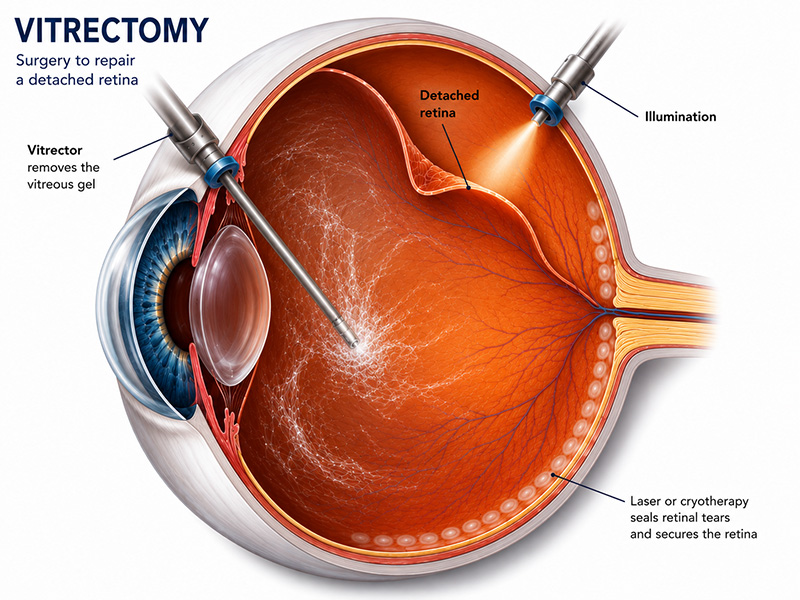
During surgery, the retina specialist removes the vitreous gel from the center of the eye. Removing the vitreous helps relieve traction on the retina and allows the surgeon to repair retinal tears and reattach the retina.
Vitrectomy is commonly used to treat:
- Retinal detachment
- Retinal tears
- Vitreous hemorrhage
- Macular holes
- Epiretinal membranes
- Diabetic retinal disease
For retinal detachment repair, vitrectomy helps:
- Flatten the retina
- Remove vitreous traction
- Repair retinal tears
- Restore retinal anatomy
Why Is Vitrectomy Needed for Retinal Detachment?
Retinal detachment often develops when:
- A retinal tear forms
- Fluid passes underneath the retina
- The retina separates from the back wall of the eye
The vitreous gel may continue pulling on the retina, worsening the detachment.
Vitrectomy helps by:
- Removing vitreous traction
- Allowing retinal reattachment
- Providing access for laser treatment
- Stabilizing the retina during healing
How Is Vitrectomy Surgery Performed?
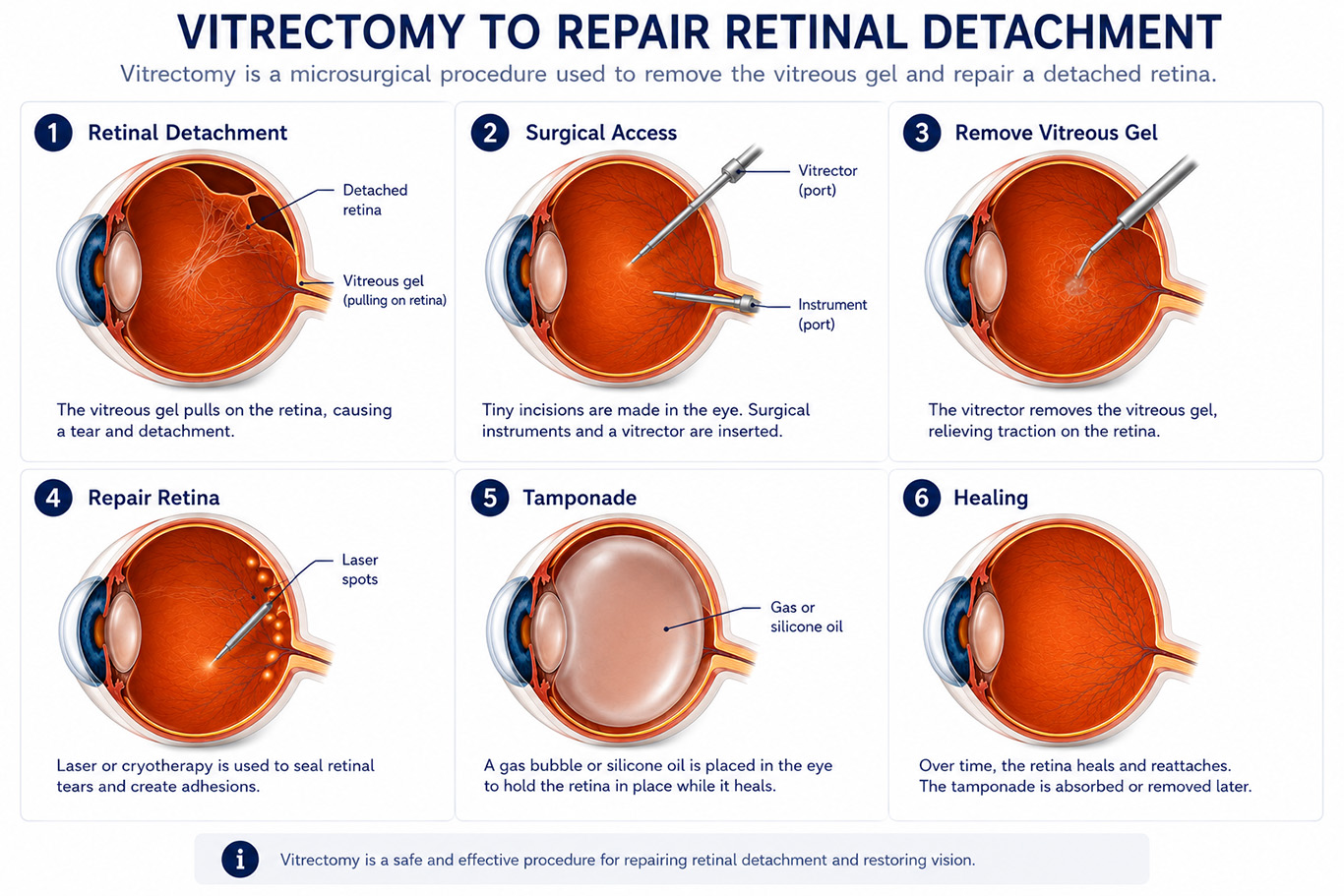
Vitrectomy surgery is performed using tiny microsurgical instruments inserted through very small openings in the eye.
During surgery, the retina specialist may:
- Remove the vitreous gel
- Drain fluid beneath the retina
- Repair retinal tears
- Remove scar tissue
- Apply laser treatment
- Place a gas bubble or silicone oil inside the eye
Modern vitrectomy surgery is minimally invasive and highly specialized.
What Is a Gas Bubble?
Many retinal detachment surgeries involve placement of a gas bubble inside the eye.
The gas bubble helps:
- Hold the retina in position
- Seal retinal tears
- Support retinal healing
- Over time, the gas bubble slowly dissolves and is naturally replaced by the eye’s own fluid.
Patients often describe the bubble as:
- A moving line
- A water level
- A dark circle floating in vision
Why Is Positioning Important After Surgery?
Some patients must maintain special head positioning after surgery.
Positioning helps:
- Keep the gas bubble against the retinal tear
- Support retinal healing
- Improve surgical success
Depending on the retinal detachment location, your retina specialist may recommend:
- Face-down positioning
- Side positioning
- Specific sleep positioning
This is one of the most commonly discussed topics online and on Reddit following retinal detachment surgery.
What Is Recovery Like After Vitrectomy?
Recovery varies depending on:
- Severity of the retinal detachment
- Whether the macula detached
- Surgical complexity
- Individual healing response
Patients may experience:
- Blurry vision initially
- Floaters or bubbles
- Mild irritation
- Light sensitivity
- Temporary visual distortion
Vision often improves gradually over weeks to months.
Can Vision Return After Retinal Detachment Surgery?
Visual recovery depends on several factors, including:
- How quickly treatment occurred
- Whether the macula detached
- Extent of retinal damage
- Overall retinal health
Earlier diagnosis and treatment generally lead to better visual outcomes.
Some patients recover excellent vision, while others may have permanent visual changes.
What Restrictions Are Needed After Surgery?
Depending on the surgery and gas bubble placement, restrictions may include:
- Avoiding heavy lifting
- Limiting strenuous activity
- Maintaining positioning instructions
- Avoiding air travel
- Using prescribed eye drops
Your retina specialist will review individualized recovery instructions carefully.
Why Can’t You Fly with a Gas Bubble?
Flying or traveling to high altitude can cause dangerous expansion of the gas bubble inside the eye.
This can lead to:
- Severe elevation of eye pressure
- Pain
- Vision loss
Patients with a gas bubble should avoid:
- Flying
- High mountain elevations
- Nitrous oxide anesthesia
until cleared by their retina specialist.
What Are the Risks of Vitrectomy?
As with any surgery, vitrectomy carries potential risks, including:
- Cataract progression
- Recurrent retinal detachment
- Infection
- Bleeding
- Elevated eye pressure
- Scar tissue formation
- Need for additional surgery
Your retina specialist will discuss the risks and benefits carefully before surgery.
How Successful Is Vitrectomy for Retinal Detachment?
Modern vitrectomy surgery has high success rates, especially when retinal detachment is diagnosed and treated early.
Success depends on:
- Detachment severity
- Duration of detachment
- Macular involvement
- Retinal health
- Scar tissue development
Some patients require more than one surgery.
When Should You Seek Urgent Retina Evaluation?
Seek prompt retina evaluation if you experience:
- Sudden flashes
- New floaters
- Curtain or shadow in vision
- Peripheral vision loss
- Sudden blurry vision
Early diagnosis is one of the best ways to improve visual outcomes and reduce the risk of permanent vision loss.
Retina Care at NH Eye Associates
At NH Eye Associates, our retina specialists provide:
- Comprehensive retinal evaluations
- Advanced retinal imaging
- Diagnosis of retinal tears and detachment
- Personalized surgical planning
- Postoperative retinal monitoring
Our goal is to diagnose retinal problems early and help preserve vision using modern retinal surgical techniques.
Frequently Asked Questions
What is vitrectomy surgery?
Is vitrectomy painful?
How long does vitrectomy surgery take?
What does the gas bubble look like after surgery?
Patients commonly describe a moving line or water level in vision.
Can I fly after retinal detachment surgery?
How long does the gas bubble last?
Will my vision improve after surgery?
Is face-down positioning always required?
Can retinal detachment come back after surgery?
Is vitrectomy successful?
Patient Testimonials
Schedule a Retina Evaluation
If you are experiencing flashes, floaters, shadows, or sudden changes in vision, prompt evaluation matters. Contact NH Eye Associates to schedule a comprehensive retina examination with our experienced retina specialists.