
Crossed Eyes (Strabismus)
Crossed eyes, medically known as strabismus, occur when the eyes do not point in the same direction at the same time. One eye may look straight ahead while the other turns inward, outward, upward, or downward. The eye turn may be constant or may only appear when a person is tired, sick, focusing at a particular distance, or looking in a certain direction.
Strabismus commonly begins during childhood, but it can also develop in adults. Early evaluation is especially important in children because persistent eye misalignment can interfere with normal visual development and lead to amblyopia, also called lazy eye. Treatment may include glasses, treatment for amblyopia, prisms, selected eye exercises, or eye-muscle surgery depending on the type and cause.
Have you noticed that your child’s eyes do not always appear aligned?
What Are Crossed Eyes?
Normally, both eyes point toward the same object and work together to create a single image. With strabismus, one eye is misaligned in relation to the other.
The misaligned eye may turn:
- Inward toward the nose
- Outward toward the ear
- Upward
- Downward
- Strabismus may affect the same eye consistently or alternate between the two eyes. Some eye turns are present all the time, while others are intermittent and may only become noticeable under certain conditions.
What Does Strabismus Look Like?
Signs of strabismus may include:
- One eye turning inward or outward
- One eye appearing higher or lower than the other
- Eyes that do not move together
- An eye turn that appears when the person is tired
- Closing or covering one eye in bright sunlight
- Tilting or turning the head to see
- Difficulty making eye contact
- Double vision
- Poor depth perception
- Frequently bumping into objects
- A difference in the position of the light reflection in each pupil
Strabismus may be obvious, but a small or intermittent eye turn can be difficult to recognize without a complete eye examination.
Types of Strabismus
Strabismus is classified according to the direction of the eye turn.
Esotropia
Esotropia occurs when one or both eyes turn inward toward the nose. It is the type most commonly described as being “cross-eyed.”
Esotropia may begin during infancy, develop later in childhood, or occur when a farsighted child focuses.
Exotropia
Exotropia occurs when one eye turns outward toward the ear.
Intermittent exotropia may become more noticeable when a child is tired, daydreaming, sick, or looking into the distance. Some children close one eye outdoors because bright light makes controlling the eye alignment more difficult.
Hypertropia
Hypertropia occurs when one eye is positioned higher than the other.
Hypotropia
Hypotropia occurs when one eye is positioned lower than the other.
Intermittent Strabismus
An intermittent eye turn is only present at certain times. The eyes may appear straight most of the day but become misaligned during fatigue, illness, stress, or prolonged visual concentration.
Constant Strabismus
Constant strabismus is present most or all of the time. Constant misalignment in a young child can increase the risk of amblyopia and reduced binocular vision.
What Causes Crossed Eyes?
Strabismus develops when the eyes do not coordinate or align normally. The problem may involve eye-muscle control, the nerves that control eye movement, focusing, vision development, or an underlying eye or neurological condition.
Possible causes and associated factors include:
- A family history of strabismus
- Significant farsightedness
- Unequal prescriptions between the eyes
- Poor vision in one eye
- Abnormal development of eye-muscle control
- Premature birth
- Developmental or neurological conditions
- Congenital eye abnormalities
- Cataracts or other conditions blocking vision
- Eye or head trauma
- Cranial nerve disorders
- Thyroid eye disease
- Stroke or other neurological disease in adults
In many children, no single underlying cause is identified.
What Is Accommodative Esotropia?
Accommodative esotropia is an inward eye turn associated with focusing, usually in children who are significantly farsighted.
A farsighted child must focus harder to see clearly. Focusing and inward eye movement are naturally connected, so excessive focusing can cause the eyes to cross.
Prescription glasses reduce the amount of focusing required and may straighten the eyes completely or partially. Children with accommodative esotropia generally need to wear their glasses consistently. Some children continue to have an inward turn even with glasses and may require additional treatment.
Are Crossed Eyes the Same as Lazy Eye?
No. Strabismus and amblyopia are related but different conditions.
Strabismus describes misalignment of the eyes.
Amblyopia, or lazy eye, describes reduced vision in an eye that did not develop normal visual ability during childhood.
When one eye is consistently misaligned, a young child’s brain may begin ignoring the image from that eye to prevent confusion or double vision. Over time, vision in the turned eye may not develop normally.
Amblyopia can also develop because of unequal prescriptions or an obstruction such as a cataract. Treatment may include glasses, patching, or atropine drops to encourage use of the weaker eye.
Can a Baby’s Eyes Cross Normally?
A newborn’s eyes may occasionally appear misaligned during the first few months as visual coordination develops. However, a constant eye turn at any age should be evaluated.
An intermittent eye turn that continues beyond early infancy, becomes more frequent, or is associated with abnormal visual behavior should also be examined by a pediatric eye doctor.
Parents should not assume a child will simply outgrow true strabismus.
Pseudostrabismus: When the Eyes Look Crossed but Are Straight
Some infants and young children appear to have crossed eyes even though their eyes are properly aligned. This is called pseudostrabismus.
A broad nasal bridge or folds of skin near the inner corners of the eyes can hide part of the white of the eye, creating the appearance of an inward turn. This appearance may become less noticeable as the child’s facial features develop.
Pseudostrabismus does not require treatment, but only an eye examination can reliably distinguish it from true strabismus. A child with pseudostrabismus can still develop real strabismus later.
Signs of Strabismus in Children
Children do not always complain about eye misalignment because the developing brain may suppress the image from the turned eye.
Possible signs include:
- One eye frequently drifting or turning
- An eye turn visible in photographs
- Closing one eye in bright light
- Tilting or turning the head
- Squinting
- Poor depth perception
- Difficulty catching a ball
- Frequently bumping into objects
- Avoiding reading or close work
- Difficulty maintaining attention during visual tasks
- Reduced vision in one eye
- An abnormal vision screening result
A child should receive a comprehensive eye examination when an eye turn is suspected, even if the child does not report symptoms.
Crossed Eyes in Adults
Adults may have strabismus that has been present since childhood or develop new eye misalignment later in life.
Adult strabismus may be associated with:
- A childhood eye turn that has returned or worsened
- Cranial nerve palsy
- Stroke
- Diabetes
- Thyroid eye disease
- Head or eye trauma
- Previous eye surgery
- Poor vision in one eye
- Neurological or muscular disorders
Adults are more likely than young children to experience double vision because their brains are already accustomed to using images from both eyes.
Adult strabismus treatment can improve alignment, double vision, visual function, social interaction, and quality of life. Age alone does not prevent a person from benefiting from strabismus surgery.
When Is New Strabismus an Emergency?
A longstanding, stable eye turn is usually not an emergency. However, sudden eye misalignment or new double vision in an adult requires prompt medical evaluation.
Seek urgent or emergency care when a new eye turn occurs with:
- Sudden double vision
- A severe or unusual headache
- Eyelid drooping
- Unequal pupils
- Weakness or numbness
- Facial drooping
- Difficulty speaking
- Dizziness or difficulty walking
- Loss of consciousness
- Eye or head trauma
- Severe eye pain
- Sudden vision loss
- Restricted eye movement
These symptoms may indicate a cranial nerve disorder, stroke, aneurysm, orbital disease, or another neurological condition.
How Is Strabismus Diagnosed?
A complete eye examination helps determine the type, size, frequency, and cause of the eye turn.
Testing may include:
Visual Acuity Testing
Vision is measured in each eye separately. Age-appropriate pictures, symbols, or letter charts may be used for children.
Eye Alignment Testing
The doctor observes how the eyes align at different distances and in different directions of gaze.
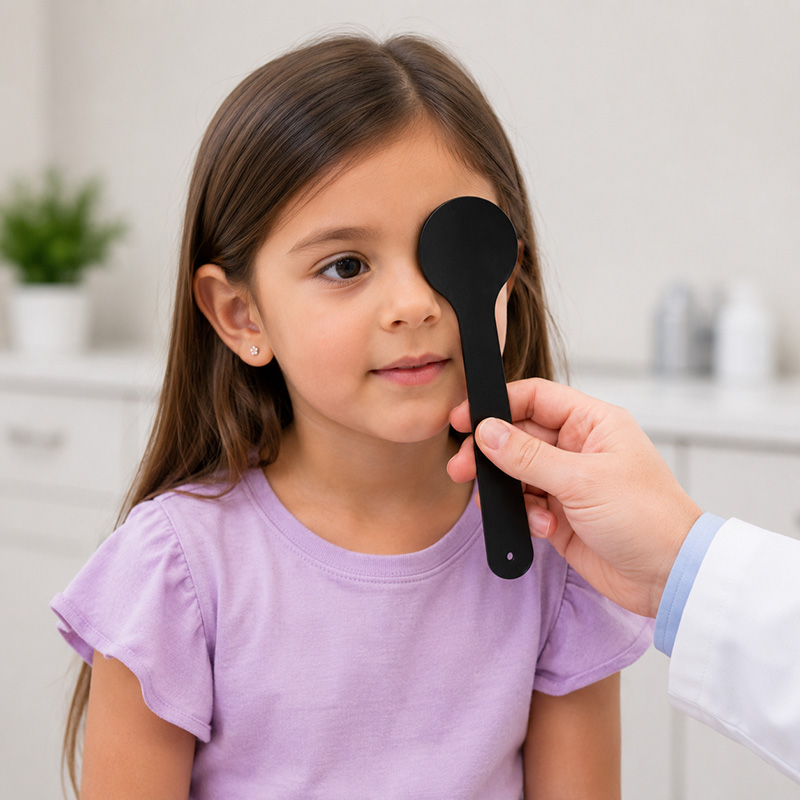
Cover Testing
During a cover test, one eye is covered at a time while the doctor watches for movement in the uncovered or newly uncovered eye. This helps detect both obvious and subtle misalignment.
Eye Movement Testing
The patient follows a target while the doctor evaluates how fully and smoothly each eye moves.
Refraction
Prescription testing determines whether nearsightedness, farsightedness, or astigmatism contributes to the eye turn.
Children often receive dilating drops to relax their focusing system and obtain an accurate prescription.
Binocular Vision and Depth Perception Testing
Testing may evaluate how well the eyes work together and whether the patient has functional depth perception.
Pupil and Neurological Testing
The pupils, eyelids, facial movement, and other neurological functions may be evaluated when nerve or neurological disease is suspected.
Dilated Eye Examination
The retina, optic nerves, lenses, and internal eye structures are examined to identify conditions that may be reducing vision or contributing to the eye turn.
Additional blood testing or imaging may be recommended when strabismus develops suddenly or appears to have a neurological, muscular, thyroid, or orbital cause.
How Are Crossed Eyes Treated?
Treatment depends on the patient’s age, the type and size of the eye turn, whether the misalignment is constant or intermittent, and whether amblyopia or another eye condition is present.
The goals are to:
- Improve eye alignment
- Protect and improve vision
- Treat amblyopia
- Improve binocular vision
- Reduce or eliminate double vision
- Improve depth perception when possible
- Reduce abnormal head positioning
- Improve comfort and quality of life
Common treatment options include glasses, amblyopia therapy, prisms, selected exercises, and eye-muscle surgery.
Prescription Glasses
Glasses may improve alignment when the eye turn is related to farsightedness or focusing. Some children’s eyes become completely straight while wearing glasses. Others experience improvement but retain a partial eye turn. Bifocal lenses may occasionally be prescribed when the inward turn is significantly greater during near work.
Treatment for Amblyopia
When one eye has reduced vision, treatment may be needed to encourage the brain to use the weaker eye.
Treatment may include:
- Prescription glasses
- Patching the stronger eye
- Atropine drops in the stronger eye
- Treatment of cataracts or other visual obstructions
Patching does not directly strengthen the eye muscles or straighten the eyes. Its primary purpose is to improve vision in the weaker eye.
Prism Glasses
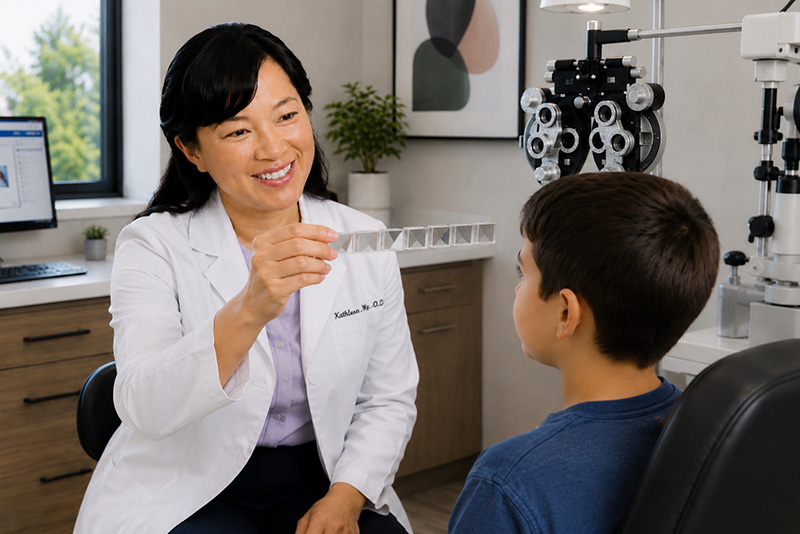
Prisms bend light and can move images closer together, helping some patients with double vision.
Prisms may be incorporated into prescription glasses or applied temporarily as a thin press-on material. They are most useful for certain smaller or stable eye deviations and do not permanently change the strength of the eye muscles.
Eye Exercises
Specific eye exercises may help selected binocular vision disorders, particularly certain problems involving convergence. Exercises are not appropriate for every type of strabismus and should only be prescribed after a complete evaluation. General internet exercises are unlikely to correct a significant constant eye turn.
Strabismus Surgery
Strabismus surgery changes the position or tension of one or more eye muscles to improve alignment.
During surgery, an eye muscle may be:
- Recessed to weaken its pulling effect
- Resected or shortened to strengthen its effect
- Repositioned to alter the direction of pull
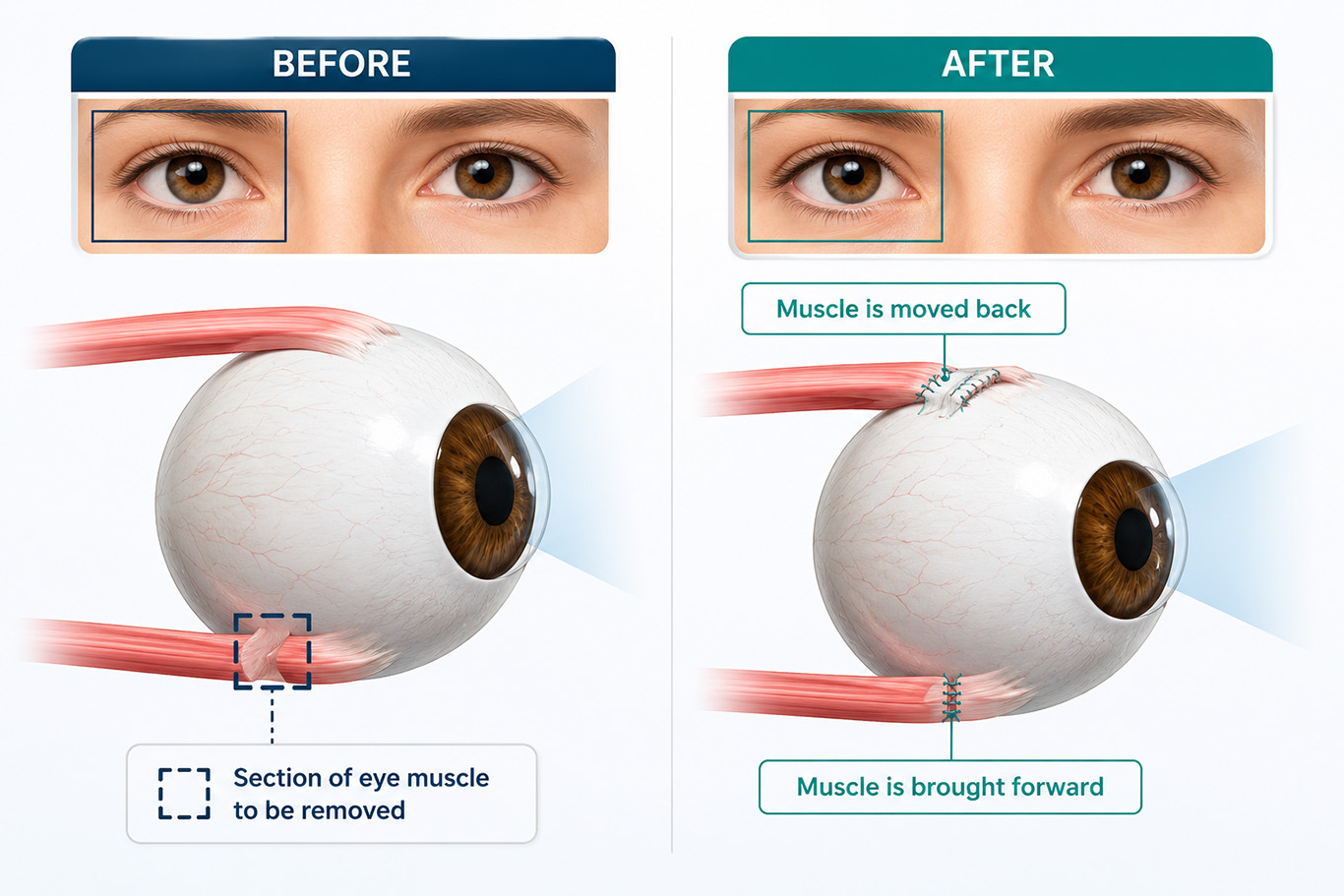
The eye itself is not removed from the socket. The surgery is performed on muscles attached to the outside of the eye.
Some patients need surgery on one eye, while others need muscles adjusted on both eyes. More than one procedure may be needed over a lifetime because eye alignment can change as a child grows or as underlying conditions evolve.
Does Strabismus Surgery Improve Vision?
Strabismus surgery primarily improves eye alignment. It does not automatically correct amblyopia or eliminate the need for glasses.
However, improved alignment may help the eyes work together more effectively, reduce double vision, improve head posture, expand the field of binocular vision, and support depth perception in selected patients.
Amblyopia treatment may be needed before or after surgery.
Is Strabismus Surgery Only Cosmetic?
No. Strabismus surgery is reconstructive treatment for abnormal eye alignment.
Potential functional benefits include:
- Reducing double vision
- Improving binocular vision
- Improving peripheral visual function
- Reducing an abnormal head position
- Improving eye contact
- Making communication and social interaction easier
- Improving confidence and quality of life
Adults and children can both benefit from treatment when it is medically appropriate.
Can Strabismus Return After Treatment?
Yes. Eye alignment may change over time because of growth, aging, changes in vision, neurological conditions, or the natural behavior of the underlying strabismus.
Some patients may eventually require:
- A prescription change
- Additional amblyopia treatment
- Prism correction
- Repeat eye-muscle surgery
Regular follow-up helps monitor vision and alignment.
When Should a Child Be Examined?
Schedule a pediatric eye examination when:
- An eye is constantly turned at any age
- An eye continues to drift after early infancy
- The eye turn is becoming more frequent
- The child closes one eye in sunlight
- The child tilts or turns the head to see
- Photographs repeatedly show abnormal eye alignment
- The child fails a vision screening
- There is a family history of strabismus or amblyopia
- Parents are uncertain whether the eyes are properly aligned
Early diagnosis provides the best opportunity to protect visual development.
Frequently Asked Questions About Crossed Eyes
What is the medical term for crossed eyes?
The medical term is strabismus, meaning the eyes do not point in the same direction at the same time.
What causes a child’s eyes to cross?
Possible causes include farsightedness, abnormal eye-muscle control, poor vision in one eye, family history, premature birth, developmental conditions, cataracts, or other eye disorders.
Will a child outgrow crossed eyes?
True strabismus should not be expected to disappear without evaluation. Some intermittent newborn misalignment resolves during early development, but persistent or constant crossing requires an eye examination.
At what age should crossed eyes be evaluated?
A constant eye turn should be evaluated at any age. An intermittent turn that persists beyond early infancy or becomes increasingly frequent should also be examined.
Are crossed eyes and lazy eye the same condition?
No. Crossed eyes describe misalignment. Lazy eye, or amblyopia, describes reduced visual development in one eye. Strabismus can cause amblyopia, but the conditions require different treatments.
Can glasses correct crossed eyes?
Yes, glasses can partially or completely correct certain eye turns, especially accommodative esotropia related to farsightedness.
Does patching straighten crossed eyes?
Patching primarily treats amblyopia by encouraging use of the weaker eye. It does not usually correct the underlying muscle imbalance by itself.
Can too much screen time cause crossed eyes?
Screen use does not usually cause true strabismus. Fatigue or prolonged focusing may make an existing intermittent eye turn more noticeable.
Why does my child’s eye turn when tired?
Control of an intermittent eye turn often becomes weaker during fatigue, illness, daydreaming, or visual inattention.
Why does my child close one eye in sunlight?
Children with intermittent exotropia often close one eye in bright light. This may help reduce visual confusion or discomfort when the eye drifts outward.
Can strabismus cause blurry vision?
Yes. Strabismus may occur with blurry vision from an uncorrected prescription or reduced vision from amblyopia. Adults may also experience double vision.
Can crossed eyes affect depth perception?
Yes. Accurate depth perception depends on both eyes being aligned and working together. Longstanding strabismus can reduce binocular depth perception.
Can crossed eyes cause headaches?
Some patients experience eye strain or headaches when trying to maintain alignment. Headaches can also have many unrelated causes.
Can strabismus develop suddenly in adults?
Yes. Sudden adult strabismus can result from a cranial nerve palsy, stroke, thyroid eye disease, trauma, neurological disease, or another condition and requires prompt evaluation.
Can adults have strabismus surgery?
Yes. Adults of any age may benefit from surgery when it is likely to improve alignment, double vision, visual function, or quality of life.
Is strabismus surgery painful?
Discomfort, redness, irritation, and a foreign-body sensation are common during early recovery. Severe or increasing pain should be reported to the surgeon.
Will glasses still be needed after surgery?
Possibly. Surgery adjusts eye-muscle alignment but does not eliminate nearsightedness, farsightedness, or astigmatism.
Can strabismus surgery need to be repeated?
Yes. Some patients require more than one surgery because alignment can change over time or because a complex deviation cannot be fully corrected with one procedure.
Can strabismus be prevented?
Most forms cannot be prevented. Early detection and treatment can reduce the risk of amblyopia and help preserve visual development.
When is crossed eye an emergency?
Seek urgent care for sudden eye misalignment accompanied by double vision, drooping eyelid, unequal pupils, severe headache, weakness, speech difficulty, trauma, severe eye pain, or vision loss.
Patient Testimonials
Schedule a Strabismus Evaluation
Crossed eyes are more than a change in appearance. Strabismus can affect visual development, depth perception, eye coordination, comfort, and quality of life.
The doctors at NH Eye Associates evaluate children and adults with suspected eye misalignment and can determine whether treatment with glasses, amblyopia therapy, prisms, monitoring, or eye-muscle surgery is appropriate. Early examination is especially important for children because they may not recognize or report reduced vision in one eye.