
Yellow Eyes
Yellow discoloration of the eye can have several different causes. When the entire white portion of both eyes becomes yellow, the change may be related to scleral icterus, a visible sign of elevated bilirubin in the body. When the discoloration appears as a small yellow spot or raised growth on one eye, it is more likely to originate from the surface of the eye, such as a pinguecula or pterygium.
Because these conditions can look similar to patients, an eye examination can help determine whether the yellow appearance is caused by an eye-surface change or whether additional medical evaluation is needed.
Have you noticed a yellow spot, bump, or discoloration on your eye?
What Causes Yellow Eyes?
The cause often depends on whether the yellow color affects the entire white portion of the eyes or appears only in one localized area.
Generalized Yellowing of Both Eyes
When most or all of the whites of both eyes appear yellow, the change may represent scleral icterus, which is usually caused by increased bilirubin in the bloodstream. This type of yellowing does not typically begin as an eye disease. It may be associated with conditions affecting the liver, gallbladder, bile ducts, pancreas, blood cells, or bilirubin metabolism.
A Localized Yellow Spot or Bump
A small yellow or cream-colored spot on the white of the eye is more commonly caused by an eye-surface condition such as:
- Pinguecula
- Pterygium
- Chronic dryness or irritation
- A conjunctival deposit or growth
Localized yellow spots are usually not related to jaundice, but they should still be examined if they are new, enlarging, irritated, or affecting vision.
Yellow Discharge or Crusting
Yellow material around the eyelids may be mucus or discharge rather than discoloration of the eye itself. This may occur with conjunctivitis, blepharitis, blocked eyelid glands, or another eye-surface condition.
What Is a Pinguecula?
A pinguecula is a small, raised, yellowish growth on the conjunctiva, the clear tissue covering the white portion of the eye.
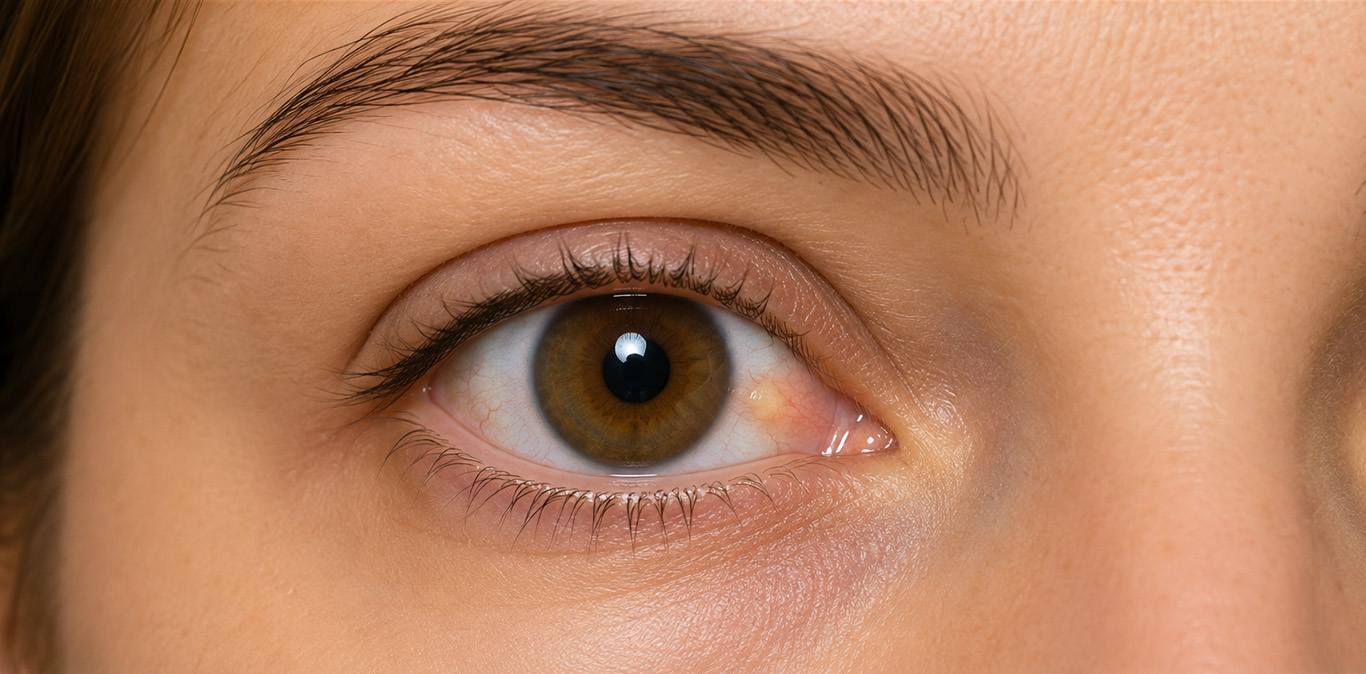
It most commonly forms near the edge of the cornea, usually on the side closest to the nose. A pinguecula does not grow onto the cornea itself.
Pingueculae are benign and are often associated with long-term exposure to:
- Ultraviolet light
- Wind
- Dust
- Dry air
- Smoke
- Chronic eye-surface irritation
Many people have no symptoms and first notice the growth while looking in a mirror or during an eye examination.
What Does a Pinguecula Look Like?
A pinguecula may appear as:
- A small yellow or cream-colored bump
- A slightly raised area on the white of the eye
- A thickened patch near the cornea
- A spot that occasionally becomes red or inflamed
- A growth affecting one eye or both eyes
Although a pinguecula may look unusual, it is not cancerous and does not usually threaten vision.
What Symptoms Can a Pinguecula Cause?
Many pingueculae cause no discomfort. When symptoms occur, they may include:
- Dryness
- Burning
- Redness
- Irritation
- A gritty or sandy sensation
- Excessive tearing
- A feeling that something is in the eye
- Contact lens discomfort
Symptoms may worsen in dry, windy, dusty, or sunny environments. A pinguecula can occasionally become inflamed, a condition known as pingueculitis. The area may then appear red, swollen, or more noticeable.
What Is a Pterygium?
A pterygium is a raised, fleshy growth of conjunctival tissue that extends onto the cornea.
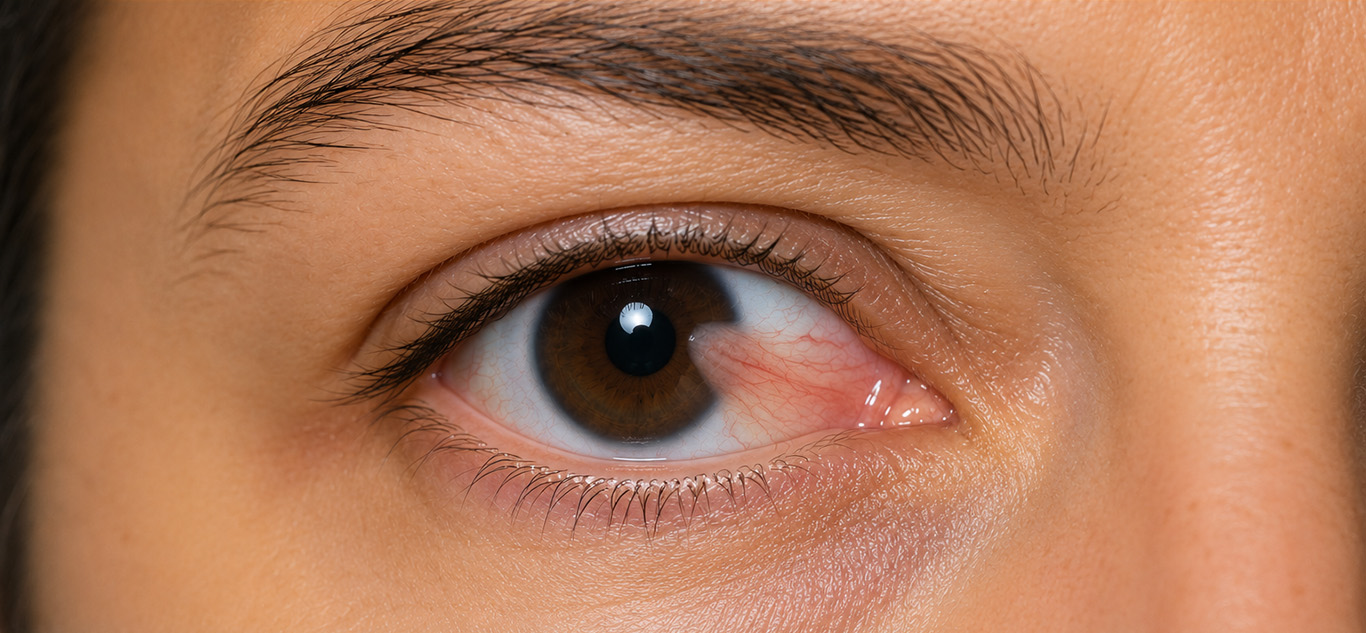
It often begins near the inner corner of the eye and grows toward the center of the cornea. Like a pinguecula, it is associated with prolonged exposure to ultraviolet light, wind, dust, and dry environments.
A pterygium is sometimes called “surfer’s eye,” although it can occur in anyone with significant outdoor or environmental exposure.
What Does a Pterygium Look Like?
A pterygium may appear as:
- A triangular or wedge-shaped growth
- A fleshy or pinkish area extending onto the cornea
- Visible blood vessels near the growth
- A raised area that becomes more noticeable when irritated
- A growth progressing from the white of the eye toward the pupil
The growth may remain small and stable or gradually enlarge over time.
Pinguecula vs. Pterygium
Pinguecula and pterygium are related eye-surface conditions, but they are not the same.
Pinguecula
- Appears as a small yellow or cream-colored bump
- Remains on the conjunctiva
- Does not grow onto the cornea
- Usually does not affect vision
- May cause dryness or irritation
Pterygium
- Often appears fleshy, pink, or triangular
- Extends from the conjunctiva onto the cornea
- May change the shape of the cornea
- Can cause astigmatism or blurry vision
- May gradually grow toward the visual axis
An eye examination can determine which condition is present and whether treatment is needed.
Can a Pterygium Affect Vision?
Yes. A small pterygium may not affect vision, but a larger or progressing growth can change the curvature of the cornea and cause astigmatism.
This may result in:
- Blurry vision
- Distorted vision
- Changes in an eyeglass prescription
- Difficulty wearing contact lenses
- Reduced vision if the growth approaches the center of the cornea
What Causes Pinguecula and Pterygium?
Ultraviolet Exposure
Long-term exposure to sunlight is one of the strongest risk factors. Ultraviolet radiation may cause gradual changes in the conjunctival tissue.
Wind and Dust
Wind, sand, dust, and airborne debris can repeatedly irritate the ocular surface.
Dry Environments
Low humidity and chronic tear evaporation may contribute to inflammation and tissue changes.
Outdoor Work or Recreation
People who spend significant time outdoors may be more likely to develop pinguecula or pterygium, particularly without eye protection.
Chronic Eye Irritation
Ongoing dryness, smoke exposure, or environmental irritation may make these growths more symptomatic.

How Are Pinguecula and Pterygium Diagnosed?
Visual Acuity Testing
Slit-Lamp Examination
Corneal Measurements
Photographic Monitoring

How Is a Pinguecula Treated?
Most pingueculae do not require removal.
Treatment focuses on reducing irritation and inflammation and may include:
- Preservative-free artificial tears
- Lubricating eye ointment
- Cold compresses
- UV-protective sunglasses
- Avoiding dust, wind, and smoke
- Short-term prescription anti-inflammatory drops when appropriate
- Treatment of associated dry eye
Surgical removal is uncommon but may be considered if the growth causes persistent discomfort, significant contact lens problems, repeated inflammation, or cosmetic concern.
How Is a Pterygium Treated?
Treatment depends on the size, symptoms, rate of growth, and effect on vision.
Observation
Small, stable pterygia that do not cause symptoms or affect vision may simply be monitored during routine eye examinations.
Lubricating Eye Drops
Artificial tears may relieve dryness, burning, and foreign-body sensation.
Anti-Inflammatory Treatment
Prescription drops may be recommended for short-term treatment when the growth becomes red or inflamed.
Pterygium Surgery
Surgery may be considered when the pterygium:
- Is growing toward the center of the cornea
- Causes significant astigmatism
- Reduces vision
- Causes persistent irritation
- Interferes with contact lens wear
- Restricts eye movement
- Causes significant cosmetic concern
Modern pterygium surgery commonly removes the abnormal tissue and covers the area with healthy conjunctival tissue to reduce the risk of recurrence.
Can Pinguecula Turn Into Pterygium?
A pinguecula does not always become a pterygium. However, both conditions are associated with similar environmental exposures and tissue changes. A growth that begins extending onto the cornea is more consistent with a pterygium and should be evaluated.
Can Pinguecula or Pterygium Be Prevented?
It may not be possible to prevent every growth, but protecting the eyes from environmental exposure may reduce risk and slow progression.
Helpful measures include:
- Wearing sunglasses that block UVA and UVB radiation
- Choosing wraparound sunglasses for additional side protection
- Wearing a brimmed hat outdoors
- Using protective eyewear in dusty or windy environments
- Treating chronic dry eye
- Using artificial tears when exposed to dry conditions
- Avoiding smoke and other irritants
UV protection is especially important for people who work or spend substantial time outdoors.
What Is Scleral Icterus?
Scleral icterus describes generalized yellow discoloration of the whites of the eyes caused by bilirubin buildup.
Unlike a pinguecula or pterygium, scleral icterus usually:
- Affects both eyes
- Involves a broad area rather than one small spot
- Appears flat rather than raised
- May occur with yellow skin, dark urine, pale stool, itching, fatigue, or abdominal symptoms
True scleral icterus requires medical evaluation because the underlying cause is usually systemic rather than an eye-surface disorder.
Medical Conditions Associated With Scleral Icterus
Generalized yellowing may be associated with:
- Hepatitis
- Fatty liver disease
- Alcohol-related liver disease
- Cirrhosis
- Medication-related liver injury
- Gallstones
- Bile-duct obstruction
- Gallbladder disease
- Pancreatic disease
- Increased breakdown of red blood cells
- Hemolytic anemia
- Certain infections
- Gilbert syndrome
- Other inherited bilirubin disorders
This list is not complete. Blood testing and medical evaluation are needed to determine the cause.
When Should Yellow Eyes Be Evaluated Urgently?
Contact a medical physician promptly if most or all of the whites of both eyes become yellow.
Seek emergency care if yellowing occurs with:
- Confusion
- Severe sleepiness
- Severe abdominal pain
- Persistent vomiting
- Fever or chills
- Fainting
- Difficulty breathing
- Vomiting blood
- Black or bloody stool
- Significant bleeding
- Rapid abdominal swelling
- Severe weakness
These symptoms may indicate a serious liver, gallbladder, pancreatic, blood, or systemic condition.
When Should I See an Eye Doctor?
Schedule an eye examination when:
- You notice a new yellow spot or bump
- A growth appears to be enlarging
- The area becomes red or painful
- You have persistent dryness or irritation
- You feel as though something is in the eye
- Your contact lenses have become uncomfortable
- Your vision has changed
- A growth is extending onto the cornea
- You are unsure whether the yellow appearance is localized or generalized
An eye doctor can determine whether the change is a pinguecula, pterygium, another eye-surface condition, or possible scleral icterus.
Frequently Asked Questions About Yellow Eyes
Why is there a yellow spot on the white of my eye?
A small, localized yellow spot is often a pinguecula, a benign growth of the conjunctiva. An eye examination can confirm the diagnosis and rule out other types of surface lesions.
What is the difference between yellow eyes and a yellow spot?
Generalized yellowing of both eyes may indicate scleral icterus caused by elevated bilirubin. A localized yellow spot is more likely to be a pinguecula or another eye-surface growth.
Is a pinguecula dangerous?
A pinguecula is usually harmless and does not threaten vision. It may become dry, irritated, or inflamed.
Can a pinguecula affect vision?
A typical pinguecula remains on the white portion of the eye and usually does not affect vision. If tissue grows onto the cornea, it may instead represent a pterygium.
What is the difference between a pinguecula and a pterygium?
A pinguecula remains on the conjunctiva, while a pterygium extends onto the cornea. A pterygium may change the shape of the cornea and affect vision.
Can a pterygium cause blurry vision?
Yes. A pterygium can cause astigmatism or distorted vision by changing the shape of the cornea. A large growth may also obstruct the visual axis.
Do pingueculae go away?
Pingueculae usually do not disappear completely. Lubricating drops and protection from sunlight and irritation can reduce symptoms and inflammation.
Does a pterygium always need surgery?
No. Small and stable pterygia may only require observation and lubrication. Surgery may be considered when the growth progresses, affects vision, or causes persistent symptoms.
Can eye drops remove a pinguecula or pterygium?
Eye drops can reduce dryness and inflammation but do not remove the growth. Surgical treatment is required if removal becomes necessary.
Can sun exposure cause yellow spots on the eyes?
Long-term ultraviolet exposure is an important risk factor for both pinguecula and pterygium. Wearing UV-blocking sunglasses may help reduce risk and progression.
Can contact lenses irritate a pinguecula?
Yes. A raised pinguecula may interfere with the edge of a contact lens or contribute to dryness and irritation. Lubrication, lens modification, or temporary discontinuation may help.
Can a pinguecula become cancerous?
A typical pinguecula is benign. Any growth that changes quickly, develops unusual pigmentation, becomes highly vascular, or has an irregular appearance should be examined.
Why is my pterygium red?
A pterygium may become inflamed from dryness, wind, dust, ultraviolet exposure, or other irritation. Lubricating or prescription anti-inflammatory drops may be recommended.
Can a pterygium grow back after surgery?
Yes. Recurrence is possible, although modern surgical techniques using a conjunctival graft help reduce the risk.
Why are the whites of both eyes yellow?
Generalized yellowing of both eyes may be scleral icterus caused by elevated bilirubin. This should be evaluated by a medical physician.
Can dehydration or lack of sleep cause yellow eyes?
Dehydration and fatigue may make the eyes look dull, dry, or irritated, but they do not usually cause true yellow discoloration of the entire sclera.
Can eating carrots cause yellow eyes?
Eating large amounts of beta-carotene may cause yellow-orange skin discoloration, but it generally does not turn the whites of the eyes yellow.
Who should I see for yellow eyes?
See an eye doctor for a localized yellow spot, bump, irritation, or growth. Contact a primary care physician or other medical provider promptly for generalized yellowing of both eyes.
Patient Testimonials
Schedule an Evaluation for a Yellow Spot or Eye-Surface Growth
A small yellow spot on the eye is often caused by a benign pinguecula, while a fleshy growth extending onto the cornea may be a pterygium. Both conditions can become irritated, and a pterygium may affect corneal shape or vision as it grows.
The doctors at NH Eye Associates can examine the ocular surface, confirm the diagnosis, monitor changes, and recommend treatment when needed. Generalized yellowing of the whites of both eyes may indicate scleral icterus and should be evaluated promptly by a medical physician.