
Cloudy Vision
Why Does My Vision Look Foggy or Hazy?
Cloudy vision means your sight looks foggy, dull, dim, or like you are looking through a dirty window. It may affect one eye or both eyes and can develop gradually or suddenly.
Cloudy vision is often associated with cataracts, but it can also be caused by dry eye, corneal swelling, glaucoma, inflammation, retinal disease, diabetes, or problems after eye surgery. Because many different eye conditions can cause cloudy vision, a comprehensive eye exam is the best way to identify the cause.
What Does Cloudy Vision Feel Like?
Patients often describe cloudy vision as:
- Vision that looks foggy or hazy
- Seeing through a film
- Dim or dull vision
- Washed-out colors
- Glare or halos around lights
- Difficulty seeing at night
- Trouble reading clearly
- A cloudy area in one part of vision
- Vision that does not improve fully with blinking
- A feeling that glasses are dirty even when clean
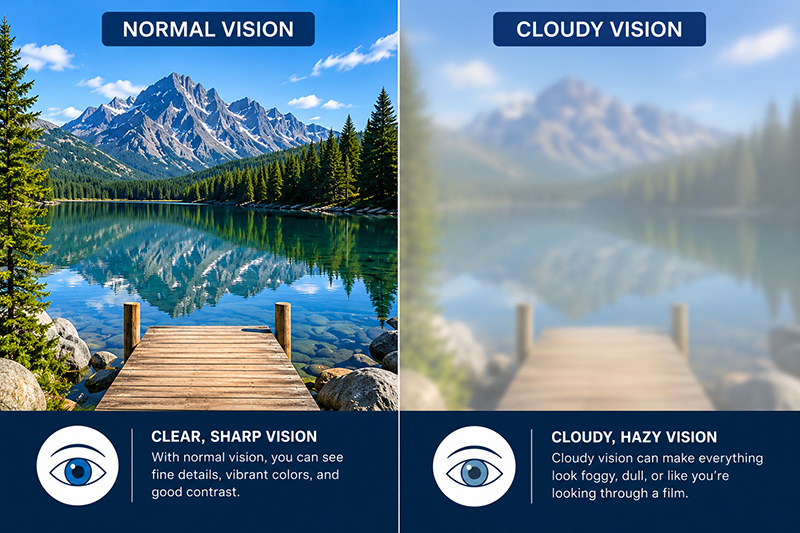
Cloudy Vision vs. Blurry Vision
Cloudy vision and blurry vision can feel similar, but they are not always the same. Blurry vision usually means objects look out of focus. Cloudy vision often feels like light is being blocked, scattered, or filtered before reaching the eye. For example, a glasses prescription change may cause blur, while cataracts often cause cloudy, dim, or glare-filled vision.
Common Causes of Cloudy Vision
Cataracts
Cataracts are one of the most common causes of cloudy vision, especially in adults over age 60. A cataract occurs when the natural lens inside the eye becomes cloudy. Symptoms may include cloudy vision, glare, halos, poor night vision, faded colors, and frequent prescription changes.
Dry Eye Disease
Dry eye can make vision look cloudy, smeared, or fluctuating. Symptoms may worsen with reading, screen use, wind, low humidity, or prolonged driving.
Corneal Swelling or Corneal Disease
The cornea is the clear front window of the eye. If it becomes swollen, scarred, infected, or irregular, vision may appear cloudy or hazy.
Possible causes include corneal edema, Fuchs’ dystrophy, keratitis, corneal scars, and contact lens overwear.
Glaucoma
Most glaucoma develops slowly and may not cause early symptoms. However, acute angle-closure glaucoma can cause sudden cloudy vision, halos, eye pain, headache, nausea, and redness. This is an emergency.
Eye Inflammation
Inflammation inside the eye, such as uveitis, can cause cloudy vision, eye pain, redness, floaters, and light sensitivity.
Diabetic Eye Disease
Diabetes can cause fluid leakage, bleeding, swelling, or cataract formation, all of which may make vision appear cloudy or blurred.
Retinal Conditions
Macular degeneration, retinal vein occlusion, vitreous hemorrhage, and retinal detachment may cause cloudy, blurred, dim, distorted, or missing areas of vision.
After Eye Surgery
Cloudy vision after cataract surgery may be caused by normal healing, dry eye, corneal swelling, inflammation, or posterior capsule opacification, sometimes called a secondary cataract.
When Is Cloudy Vision an Emergency?
Seek urgent care if cloudy vision is sudden or occurs with:
- Eye pain
- Redness
- Halos around lights
- Severe headache
- Nausea or vomiting
- Sudden vision loss
- Flashes or new floaters
- A curtain or shadow in vision
- Recent eye injury
- Light sensitivity
Sudden cloudy vision can be a sign of a serious eye condition that needs prompt treatment.
How Is Cloudy Vision Diagnosed?
A cloudy vision evaluation may include:
- Visual acuity testing
- Refraction
- Slit lamp examination
- Cataract evaluation
- Corneal examination
- Eye pressure measurement
- Dilated retinal exam
- OCT imaging
- Retinal photography
- Tear film evaluation
- Glare testing when appropriate
These tests help determine whether the cloudiness is coming from the tear film, cornea, lens, retina, optic nerve, or another part of the eye.
Treatment for Cloudy Vision
Treatment depends on the cause. Dry eye may improve with artificial tears, prescription drops, lid treatments, LipiFlow, IPL, or other advanced dry eye therapies.
Cataracts may require cataract surgery when cloudy vision begins interfering with reading, driving, night vision, or daily activities.
Corneal disease may require medication, specialty contact lenses, or referral for corneal care.
Inflammation may require prescription anti-inflammatory treatment.
Glaucoma, diabetic eye disease, and retinal conditions may require specialized treatment to protect vision.
Frequently Asked Questions
Why does my vision look cloudy?
Cloudy vision may be caused by cataracts, dry eye, corneal disease, inflammation, glaucoma, diabetes, retinal disease, or healing after eye surgery.
Is cloudy vision always cataracts?
No. Cataracts are common, but cloudy vision can also come from the cornea, tear film, retina, optic nerve, or inflammation inside the eye.
Why does my vision look cloudy in one eye?
Cloudy vision in one eye may be caused by a cataract, corneal problem, dry eye, retinal disease, glaucoma, inflammation, or a problem after surgery.
Can dry eyes cause cloudy vision?
Yes. Dry eye can cause cloudy, smeared, or fluctuating vision, especially during reading, screen use, driving, or exposure to wind and dry air.
Can dry eye cause double vision?
Yes. Dry eye can cause cloudy, smeared, or fluctuating vision, especially during reading, screen use, driving, or exposure to wind and dry air.
When should I worry about cloudy vision?
Cloudy vision is more concerning if it happens suddenly, affects one eye, causes pain, redness, halos, nausea, flashes, floaters, or sudden vision loss.
Can cloudy vision go away?
Some causes are temporary and treatable, such as dry eye or mild inflammation. Other causes, such as cataracts or retinal disease, may require medical or surgical treatment.
What is the difference between cloudy vision and blurry vision?
Blurry vision usually means things are out of focus. Cloudy vision often feels like looking through haze, fog, film, or a dirty window.
Can cloudy vision after cataract surgery be treated?
Yes. Depending on the cause, treatment may include time for healing, dry eye treatment, anti-inflammatory drops, or a quick laser procedure for posterior capsule opacification.
Patient Testimonials
Foggy or Cloudy Vision Should Be Checked
Cloudy vision may be caused by cataracts, dry eye, corneal disease, glaucoma, diabetes, or retinal conditions. The right treatment starts with the right diagnosis.
Schedule a comprehensive eye exam with NH Eye Associates today to find the cause of your cloudy vision and protect your sight.