
Facial Spots & Blotches
Uneven Skin Tone, Brown Spots & Facial Discoloration
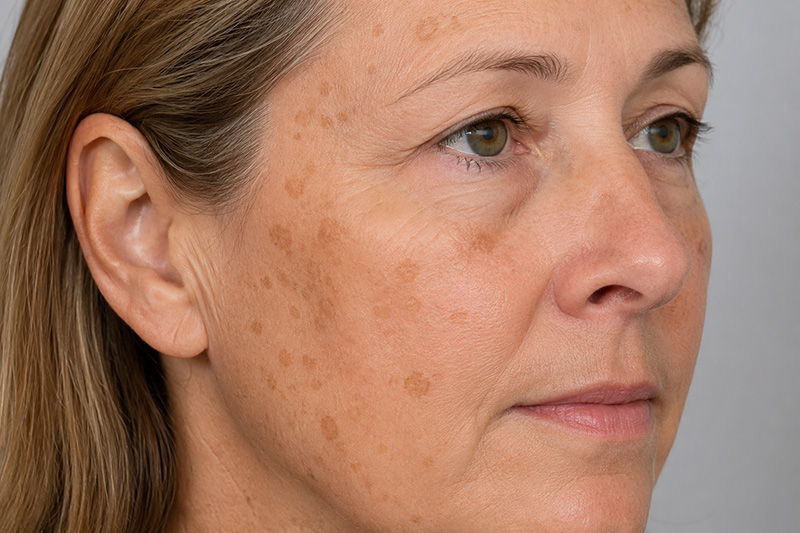
Facial spots and blotches are areas of skin that appear darker, lighter, redder, or otherwise different from the surrounding skin. They are extremely common and may develop from sun exposure, aging, inflammation, hormonal changes, skin conditions, or changes in pigment production.
Many facial spots are harmless. However, a new, changing, irregular, bleeding, or non-healing spot—especially around the eyelids—should be examined to make sure it is not a precancerous or cancerous skin lesion.
At NH Eye Associates, our ophthalmic and facial aesthetic specialists can evaluate changes involving the skin around the eyes and face and help determine whether treatment, observation, or further evaluation is appropriate.
Concerned about a new facial or eyelid spot?
What Do Facial Spots and Blotches Look Like?
Skin discoloration can vary significantly from person to person.
You may notice:
- Brown or tan spots
- Freckle-like pigmentation
- Larger areas of uneven brown pigmentation
- Red or pink patches
- Darkening beneath or around the eyes
- Areas that appear lighter than surrounding skin
- A blotchy or uneven complexion
- New growths or spots near the eyelids
Some people develop one isolated area while others notice multiple spots across the cheeks, forehead, temples, nose, or around the eyes.
Common Causes of Facial Spots and Blotches
Sun Damage
Years of ultraviolet exposure can cause pigment-producing cells in the skin to become increasingly active.
Over time, this can contribute to:
- Uneven pigmentation
- Freckles
- Brown spots
- Age spots
- Premature skin aging
- Increased risk of certain skin cancers
Areas that receive significant sun exposure—including the face, temples, forehead, and eyelids—are particularly susceptible.
Age Spots
Age spots, also called solar lentigines, are flat tan, brown, or darkened areas that commonly develop on sun-exposed skin. They become more common with age but are primarily associated with cumulative ultraviolet exposure rather than aging alone. Age spots themselves are generally harmless. However, a spot that begins changing in size, shape, border, color, or appearance should be examined.
Melasma
Melasma causes areas of increased pigmentation, most commonly affecting the face. It frequently produces symmetrical brown or gray-brown patches involving areas such as the:
- Cheeks
- Forehead
- Nose
- Upper lip
Melasma can be influenced by sunlight, hormones, genetics, and other factors. The American Academy of Dermatology describes melasma as producing blotchy patches or freckle-like areas that are darker than a person's natural skin tone.
Post-Inflammatory Hyperpigmentation
Skin sometimes produces additional pigment after inflammation or injury.
Darkened areas may remain after:
- Acne
- Skin irritation
- Rashes
- Scratches
- Insect bites
- Cosmetic procedures
- Other inflammatory skin conditions
These areas may gradually fade, although sun exposure can make pigmentation more persistent or noticeable.
Aging and Changes in Facial Pigmentation
Our skin naturally changes as we age. Years of sun exposure combined with changes in pigment production can create a complexion that appears less uniform than it did when we were younger.
Patients may simultaneously develop:
- Brown spots
- Uneven pigmentation
- Fine lines
- Wrinkles
- Crow's feet
- Skin laxity
- Under-eye changes
- Eyelid aging
For patients interested in improving multiple signs of facial aging, our specialists can discuss whether a customized facial rejuvenation approach may be appropriate.
Treatment Options for Facial Spots and Blotches
Facial pigmentation can often be improved, but treatment depends on the underlying cause, skin type, and location of the discoloration.
Common treatment options include:
- Prescription or medical-grade topical creams
- Sun protection and prevention strategies
- Chemical peels (in selected cases)
- Laser treatments for pigment reduction
- IPL (Intense Pulsed Light) therapy for sun spots, redness, and uneven pigmentation
- Treatment of underlying inflammation or skin conditions
- Removal or biopsy of suspicious lesions when needed
IPL (Intense Pulsed Light) Therapy
IPL is a non-invasive light-based treatment that can help improve the appearance of sun spots, freckles, redness, and uneven pigmentation. It works by delivering broad-spectrum light energy to targeted areas of the skin, which can help break up excess pigment and improve overall skin tone.
IPL may be considered for:
- Sun spots (solar lentigines)
- Freckles
- Mild to moderate facial redness
- Uneven pigmentation
- General skin tone improvement
Not all patients are candidates for IPL, and it is not appropriate for all types of pigmentation. A clinical evaluation is necessary to determine whether IPL is safe and effective for your skin type and condition.
Facial Spots Around the Eyes
Pigmented areas near the eye deserve particular attention because the eyelid skin is thin, delicate, and frequently exposed to the sun. Most eyelid spots and growths are benign. However, skin cancers can also occur on the eyelids.
Warning signs may include:
- A lesion that does not heal
- Repeated crusting
- Bleeding
- Ulceration
- Loss of eyelashes
- Distortion of the eyelid margin
- Progressive enlargement
- A noticeable change in appearance
These findings warrant professional evaluation.
When Should I Be Concerned About a Facial Spot?
Most pigment changes are not dangerous, but changes in appearance should not automatically be assumed to be cosmetic.
Arrange an evaluation for a spot that:
- Is new and continues to grow
- Changes noticeably in appearance
- Has an irregular border
- Contains several different colors
- Becomes unusually dark
- Repeatedly crusts or bleeds
- Develops an open sore
- Does not heal
- Causes loss of eyelashes
- Distorts the eyelid
Changes such as enlargement, irregular borders, unusual color variation, or bleeding should be evaluated because they can occasionally indicate skin cancer.
How Are Facial Spots Evaluated?
The first step is determining what is causing the discoloration.
Depending on the appearance and location of the area, your evaluation may include examination of:
- Color
- Shape
- Border
- Size
- Surface characteristics
- Symmetry
- Changes over time
- Surrounding eyelid or facial tissue
Your doctor may also ask when the spot appeared and whether it has changed. When a suspicious eyelid lesion is present, a biopsy may sometimes be necessary to establish the diagnosis.
Can Facial Spots and Blotches Be Treated?
Often, yes—but the appropriate treatment depends on the cause.
Treatment may focus on:
- Reducing excess pigmentation
- Improving uneven skin tone
- Protecting the skin from additional ultraviolet exposure
- Treating underlying inflammation
- Addressing facial aging
- Removing or biopsying suspicious lesions
Because several very different conditions can appear as facial discoloration, obtaining the correct diagnosis before pursuing treatment is important.
Sun Protection Matters
Daily sun protection is one of the most important ways to reduce additional sun-related pigmentation.
Patients should consider:
- Broad-spectrum sunscreen
- Sunglasses
- Wide-brimmed hats
- Avoiding unnecessary tanning
- Limiting intense midday sun exposure
Sun protection can also help prevent existing areas of hyperpigmentation from becoming darker.
Facial Spots vs. Facial Wrinkles
Pigmentation and wrinkles are separate aspects of facial aging, although they frequently develop together. Facial spots and blotches involve changes in skin color or pigment. Facial lines and wrinkles result primarily from repeated facial movement, changes in collagen and elastin, volume loss, sun damage, and aging. For many patients, evaluating the entire face rather than focusing on one isolated concern allows treatment to be better customized.
Why Choose NH Eye Associates?
Changes involving the face and eyelids can sometimes cross the boundary between cosmetic concerns and medical eye care. Our eye care and oculoplastic specialists understand the delicate anatomy surrounding the eyes and can evaluate both the appearance and health of the eyelids and surrounding tissues.
Patients choose NH Eye Associates for:
- Experienced ophthalmic care
- Board-certified physicians
- Oculoplastic and facial aesthetic expertise
- Comprehensive evaluation of eyelid abnormalities
- Multiple convenient New Hampshire locations
- More than 50 years of eye care in New Hampshire
Facial Spots & Blotches FAQs
What causes brown spots on my face?
Common causes include cumulative sun exposure, freckles, age spots, melasma, previous skin inflammation, and normal changes in pigmentation.
Are brown spots on the face caused by aging?
They become more common as people get older, but many so-called age spots are closely related to cumulative ultraviolet exposure.
Can sun exposure cause facial blotches?
Yes. Ultraviolet exposure stimulates pigment production and can contribute to freckles, uneven pigmentation, age spots, and worsening melasma.
What is melasma?
Melasma is a pigmentation disorder that causes darker patches or spots, usually on the face. It frequently affects the cheeks, forehead, nose, and upper lip.
Why are dark spots appearing around my eyes?
Possible causes include sun damage, freckles, post-inflammatory pigmentation, benign skin lesions, hormonal pigmentation changes, and age-related changes.
A new or changing eyelid lesion should be examined.
Are facial spots dangerous?
Most are benign. However, new or changing lesions can occasionally represent precancerous or cancerous conditions.
What facial spot changes should concern me?
Pay attention to a spot that grows, changes color, develops irregular borders, contains multiple colors, repeatedly bleeds, crusts, or does not heal.
Can skin cancer develop on the eyelid?
Yes. Skin cancers can develop on the eyelids and surrounding skin. A persistent sore, bleeding lesion, eyelash loss, ulceration, or distortion of the eyelid should be evaluated.
Should every facial spot be biopsied?
No. Many facial spots can be identified clinically and do not require biopsy. When a lesion appears suspicious or its diagnosis is uncertain, your physician may recommend biopsy.
Can facial spots and wrinkles be treated together?
Potentially. Patients concerned about sun damage, pigmentation, wrinkles, eyelid aging, or volume changes may benefit from a comprehensive facial aesthetic evaluation.
Patient Testimonials
Have You Noticed a New or Changing Spot?
Facial spots and blotches are areas of uneven skin color that may result from sun exposure, aging, melasma, inflammation, freckles, or other changes in skin pigmentation. Most are harmless, but a new or changing spot—particularly one that grows, bleeds, develops irregular borders, or does not heal—should be evaluated by a medical professional.
Most facial pigmentation is harmless, but a spot that is new, changing, bleeding, crusting, or not healing should not be ignored—especially when it involves the eyelid. Our specialists can evaluate the area and help determine whether it represents a benign cosmetic change or something requiring additional treatment.
Schedule an Evaluation at NH Eye Associates