
Facial Lines & Wrinkles
Facial lines and wrinkles are a natural part of aging, but sun exposure, repeated facial expressions, changes in collagen and elastin, genetics, and loss of facial volume can make them more noticeable over time.
At NH Eye Associates, our ophthalmic and facial aesthetic specialists evaluate facial aging with particular attention to the delicate skin around the eyes, forehead, brows, and upper face. Depending on your concerns and goals, treatment may include BOTOX® Cosmetic, dermal fillers such as JUVÉDERM®, skin rejuvenation treatments, or oculoplastic procedures designed to create a refreshed, natural appearance.
What Are Facial Lines and Wrinkles?
Facial lines and wrinkles are creases that develop as the skin becomes thinner and loses collagen, elastin, hydration, and underlying support with age. Some wrinkles appear primarily when the facial muscles move, while others remain visible even when the face is relaxed.
Common areas include:
- Forehead lines
- Frown lines between the eyebrows
- Crow's feet around the eyes
- Fine lines beneath the eyes
- Wrinkles around the mouth
- Lines around the cheeks and lower face
The type and location of your wrinkles can help determine which treatment may be most appropriate.
What Causes Facial Wrinkles?
Facial wrinkles typically develop from a combination of natural aging, repetitive muscle movement, sun exposure, genetics, and changes in facial volume.
Aging and Collagen Loss
As we age, the skin gradually produces less collagen and elastin. The skin becomes thinner, less elastic, and less able to recover from repeated movement.
Repeated Facial Expressions
Smiling, squinting, frowning, and raising the eyebrows repeatedly contract specific facial muscles.
Over time, these movements can produce lines such as:
- Forehead wrinkles
- Frown lines
- Crow's feet
- These are often referred to as dynamic wrinkles.
Sun Exposure
Ultraviolet radiation accelerates the breakdown of collagen and elastin and is one of the major contributors to premature skin aging. Regular sunscreen use and sun protection can help reduce additional photoaging.
Facial Volume Loss
Changes in the fat, bone, and soft tissues beneath the skin can cause facial contours to change with age. Volume loss may contribute to deeper folds, hollowing around the eyes, and a more tired appearance.
Genetics
Genetics influence skin thickness, facial structure, collagen production, and how early certain lines may become noticeable.
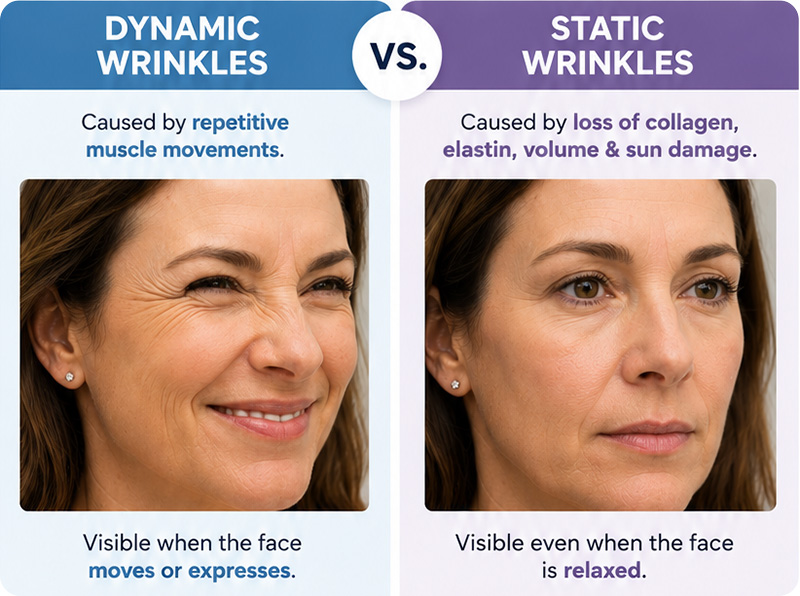
Dynamic Wrinkles vs. Static Wrinkles
Understanding the difference between dynamic and static wrinkles is important because they may respond to different treatments.
Dynamic Wrinkles
Dynamic wrinkles occur primarily during facial movement.
Examples include:
- Forehead lines when raising the eyebrows
- Crow's feet when smiling
- Frown lines when concentrating or squinting
Neuromodulators such as BOTOX® Cosmetic are commonly used to soften these lines by temporarily reducing the muscle activity responsible for their formation.
Static Wrinkles
Static wrinkles remain visible even when the face is relaxed.
They may develop because of:
- Collagen loss
- Sun damage
- Skin thinning
- Long-standing dynamic wrinkles
- Facial volume changes
Depending on their depth and location, treatment may involve skin rejuvenation, volume restoration, neuromodulators, or surgical procedures.
Common Facial Lines Around the Eyes
Because the skin surrounding the eyes is especially thin, signs of aging frequently appear in this area first.
Crow's Feet
Crow's feet are fine lines extending outward from the corners of the eyes. They are commonly caused by repeated contraction of the muscles surrounding the eyes when smiling or squinting. BOTOX® Cosmetic may help soften these lines while preserving natural facial expression.
Under-Eye Fine Lines
Fine lines beneath the eyes can develop from:
- Skin thinning
- Collagen loss
- Sun exposure
- Repetitive movement
- Loss of facial volume
Treatment depends on whether the primary issue involves skin texture, muscle activity, volume loss, or lower eyelid anatomy.
Forehead Lines
Horizontal forehead lines develop primarily from repeated contraction of the frontalis muscle when raising the eyebrows. BOTOX® can reduce muscle activity and soften these lines. Careful treatment is particularly important around the forehead and brows because these muscles can influence eyebrow position.
Frown Lines Between the Eyebrows
Vertical lines between the eyebrows are sometimes called glabellar lines or “11 lines.” They develop from repeated contraction of muscles used when:
- Frowning
- Squinting
- Concentrating
These lines are one of the most commonly treated areas with neuromodulators such as BOTOX®.
How Are Facial Lines and Wrinkles Treated?
The best treatment depends on whether the primary concern involves muscle movement, skin quality, volume loss, or excess skin.
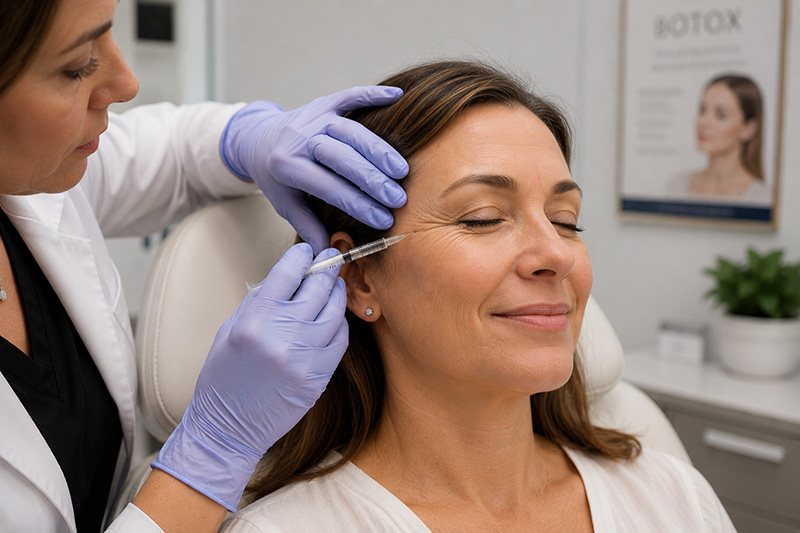
BOTOX® Cosmetic
BOTOX® is a neuromodulator used to temporarily reduce the activity of selected facial muscles.
It is commonly used for:
- Forehead lines
- Frown lines
- Crow's feet
The goal is typically not to eliminate facial movement entirely, but to create a smoother and more rested appearance while maintaining natural expression.
JUVÉDERM® Dermal Fillers
JUVÉDERM® is a collection of hyaluronic acid-based dermal fillers used to restore lost facial volume, smooth static wrinkles, and enhance facial contours.
Unlike BOTOX®, which targets muscle movement, JUVÉDERM® works by replacing volume beneath the skin to improve folds, hollows, and deeper lines.
It is commonly used for:
- Nasolabial folds (smile lines)
- Marionette lines around the mouth
- Cheek volume loss
- Under-eye hollowing (in select patients)
- Lip enhancement and definition
Because facial aging often involves both muscle activity and volume loss, JUVÉDERM® is frequently used in combination with BOTOX® for a more comprehensive rejuvenation approach.
Skin Rejuvenation
Certain fine lines are related more to skin texture and collagen loss than muscle activity. A personalized facial evaluation can determine whether treatments focused on improving skin quality may be appropriate.
Blepharoplasty
When an aged or tired appearance is caused by excess eyelid skin, prominent eyelid fat, or lower eyelid bags, surgical eyelid rejuvenation may be more effective than wrinkle treatments alone. Blepharoplasty can address structural changes that BOTOX® cannot correct.
Brow Rejuvenation
Drooping or descent of the eyebrows can contribute to:
- Upper eyelid heaviness
- Forehead lines
- A tired appearance
- Excessive forehead muscle use
An oculoplastic evaluation can help distinguish true eyelid skin excess from brow descent.
Can BOTOX® Prevent Wrinkles From Getting Deeper?
BOTOX® reduces the repeated muscle contractions responsible for many dynamic wrinkles. By decreasing repetitive folding of the skin, regular treatment may help prevent certain expression lines from becoming increasingly etched into the skin over time. Treatment plans should be individualized based on facial anatomy, muscle strength, age, and aesthetic goals.
Will BOTOX® Make My Face Look Frozen?
Properly performed BOTOX® treatment is designed to soften excessive muscle activity rather than eliminate normal facial expression. The amount and location of treatment can be customized to provide subtle results. A detailed understanding of the muscles surrounding the eyes and brows is particularly important because treatment in this region can influence eyelid and eyebrow position.
Why Choose an Oculoplastic Specialist for Facial Rejuvenation?
The eyes and surrounding tissues have some of the most complex anatomy in the face. An oculoplastic specialist has advanced training in:
- Eyelid anatomy
- Eyebrow position
- Muscles surrounding the eyes
- Facial aging
- Eyelid surgery
- Functional and cosmetic eyelid conditions
This perspective can be particularly valuable when determining whether an appearance concern is caused by wrinkles, eyelid skin, eyelid fat, brow position, or a combination of these factors.
Natural-Looking Facial Rejuvenation
Many patients are not looking to dramatically change their appearance.
They simply want to:
- Look less tired
- Soften prominent wrinkles
- Reduce crow's feet
- Improve forehead lines
- Refresh the appearance around the eyes
- Maintain normal facial expression
Our approach emphasizes facial balance and natural-looking results.
When Should I Consider Treatment for Facial Wrinkles?
There is no specific age when cosmetic treatment should begin. You may consider an evaluation when facial lines or aging changes begin to bother you or when you would like to better understand your treatment options.
Patients may seek consultation for:
- Early expression lines
- Increasing forehead wrinkles
- Crow's feet
- Deep frown lines
- Eyelid skin changes
- Under-eye bags
- A chronically tired appearance
- Combination facial aging concerns
What Happens During a Facial Aesthetics Consultation?
During your consultation, your provider may evaluate:
- Facial muscle movement
- Forehead lines
- Brow position
- Crow's feet
- Upper and lower eyelids
- Skin quality
- Facial symmetry
- Areas of volume loss
- Your cosmetic goals
Your provider can then discuss whether injectable treatment, skin rejuvenation, eyelid surgery, or a combination of approaches may be appropriate.
Frequently Asked Questions About Facial Lines and Wrinkles
What is the main cause of facial wrinkles?
Facial wrinkles develop from a combination of aging, collagen loss, repeated muscle movements, sun exposure, genetics, and changes in facial volume.
What is the difference between wrinkles and fine lines?
Fine lines are typically shallower creases in the skin, while wrinkles tend to be deeper and more established. Fine lines may gradually become deeper with age and repeated facial movement.
What wrinkles does BOTOX® treat?
BOTOX® is commonly used for dynamic wrinkles caused by muscle movement, including forehead lines, frown lines between the eyebrows, and crow's feet.
Can BOTOX® remove all wrinkles?
No. BOTOX® primarily treats wrinkles caused by muscle activity. Static wrinkles caused by skin aging, sun damage, volume loss, or structural changes may require additional treatments.
How long does BOTOX® last?
Results are temporary. The duration varies by patient, treatment area, dose, and individual muscle activity. Your provider will discuss an appropriate maintenance schedule based on your response to treatment.
Can eyelid surgery eliminate crow's feet?
Blepharoplasty primarily removes or repositions excess eyelid skin and fat. It is not designed specifically to eliminate crow's feet, which are primarily caused by muscle activity and skin aging.
BOTOX® may be more appropriate for crow's feet.
Are under-eye bags caused by wrinkles?
Not usually. Under-eye bags commonly result from changes in the fat and supporting tissues of the lower eyelid.
Fine lines may occur at the same time, but prominent lower eyelid bags may require a different treatment such as lower eyelid blepharoplasty.
Why do my eyes look tired even when I am rested?
A tired appearance can result from excess upper eyelid skin, lower eyelid bags, brow descent, facial volume loss, under-eye hollowing, or wrinkles around the eyes.
An examination can determine which changes are contributing most to your appearance.
What age should I start treating wrinkles?
There is no ideal age. Treatment is based on your anatomy, skin changes, facial movement, concerns, and aesthetic goals rather than age alone.
Can men receive treatment for facial wrinkles?
Yes. Men commonly seek treatment for forehead lines, frown lines, crow's feet, eyelid aging, and other facial changes.
Treatment can be tailored to maintain natural masculine facial characteristics.
What is the best treatment for facial lines and wrinkles?
The best treatment depends on the cause of the wrinkles. Dynamic wrinkles caused by facial muscle movement, including forehead lines, frown lines, and crow's feet, are commonly treated with neuromodulators such as BOTOX®. Static wrinkles and volume loss may be treated with dermal fillers such as JUVÉDERM®, while skin laxity or excess eyelid skin may require surgical or skin-based treatments. An evaluation can determine the most appropriate approach.
Patient Testimonials
Schedule a Facial Aesthetics Consultation
Facial wrinkles, eyelid changes, and brow position often occur together. Determining the underlying cause is the first step toward choosing the right treatment. Our team can evaluate your facial anatomy and discuss options ranging from BOTOX® Cosmetic to dermal fillers, eyelid and facial rejuvenation procedures, with an emphasis on natural-looking results.
Schedule a consultation with NH Eye Associates.