
Entropion
Inward-Turning Eyelid
Entropion is an eyelid condition in which the edge of the eyelid turns inward toward the eye. When this happens, the eyelashes and eyelid skin may repeatedly rub against the surface of the eye, causing irritation, tearing, redness, light sensitivity, and discomfort.
Entropion most commonly affects the lower eyelid and is more frequent in older adults. Although lubricating drops may provide temporary relief, persistent entropion should be evaluated because ongoing eyelash contact can injure the cornea and potentially threaten vision.
Are your eyelashes rubbing against your eye? Our ophthalmologists can evaluate your eyelid position, protect the surface of your eye, and recommend the most appropriate treatment.
What Is Entropion?
Entropion occurs when an eyelid turns inward rather than resting normally against the eye. The inward rotation causes the eyelashes and outer eyelid skin to rub against the conjunctiva and cornea.
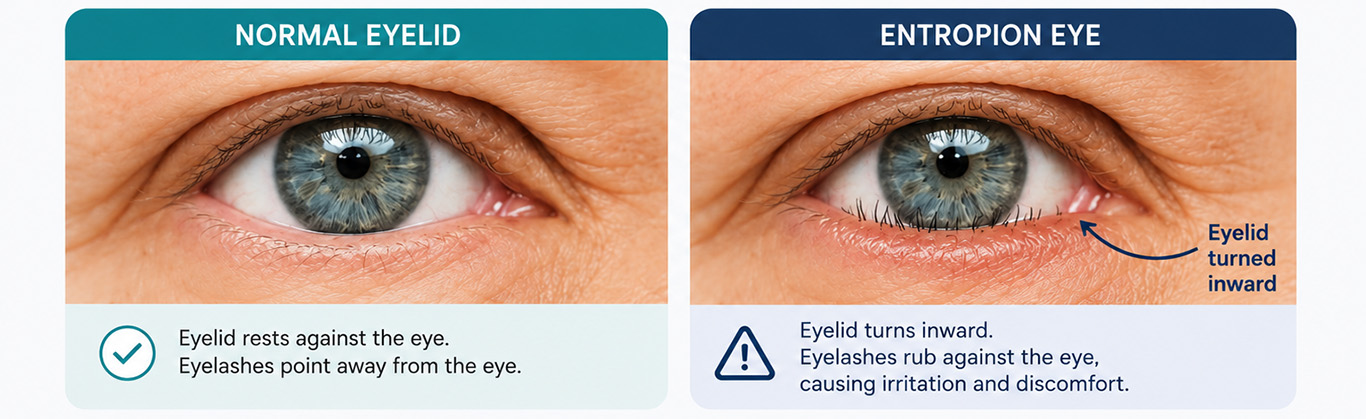
The cornea is the clear front surface of the eye. Repeated rubbing can cause significant irritation and may eventually lead to:
- Corneal abrasions
- Persistent inflammation
- Eye infections
- Corneal ulcers
- Corneal scarring
- Reduced vision
Entropion may affect one or both eyes. It can be constant or may occur primarily when a person blinks, squeezes the eyelids, or closes the eyes tightly. The lower eyelid is affected most often, particularly when age-related changes weaken the tissues that support the eyelid.
What Causes Entropion?
Several conditions can cause an eyelid to rotate inward.
Age-Related Eyelid Changes
The most common form is involutional entropion, which develops as the muscles, tendons, and connective tissues supporting the lower eyelid weaken or stretch with age. These changes may allow the eyelid to become loose and rotate inward.
Eyelid Muscle Spasms
Eye irritation, inflammation, or forceful eyelid squeezing may cause the muscles around the eye to contract. These contractions can pull an already weakened eyelid inward. This is sometimes called spastic entropion.
Scarring Inside the Eyelid
Scar tissue affecting the inner surface of the eyelid can shorten or distort the eyelid and pull it inward. This is known as cicatricial entropion.
Scarring may develop following:
- Previous eyelid surgery
- Trauma or burns
- Chronic eye inflammation
- Certain infections
- Autoimmune or inflammatory conditions
Congenital Entropion
Rarely, a child may be born with an inward-turning eyelid. A pediatric eye evaluation can help distinguish true congenital entropion from other conditions that cause eyelashes to touch the eye.
Why Should Entropion Be Treated?
Entropion is more than a cosmetic eyelid concern. Each blink may drag the eyelashes across the eye’s delicate surface. Without treatment, continued friction may damage the corneal epithelium, which is the cornea’s protective outer layer. Open areas on the cornea can become infected or develop into corneal ulcers. More advanced damage may lead to permanent scarring and vision loss.
Treatment can:
- Reduce irritation and pain
- Stop the eyelashes from rubbing the eye
- Protect the cornea
- Improve tearing and redness
- Restore a more natural eyelid position
- Reduce the risk of infection and vision loss
How Is Entropion Diagnosed?
Entropion can usually be diagnosed during a comprehensive eye and eyelid examination.
Your ophthalmologist may evaluate:
- The position of the upper and lower eyelids
- Whether the eyelashes touch the eye
- Eyelid tightness and horizontal looseness
- The strength of the muscles supporting the eyelid
- Eyelid movement during blinking and forceful closure
- The inner surface of the eyelid
- The cornea and tear film
- Evidence of abrasions, inflammation, infection, or scarring
Fluorescein dye may be placed in the eye to highlight areas of corneal injury. The eye is then examined under magnification using a slit-lamp microscope.
Your doctor will also determine whether the entropion is caused by age-related tissue changes, muscle spasms, scarring, previous surgery, trauma, or another condition.
How Is Entropion Treated?
Treatment depends on the cause, severity, condition of the cornea, and the patient’s overall health.
Lubricating Eye Drops and Ointments
Artificial tears and lubricating ointments may reduce friction and help protect the cornea. These treatments can improve comfort, but they do not correct the underlying eyelid position.
Eyelid Taping
Special tape may sometimes be used to temporarily pull the lower eyelid outward and prevent the eyelashes from rubbing against the eye. Patients should receive instructions from their eye doctor before attempting eyelid taping.
Protective Contact Lens
In selected cases, a soft bandage contact lens may be placed over the cornea to protect it from the eyelashes while definitive treatment is being planned. A protective contact lens requires professional fitting and follow-up because improper or prolonged use can increase the risk of infection.
Botulinum Toxin Injections
Botulinum toxin may occasionally be injected into the muscles around the eyelid to temporarily rotate the eyelid outward. The effect is not permanent, but injections may provide temporary relief for certain patients or those who cannot immediately undergo surgery.
Entropion Surgery
Surgery is generally the most effective long-term treatment for persistent age-related entropion. The goal is to tighten, reposition, or reinforce the tissues that normally hold the eyelid against the eye. The specific procedure depends on which eyelid structures have weakened or shifted.
What Happens During Entropion Surgery?
Entropion repair is usually performed as an outpatient procedure. Local anesthesia is commonly used to numb the eyelid, sometimes with medication to help the patient relax.
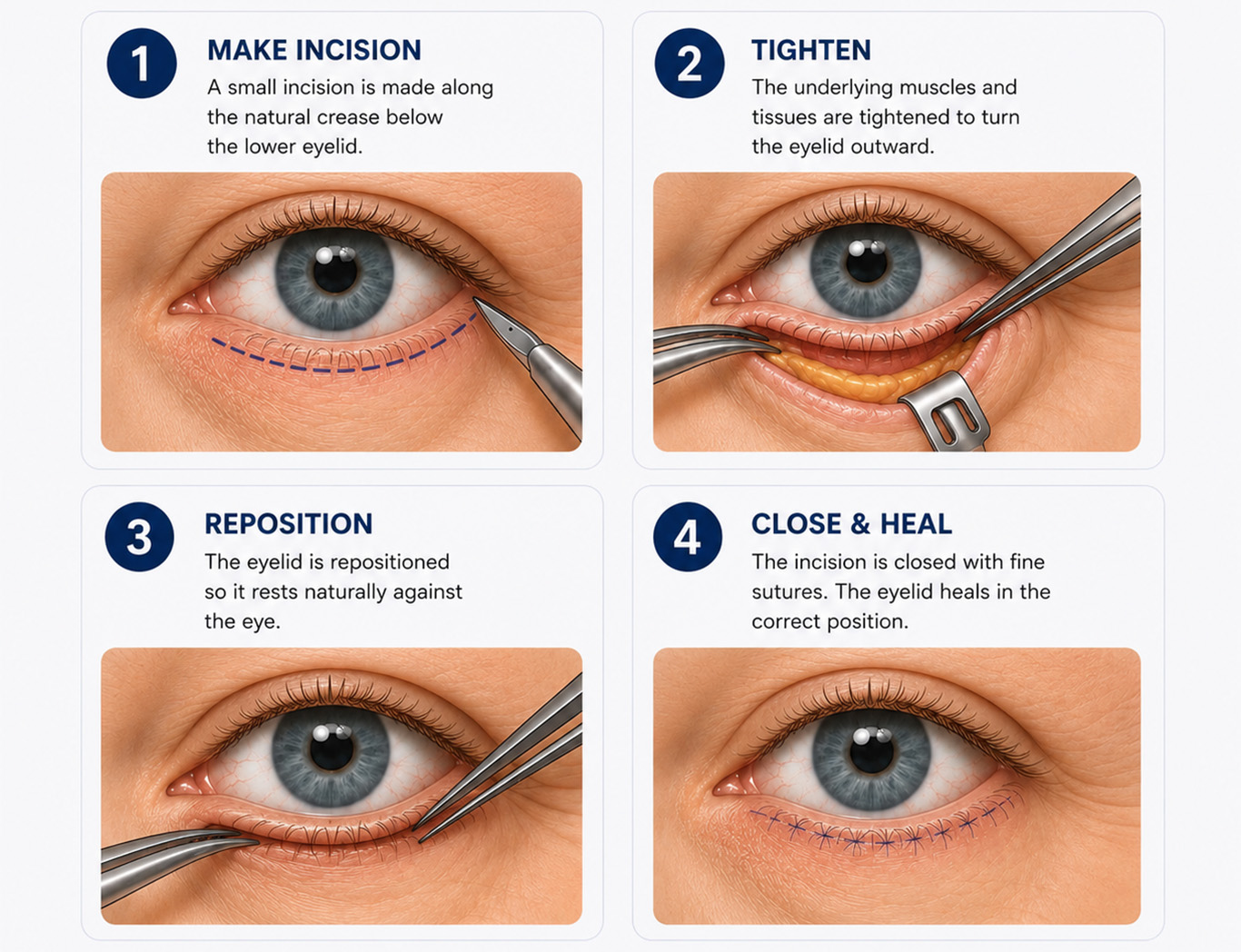
Depending on the cause of the entropion, surgery may include:
- Tightening a loose lower eyelid
- Reattaching or strengthening the lower eyelid retractors
- Repositioning eyelid muscles
- Placing sutures that rotate the eyelid outward
- Removing or releasing scar tissue
- Using a graft when significant internal eyelid scarring is present
The objective is to return the eyelid to a stable, natural position so the lashes no longer touch the eye.
Recovering From Entropion Repair
Patients may experience temporary swelling, bruising, tenderness, or tightness following surgery. Antibiotic or lubricating ointment may be prescribed to protect the surgical site and eye.
During recovery, patients may be advised to:
- Use cold compresses as directed
- Keep the surgical area clean
- Apply prescribed medication
- Avoid rubbing or pulling the eyelid
- Avoid strenuous activity temporarily
- Sleep with the head elevated
- Attend scheduled follow-up visits
Your surgeon will provide instructions based on the specific procedure performed.
Although many patients notice prompt relief from eyelash irritation, healing continues gradually over the following weeks.
Can Entropion Return After Surgery?
Entropion repair is usually effective, but recurrence is possible. The likelihood of recurrence depends on the severity of the condition, the surgical technique, the strength of the eyelid tissues, scarring, and continued age-related changes. Additional treatment may occasionally be needed if the eyelid begins turning inward again.
Entropion Versus Ectropion
Entropion and ectropion are both eyelid malpositions, but they affect the eyelid in opposite ways.
Entropion
With entropion, the eyelid turns inward. The eyelashes may rub against the eye and damage the cornea.
Ectropion
With ectropion, the eyelid turns outward and pulls away from the eye. This may cause exposure, dryness, irritation, tearing, or difficulty closing the eye completely.
Both conditions are commonly related to age-related weakening of the eyelid and may require surgical correction.
Why Choose NH Eye Associates for Entropion Care?
NH Eye Associates provides comprehensive medical and surgical care for eyelid conditions that affect comfort, eye health, vision, and appearance.
Our experienced eye doctors can:
- Determine why the eyelid is turning inward
- Examine the cornea for damage
- Provide temporary protection when needed
- Develop an individualized treatment plan
- Coordinate surgical eyelid care when appropriate
- Monitor healing and long-term eyelid function
Early evaluation can relieve discomfort and help prevent ongoing damage to the surface of the eye.
Frequently Asked Questions About Entropion
What is entropion?
Entropion is a condition in which the edge of the eyelid turns inward. This causes the eyelashes and eyelid skin to rub against the surface of the eye.
What are the first signs of entropion?
Early symptoms may include tearing, redness, a gritty sensation, intermittent irritation, or the feeling that an eyelash is stuck in the eye. Symptoms may initially occur only when blinking or squeezing the eyelids.
Is entropion dangerous?
Entropion can become dangerous if the eyelashes repeatedly damage the cornea. Untreated corneal injury may lead to abrasions, infection, ulcers, scarring, and reduced vision.
Does entropion go away on its own?
Age-related entropion generally does not permanently resolve without treatment. Lubricating drops, ointments, tape, contact lenses, or injections may provide temporary relief, but surgery is often needed for lasting correction.
What causes the eyelid to turn inward?
The most common cause is age-related weakening and stretching of the muscles and tissues that support the lower eyelid. Scarring, muscle spasms, trauma, previous surgery, inflammation, and congenital eyelid abnormalities may also cause entropion.
Is entropion the same as an ingrown eyelash?
No. Entropion causes the entire eyelid margin to rotate inward. An ingrown or misdirected eyelash may occur even when the eyelid is in a normal position. However, both conditions can cause eyelashes to rub against the cornea.
Can eye drops fix entropion?
Lubricating drops and ointments can reduce irritation and protect the eye temporarily, but they do not restore the eyelid to its normal position.
Is entropion surgery painful?
The eyelid is numbed during surgery. Patients may notice pressure or movement but should not feel sharp pain. Temporary tenderness, swelling, or bruising may occur during recovery.
Is entropion surgery performed in a hospital?
Entropion repair is commonly performed as an outpatient procedure. The appropriate surgical setting depends on the patient’s health, the complexity of the repair, and the surgeon’s recommendations.
How long does entropion surgery take?
The length of surgery varies according to the technique and whether one or both eyelids require treatment. Many uncomplicated repairs are relatively brief outpatient procedures.
Will insurance cover entropion surgery?
Insurance may cover entropion repair when the condition causes eye irritation, corneal damage, infection risk, pain, or other medically necessary concerns. Coverage varies by plan, and documentation or prior authorization may be required.
Can entropion affect both eyes?
Yes. Entropion may affect one eye or both eyes, although the severity may differ between them.
Can entropion cause blurry vision?
Yes. Excessive tearing, corneal irritation, abrasions, inflammation, infection, or scarring may cause blurry or fluctuating vision.
Should I pull out eyelashes that are rubbing my eye?
Removing an eyelash may offer brief relief, but it does not correct the inward-turning eyelid, and the eyelash will usually grow back. An eye doctor should evaluate persistent eyelash contact to determine the underlying cause and protect the cornea.
When should I see an ophthalmologist?
Schedule an evaluation when an eyelid appears to turn inward or when eyelashes repeatedly rub against the eye. Seek urgent care for significant pain, light sensitivity, sudden vision changes, severe redness, discharge, or a visible white spot on the cornea.
Patient Testimonials
Schedule an Entropion Evaluation
An eyelid that turns inward should not be ignored. Even mild symptoms may become more persistent, and repeated eyelash contact can injure the cornea. Schedule an examination if you experience ongoing tearing, redness, irritation, or the sensation that your eyelashes are rubbing against your eye.
Protect your comfort, cornea, and vision with an evaluation from NH Eye Associates.