
Ectropion
Causes, Symptoms and Treatment for a Turned-Out Eyelid
Ectropion is an eyelid condition in which the lower eyelid turns outward or pulls away from the eye. This exposes the sensitive inner surface of the eyelid and may interfere with normal blinking and tear drainage.
Patients with ectropion often experience excessive tearing, redness, irritation, dryness or a persistent gritty sensation. Although lubricating drops may temporarily improve discomfort, surgery is often the most effective way to restore the eyelid’s normal position and protect the surface of the eye.
NH Eye Associates provides evaluation and treatment for ectropion and other eyelid conditions in New Hampshire.
What Is Ectropion?
Ectropion is the outward turning or sagging of the eyelid, most commonly the lower eyelid.
Normally, the lower eyelid rests against the surface of the eye and helps spread tears evenly with every blink. It also directs tears toward small drainage openings near the inner corner of the eyelid.
When the eyelid turns outward:
- The inner eyelid tissue becomes exposed
- Tears may not drain normally
- Blinking may not fully protect the eye
- The cornea may become dry or irritated
- The eye may water continuously
Ectropion may affect one eye or both eyes. It is most common in older adults, but it can also develop after facial paralysis, eyelid surgery, trauma, scarring or removal of an eyelid growth.
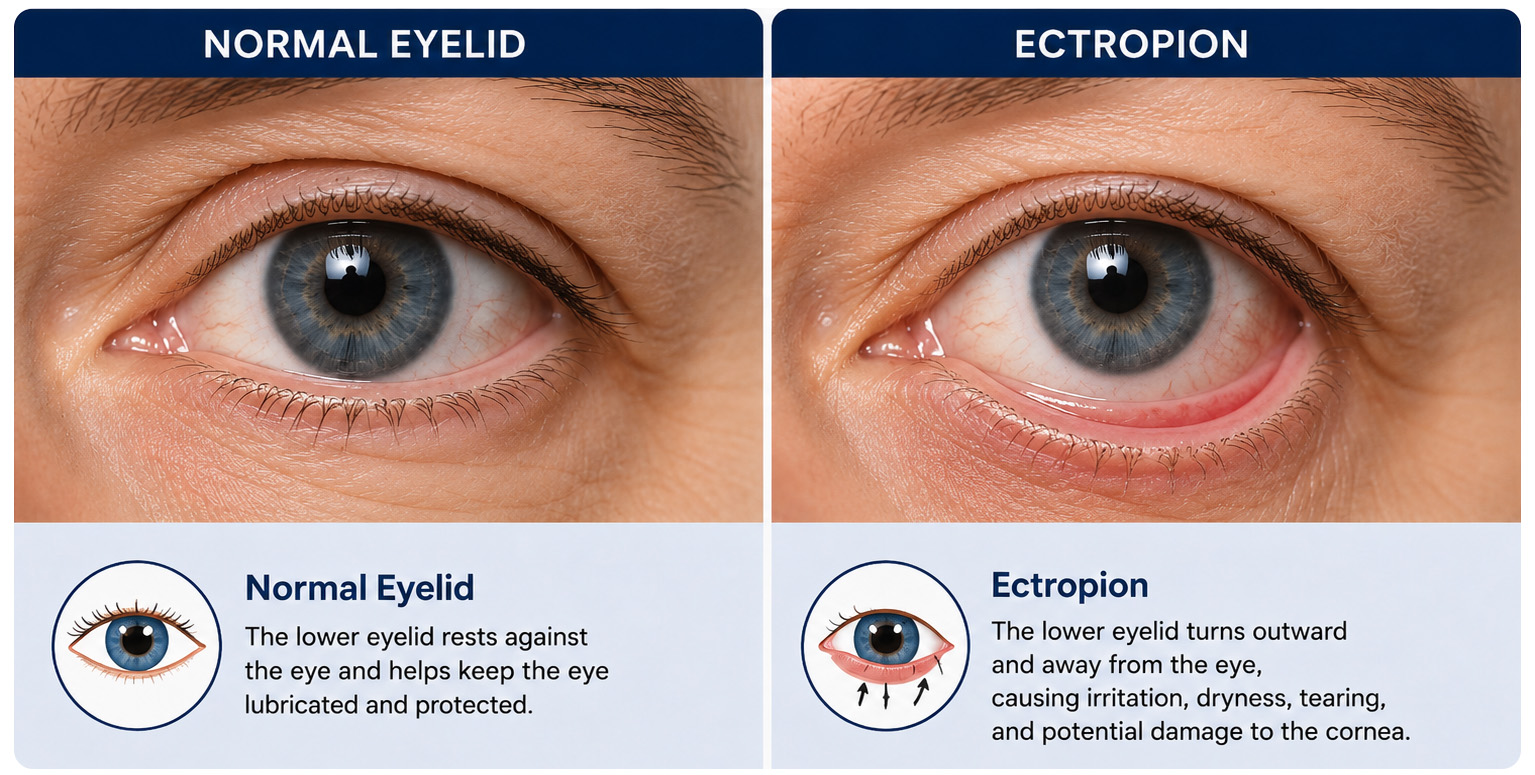
What Is Ectropion?
Ectropion is the outward turning or sagging of the eyelid, most commonly the lower eyelid.
Normally, the lower eyelid rests against the surface of the eye and helps spread tears evenly with every blink. It also directs tears toward small drainage openings near the inner corner of the eyelid.
When the eyelid turns outward:
- The inner eyelid tissue becomes exposed
- Tears may not drain normally
- Blinking may not fully protect the eye
- The cornea may become dry or irritated
- The eye may water continuously
Ectropion may affect one eye or both eyes. It is most common in older adults, but it can also develop after facial paralysis, eyelid surgery, trauma, scarring or removal of an eyelid growth.
What Does Ectropion Look Like?
Ectropion usually causes the lower eyelid to appear loose, droopy or rolled outward. A gap may be visible between the eyelid and the eye. The inner surface of the eyelid may look red or irritated. In more advanced cases, the eye may not close completely when blinking or sleeping. Some patients notice only mild sagging near the inner or outer corner of the eyelid. Others may have outward turning along most of the lower eyelid.
Common Symptoms of Ectropion
Symptoms may develop gradually and become more noticeable as the eyelid becomes looser.
Common ectropion symptoms include:
- A lower eyelid that turns outward
- A drooping or sagging lower eyelid
- Excessive tearing or watery eyes
- Dryness
- Redness
- Burning or stinging
- A gritty or sandy sensation
- Mucus or discharge
- Sensitivity to wind or light
- Recurrent eye irritation
- Difficulty closing the eye completely
- Blurred vision caused by an unstable tear film
Paradoxically, ectropion can cause both dry eyes and excessive tearing. The exposed eye becomes irritated and produces additional tears, but the loose eyelid may prevent those tears from draining correctly.
Why Does Ectropion Cause Watery Eyes?
Ectropion frequently causes persistent tearing because the lower eyelid no longer rests against the eye. Near the inner corner of each eyelid is a small opening called the punctum. Tears normally enter the punctum and drain away through the tear drainage system.
When the eyelid turns outward, the punctum may also turn away from the eye. Tears can then collect along the eyelid or spill onto the cheek instead of draining normally. Watering may also increase because exposure of the eye creates dryness and irritation, stimulating reflex tear production.
What Causes Ectropion?
Age-Related Eyelid Looseness
Age-related tissue changes are the most common cause of ectropion. Over time, the muscles, tendons and supportive tissues around the eyelid may stretch or weaken. As the lower eyelid becomes loose, it can sag away from the eye and gradually turn outward.
Facial Nerve Weakness or Paralysis
Conditions affecting the facial nerve can weaken the muscles responsible for blinking and eyelid closure.
Facial nerve weakness may develop after:
- Bell’s palsy
- Stroke
- Facial trauma
- Infection
- Surgery involving the face or ear
- Certain tumors or neurologic conditions
Facial paralysis may cause ectropion, incomplete eyelid closure and significant exposure of the eye.
Eyelid Scarring
Scarring can shorten the skin and tissues surrounding the lower eyelid, pulling it outward.
Possible causes include:
- Previous eyelid surgery
- Skin cancer removal
- Facial trauma
- Burns
- Chronic sun damage
- Skin conditions
- Radiation treatment
This is known as cicatricial ectropion.
Eyelid Growths or Tumors
A growth on or near the eyelid may pull the eyelid away from the eye because of its weight or position. New, enlarging, bleeding or irregular eyelid growths should be evaluated promptly.
Previous Eyelid or Facial Surgery
Ectropion may occasionally occur after lower-eyelid surgery, skin cancer reconstruction or another procedure involving the tissues around the eye.
Congenital Ectropion
Rarely, a child may be born with ectropion. Congenital cases may occur in association with certain skin, facial or genetic conditions.
Types of Ectropion
Ectropion may be classified according to its underlying cause.
Involutional Ectropion
Involutional ectropion develops because of age-related weakening and stretching of the eyelid tissues. It is the most common type.
Paralytic Ectropion
Paralytic ectropion results from facial nerve weakness or paralysis. The eyelid muscles may not provide enough support to hold the lower eyelid against the eye.
Cicatricial Ectropion
Cicatricial ectropion occurs when scar tissue or shortened skin pulls the eyelid downward and outward.
Mechanical Ectropion
Mechanical ectropion is caused by the weight or position of an eyelid growth, tumor or surrounding tissue.
Congenital Ectropion
Congenital ectropion is present at birth and is considerably less common than acquired ectropion.
Is Ectropion Dangerous?
Mild ectropion may initially cause only tearing or irritation. However, the condition can interfere with the eyelid’s ability to protect and lubricate the eye.
Without appropriate treatment, significant ectropion may contribute to:
- Chronic eye redness
- Persistent dryness
- Recurrent conjunctivitis
- Exposure keratopathy
- Corneal abrasions
- Corneal infection
- Corneal ulceration
- Scarring of the cornea
- Permanent vision loss in severe cases
Serious corneal complications are uncommon, but they can occur when the eye remains poorly protected for an extended period.
When Should Ectropion Be Evaluated?
Schedule an eye examination if you notice that your lower eyelid is sagging away from your eye, especially if you also have persistent tearing, dryness, redness or irritation.
Seek Prompt Medical Attention for:
- Significant eye pain
- Rapidly increasing redness
- Sudden sensitivity to light
- Decreased or blurred vision
- Inability to close the eye
- A white or cloudy area on the cornea
- Thick discharge
- A new or changing eyelid growth
- Ectropion that develops with sudden facial weakness
Sudden facial drooping or weakness may require urgent medical evaluation because it can be associated with a neurologic condition.
How Is Ectropion Diagnosed?
Ectropion can usually be diagnosed during a comprehensive eye and eyelid examination.
Your eye doctor may evaluate:
- The position of the lower eyelid
- The degree of eyelid looseness
- Your ability to blink and close the eye
- The position of the tear drainage opening
- The strength of the facial muscles
- The condition of the cornea and conjunctiva
- Evidence of scarring or sun damage
- Previous surgical sites
- Eyelid lesions or growths
- The amount and quality of your tear film
The doctor may gently pull on the eyelid or ask you to close your eyes tightly to assess eyelid tone and support. A slit-lamp examination may be performed to look for dryness, inflammation or damage to the surface of the eye.
Ectropion Treatment
Treatment depends on the severity of the ectropion, its underlying cause and whether the cornea is being adequately protected.
Lubricating Eye Drops
Artificial tears may reduce dryness, burning and irritation during the day. Preservative-free artificial tears may be recommended when drops must be used frequently.
Lubricating Ointment
A thicker lubricating gel or ointment may provide longer-lasting protection, particularly at bedtime. Ointment can temporarily blur vision and is therefore often used at night.
Eyelid Taping
In selected cases, temporary taping may help reposition the eyelid or improve eye closure. Your eye care provider should demonstrate the correct taping technique. Incorrect placement can worsen the eyelid position or irritate the skin.
Treating the Underlying Cause
Treatment may also address the condition responsible for the ectropion. For example:
- Facial nerve weakness may require additional eye-protection measures
- An eyelid growth may need biopsy or removal
- Significant inflammation may require medical treatment
- Scar-related ectropion may require release of tight tissue
- Dry eye may need additional treatment
Ectropion Surgery
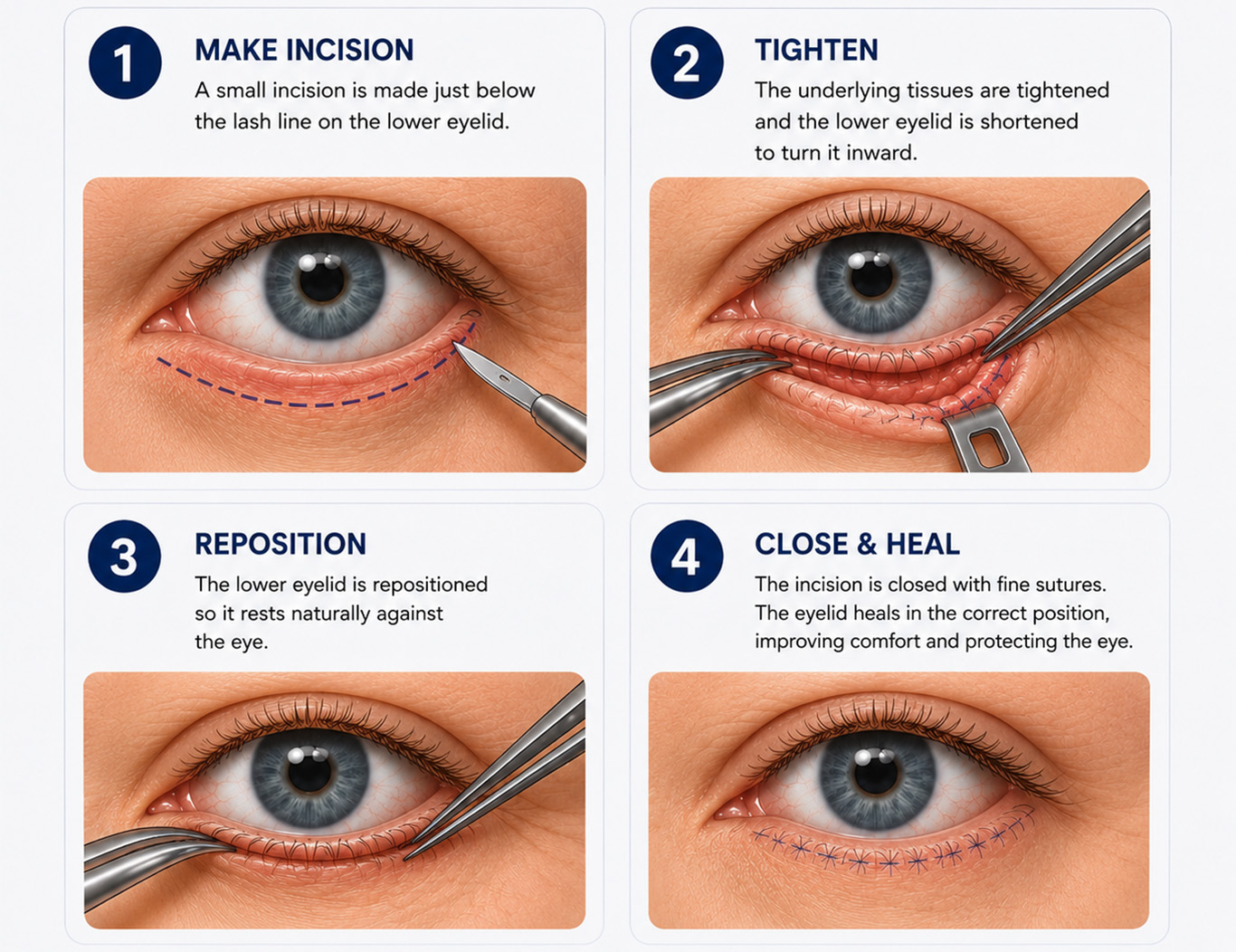
Surgery is often recommended when the eyelid remains turned outward, symptoms continue despite lubrication or the surface of the eye is at risk. The goal is to reposition the eyelid so that it rests naturally against the eye again.
How Is Ectropion Surgery Performed?
The surgical technique is customized to the cause and location of the ectropion.
Tightening a Loose Lower Eyelid
For age-related ectropion, the surgeon may shorten and tighten the lower eyelid near its outer corner. This restores eyelid tension and helps the eyelid sit against the eye.
Repairing the Inner Eyelid
When the inner portion of the eyelid turns outward, the surgeon may reposition the tear drainage opening and tighten the surrounding tissues.
Releasing Scar Tissue
Scar-related ectropion may require release or removal of tight scar tissue. A skin graft or tissue flap may occasionally be needed when there is not enough skin to return the eyelid to its normal position.
Treating Facial Paralysis
Patients with facial nerve weakness may require a combination of procedures to:
- Tighten the lower eyelid
- Improve eyelid closure
- Protect the cornea
- Support the outer corner of the eye
The exact procedure depends on the severity and expected duration of the facial weakness.
What to Expect During Ectropion Surgery
Ectropion repair is commonly performed as an outpatient procedure. Local anesthesia is typically used to numb the eyelid, sometimes with light sedation.
Although every procedure is different, patients can generally expect:
- The eyelid and surrounding skin are cleaned and numbed.
- The surgeon adjusts, tightens or reconstructs the supporting eyelid tissues.
- Small sutures are used to hold the eyelid in its corrected position.
- Antibiotic ointment may be applied after surgery.
- The patient returns home the same day in most cases.
The length of the procedure depends on whether the ectropion is caused by simple eyelid looseness, scarring, facial paralysis or another condition.
Recovery After Ectropion Surgery
Temporary swelling, bruising, tenderness and tightness are common after eyelid surgery.
Patients may be instructed to:
- Apply cold compresses
- Use prescribed antibiotic ointment
- Keep the surgical area clean
- Avoid rubbing or pulling the eyelid
- Sleep with the head elevated
- Avoid strenuous activity temporarily
- Attend follow-up visits
- Return for suture removal when necessary
Many patients experience improvement in tearing, irritation and eyelid position as the tissues heal. Mild postoperative discomfort is common, while significant pain should be reported to the surgeon.
Your surgeon will provide individualized instructions regarding driving, exercise, work and medication use.
Benefits of Ectropion Repair
Correcting ectropion may:
- Restore the eyelid’s normal position
- Improve eyelid closure
- Protect the cornea
- Reduce dryness and irritation
- Improve tear drainage
- Reduce excessive tearing
- Decrease recurrent redness or inflammation
- Improve the appearance and symmetry of the eyelids
The primary purpose of ectropion surgery is usually functional: to restore the eyelid’s ability to protect the eye.
Can Ectropion Return After Surgery?
Ectropion surgery generally provides lasting improvement, but recurrence is possible.
The likelihood of recurrence may depend on:
- The degree of age-related tissue weakness
- The presence of facial paralysis
- Significant scar tissue
- Chronic sun damage
- Previous eyelid procedures
- Ongoing skin disease
- The underlying surgical technique required
Additional treatment may occasionally be needed if the eyelid becomes loose again or if facial nerve function changes.
Ectropion vs. Entropion
Ectropion and entropion are both eyelid-position disorders, but they affect the eyelid in opposite directions.
Ectropion
- The eyelid turns outward
- The inner eyelid becomes exposed
- The eye may become dry or watery
- Tears may spill onto the cheek
Entropion
- The eyelid turns inward
- Eyelashes rub against the eye
- The eye may feel scratched or painful
- The cornea may become irritated or damaged
Both conditions should be evaluated when they cause persistent discomfort or interfere with protection of the eye.
Ectropion and Dry Eye
Ectropion can contribute to dry eye because the lower eyelid may no longer spread the tear film evenly across the eye. Incomplete blinking may allow tears to evaporate more quickly. At the same time, poor tear drainage can cause tears to overflow onto the cheek. Treating the ectropion may improve these symptoms, although some patients also have underlying dry eye disease that requires separate treatment.
Why Choose NH Eye Associates for Eyelid Care?
NH Eye Associates provides comprehensive medical and surgical eye care for patients with eyelid abnormalities, tearing, irritation and ocular-surface disease.
Our team can:
- Determine whether your symptoms are caused by ectropion
- Examine the cornea for exposure-related damage
- Identify age-related, scar-related or nerve-related causes
- Recommend temporary measures to protect the eye
- Discuss whether surgical correction may be appropriate
- Coordinate treatment for associated dry eye or tear-drainage problems
Our goal is to improve eyelid function, protect your vision and help your eyes feel more comfortable.
Frequently Asked Questions About Ectropion
What is the main cause of ectropion?
The most common cause is age-related weakening and stretching of the tissues that support the lower eyelid. Ectropion can also result from facial paralysis, scarring, trauma, previous surgery or an eyelid growth.
Can ectropion cause watery eyes?
Yes. Ectropion may pull the tear drainage opening away from the eye, preventing tears from draining normally. Tears may then collect or run down the cheek. Exposure and irritation can also stimulate excess tear production.
Can ectropion cause dry eyes?
Yes. When the eyelid does not rest against the eye, blinking may not spread tears evenly across the cornea. The eye may become dry, irritated, red or gritty.
Can ectropion affect vision?
Ectropion may temporarily blur vision because of excessive tearing or an unstable tear film. Severe untreated exposure can damage the cornea and potentially threaten vision.
Is ectropion the same as a droopy eyelid?
Not exactly. Ectropion usually involves the lower eyelid sagging and turning outward. Ptosis refers to an upper eyelid that droops downward and may cover part of the pupil.
Can ectropion heal on its own?
Age-related or scar-related ectropion usually does not permanently resolve without treatment. Facial-paralysis-related ectropion may improve if nerve function returns, but the eye must remain protected during recovery.
Do eye drops cure ectropion?
No. Artificial tears, gels and ointments can relieve dryness and protect the eye, but they do not permanently reposition a turned-out eyelid.
Is ectropion surgery painful?
Local anesthesia is used to numb the surgical area. Patients may experience temporary soreness, tightness, bruising or swelling afterward, but severe pain is not typical.
Will ectropion surgery stop my eye from watering?
Surgery often improves tearing by restoring the eyelid and tear drainage opening to a more natural position. Other tear-production or drainage conditions may also contribute, so complete resolution cannot be guaranteed in every case.
Can ectropion occur in both eyes?
Yes. Age-related ectropion may affect one or both lower eyelids.
Can Bell’s palsy cause ectropion?
Yes. Bell’s palsy and other causes of facial nerve weakness can reduce eyelid muscle tone, causing the lower eyelid to sag and the eye to close incompletely.
Is ectropion surgery cosmetic or medically necessary?
Ectropion repair is often medically necessary because the condition can interfere with tear drainage, blinking and protection of the cornea. Insurance coverage depends on the patient’s symptoms, examination findings, health plan and documentation requirements.
When is ectropion an emergency?
Seek prompt care if ectropion is accompanied by severe pain, sudden vision changes, marked light sensitivity, inability to close the eye, significant discharge or a white or cloudy spot on the cornea. Sudden facial weakness also requires urgent medical evaluation.
Patient Testimonials
Protect Your Eye and Restore Your Eyelid Position
A lower eyelid that turns outward can cause more than a change in appearance. It may interfere with blinking, tear drainage and protection of the cornea. An eye examination can determine the cause of your ectropion and whether lubrication, monitoring or surgical repair is the most appropriate treatment.
Schedule an ectropion evaluation with NH Eye Associates.