
Chalazion & Stye Treatment in New Hampshire
Have a Painful or Persistent Bump on Your Eyelid?
A stye or chalazion can cause a noticeable lump, redness, swelling, tenderness, or irritation of the eyelid. Although the two conditions can look similar, they develop for different reasons and may require different treatment.
A stye, also called a hordeolum, is typically a painful, inflamed bump associated with infection of an eyelid gland or eyelash follicle. A chalazion develops when one of the eyelid's oil-producing meibomian glands becomes blocked and is usually less painful once the initial inflammation settles.
Many styes and chalazia improve with conservative treatment, but a persistent, recurrent, unusually large, or concerning eyelid bump should be evaluated by an eye care professional.
At NH Eye Associates, our doctors evaluate eyelid bumps and can determine whether you have a chalazion, stye, or another eyelid condition that requires treatment.
Eyelid bump that isn't improving?
What Is a Stye?
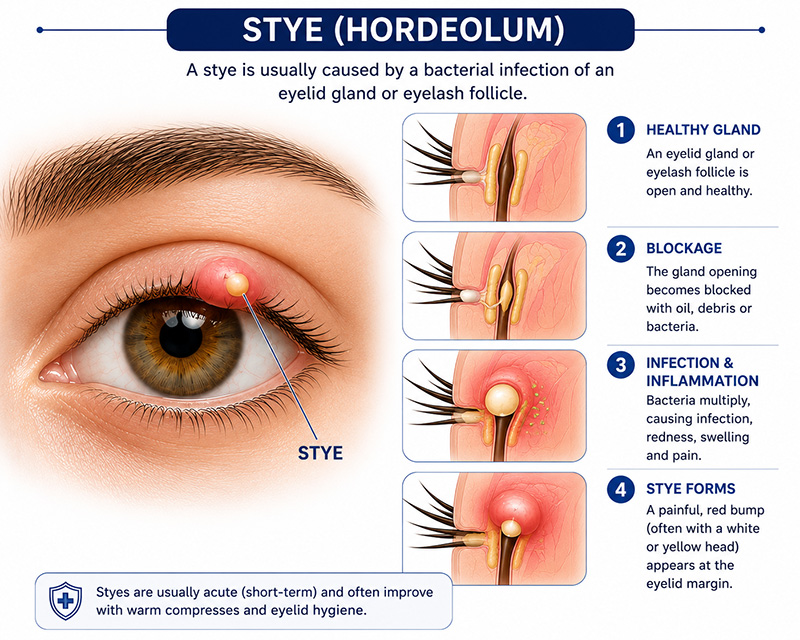
A stye is a red, tender or painful bump that develops on or near the edge of the eyelid. It usually occurs when an eyelid gland or eyelash follicle becomes inflamed and infected. A stye may develop on the outside of the eyelid near the eyelashes or deeper along the inside of the eyelid.
Common symptoms of a stye include:
- A painful eyelid bump
- Redness
- Localized eyelid swelling
- Tenderness
- Tearing
- Irritation or a scratchy sensation
- Crusting around the eyelid
- Occasionally a small white or yellow point within the bump
Styes often resemble a small pimple along the eyelid margin.
What Is a Chalazion?
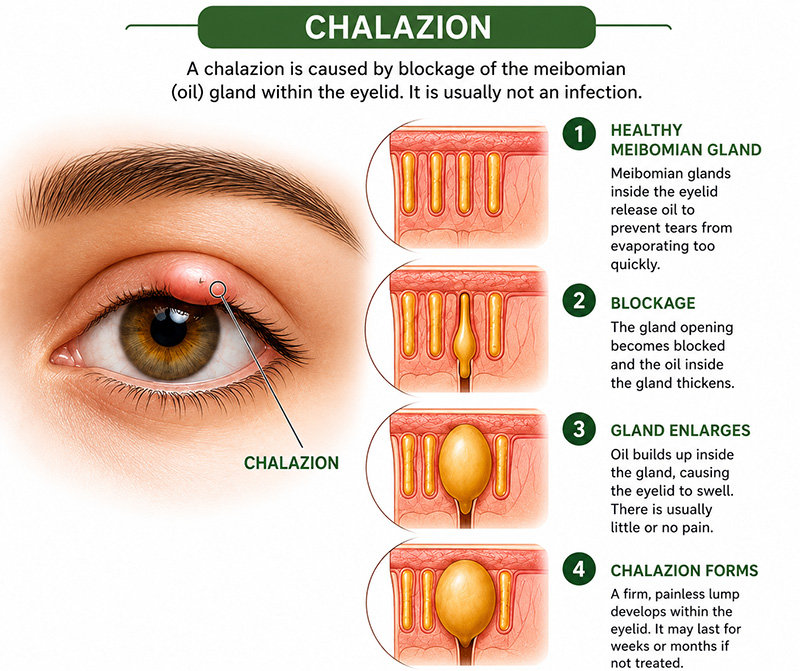
A chalazion is a lump within the eyelid caused by blockage of one of the meibomian oil glands. Unlike a typical stye, a chalazion is not primarily an infection. A chalazion may initially be red or tender but often becomes a firm, relatively painless lump within the upper or lower eyelid. Small chalazia may be barely noticeable, while larger ones can cause considerable eyelid swelling. Occasionally, a large chalazion can press against the surface of the eye and temporarily affect vision.
Chalazion vs. Stye: What's the Difference?
Patients frequently use the terms interchangeably, but they are not exactly the same.
Stye
Chalazion
Typical Cause
Pain
Location
A stye can sometimes evolve into a chalazion after the acute inflammation improves but the oil gland remains blocked.
What Causes Chalazia and Styes?
Your eyelids contain many small glands that produce oils important for a healthy tear film. one of these glands becomes blocked, oil can accumulate inside the eyelid and trigger inflammation, resulting in a chalazion.
A stye generally develops when an eyelid gland or eyelash follicle becomes inflamed and infected. Certain eyelid conditions can make recurrent blockage more likely.
Factors associated with chalazia and styes can include:
- Meibomian gland dysfunction
- Blepharitis
- Thickened eyelid oil secretions
- Rosacea
- Previous chalazia or styes
- Chronic eyelid inflammation
Patients who repeatedly develop eyelid bumps may benefit from evaluation for an underlying eyelid or ocular surface problem rather than repeatedly treating each bump individually.
How Are Chalazia and Styes Treated?
Treatment depends on whether the bump is a stye or chalazion, its size, how long it has been present, associated symptoms, and whether conservative treatment has already been attempted.
Warm Compresses
Warm compresses are often the first treatment recommended for both styes and chalazia. A clean, comfortably warm compress is generally placed over the closed eyelid for approximately 10–15 minutes at a time, several times per day. Heat can help soften thickened oils and encourage a blocked gland to drain naturally. Gentle eyelid massage may sometimes be recommended after the compress. Do not squeeze, puncture, or attempt to pop an eyelid bump yourself.
Eyelid Hygiene
If blepharitis or meibomian gland dysfunction contributes to repeated chalazia or styes, your eye doctor may recommend an ongoing eyelid hygiene routine. This may include warm compresses, eyelid cleansing, or treatment directed at the underlying eyelid-gland dysfunction.
Medication
Medication is not necessary for every eyelid bump. Because a chalazion is primarily caused by an obstructed oil gland rather than infection, antibiotics generally do not make an uncomplicated chalazion disappear. Antibiotic or anti-inflammatory treatment may be considered when your eye doctor identifies associated infection, significant inflammation, blepharitis, or another condition requiring medication. Treatment should be based on an examination rather than self-treating with leftover antibiotic or steroid eye drops.
What If a Chalazion Does Not Go Away?
Many chalazia gradually resolve without surgery, but some persist despite consistent warm compresses. Persistent lesions may require additional treatment. Options can include:
Steroid Injection
In selected cases, medication can be injected directly into the chalazion to reduce inflammation and help the lump resolve.
Incision and Drainage
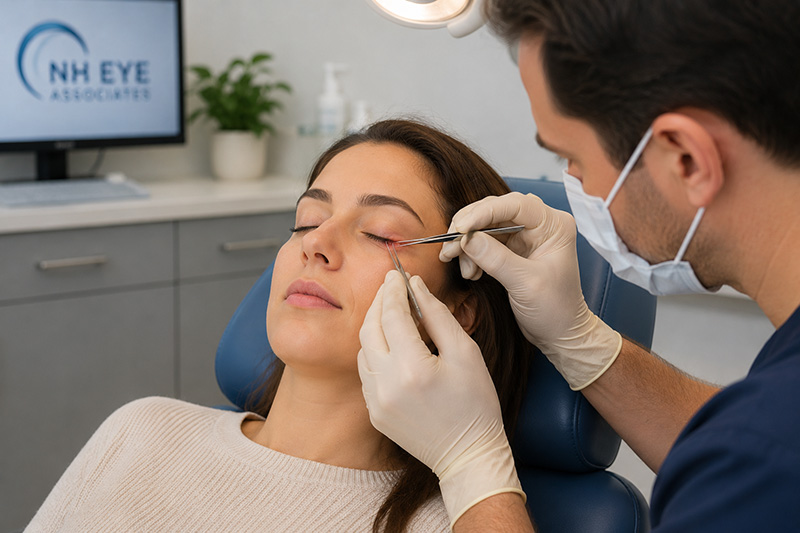
A persistent or larger chalazion may be treated with a minor procedure in which the lesion is opened and its contents removed. The appropriate treatment depends on the chalazion's size, location, duration and clinical appearance.
Have an eyelid bump that hasn't gone away?
When Should a Droopy Eyelid Be Evaluated?
Gradually developing ptosis is often related to aging and typically does not represent an emergency. However, sudden eyelid drooping should be evaluated promptly, particularly when accompanied by other neurologic or visual symptoms.
Seek urgent medical care for new ptosis associated with:
- Double vision
- Severe headache
- Unequal pupils
- Facial weakness
- Weakness or numbness
- Difficulty speaking
- Significant eye pain
What Happens During a Chalazion or Stye Examination?
Your eye doctor will examine the eyelid and surrounding eye to determine what type of lesion is present.
The evaluation may include:
- Examining the location and appearance of the bump
- Checking the eyelid margin and eyelashes
- Looking for signs of infection
- Evaluating the meibomian oil glands
- Checking for blepharitis
- Examining the surface of the eye
- Determining whether another eyelid lesion could be causing the lump
Most chalazia and styes can be diagnosed based on their appearance and an eye examination.
When Should You See an Eye Doctor for a Stye or Chalazion?
Consider scheduling an eye examination when:
- The bump is not improving
- The lesion continues to enlarge
- Eyelid swelling is significant
- The bump keeps returning
- You repeatedly develop chalazia or styes
- The diagnosis is uncertain
- The bump is affecting your vision
- The eyelid lesion looks unusual
- You are concerned that it may be something other than a stye or chalazion
A recurrent eyelid lesion in the same location or a lesion with atypical features deserves further evaluation because not every eyelid lump is a chalazion or stye.
When Is Eyelid Swelling an Emergency?
A routine chalazion usually does not require emergency care. Seek prompt medical evaluation when eyelid swelling is accompanied by symptoms such as:
- Rapidly spreading redness or swelling
- Significant pain
- Fever or feeling seriously ill
- Decreased vision
- Difficulty moving the eye
- Pain with eye movement
- Significant swelling surrounding the eye
An eyelid infection can occasionally extend into the surrounding tissues and cause preseptal or orbital cellulitis, which requires prompt medical attention.
Why Do I Keep Getting Chalazia or Styes?
Recurring eyelid bumps can be associated with underlying inflammation of the eyelid and its oil glands. Conditions such as blepharitis and meibomian gland dysfunction can cause the oil produced by the eyelid glands to become abnormal or the gland openings to become obstructed. For patients with repeated chalazia, treating the underlying eyelid-gland problem may be an important part of preventing future episodes.
At NH Eye Associates, patients with chronic eyelid inflammation can also be evaluated through our Dry Eye Treatment Center, where advanced treatment options are available for meibomian gland dysfunction and ocular surface disease.
Can You Prevent Chalazia and Styes?
Not every stye or chalazion can be prevented, but maintaining healthy eyelids may reduce repeated gland blockage.
Depending on your condition, your eye doctor may recommend:
- Regular eyelid hygiene
- Warm compresses
- Treatment of blepharitis
- Treatment of meibomian gland dysfunction
- Proper hand hygiene before touching the eyes or contact lenses
- Removing eye makeup before sleeping
- Avoiding squeezing or manipulating an existing eyelid bump
Patients who develop frequent chalazia should be evaluated to determine why the glands are repeatedly becoming obstructed.
Chalazion & Stye Care at NH Eye Associates
An eyelid bump may seem straightforward, but several conditions can cause similar changes in the eyelid. At NH Eye Associates, our ophthalmologists and optometrists can determine whether your eyelid lesion represents a chalazion, stye, chronic eyelid-gland problem, or another condition requiring further evaluation. When necessary, patients can also receive specialized evaluation for persistent or more complex eyelid lesions through our oculoplastics service. With multiple locations in New Hampshire and more than 50 years of experience providing eye care, NH Eye Associates offers comprehensive evaluation and treatment for eyelid conditions.
Frequently Asked Questions About Chalazia and Styes
Is a chalazion the same as a stye?
No. A stye is typically a painful, inflamed or infected eyelid gland, while a chalazion occurs when an eyelid oil gland becomes blocked. Chalazia are commonly less painful than styes.
How can I tell whether I have a stye or chalazion?
A stye is often red, painful and located near the eyelid margin. A chalazion commonly feels like a firmer lump deeper within the eyelid and may become painless. Because other eyelid conditions can look similar, persistent or unusual lesions should be examined by an eye care professional.
How do you get rid of a chalazion?
Warm compresses are usually the first treatment. They may help open the blocked gland and allow trapped oil to drain. Chalazia that do not resolve may sometimes be treated with a steroid injection or minor drainage procedure.
How do you get rid of a stye?
Many styes improve with warm compresses. An eye doctor should evaluate a stye that becomes increasingly painful or swollen, affects vision, fails to improve, or is associated with spreading redness.
Should I pop a stye or chalazion?
No. Do not squeeze, puncture, or attempt to pop a stye or chalazion. Manipulating the eyelid can worsen inflammation and potentially spread infection.
Do antibiotics cure a chalazion?
Usually not. A chalazion primarily results from blockage of an oil gland rather than bacterial infection, so antibiotics are generally not effective for an uncomplicated chalazion. Antibiotics may be used when an associated infection or another indication is present.
How long does a chalazion last?
Many resolve gradually, but a chalazion can persist for several weeks. Merck notes that many disappear without treatment within approximately two to eight weeks. Persistent lesions should be evaluated, particularly if they are enlarging, recurring, or affecting vision.
Can a stye turn into a chalazion?
Yes. After the painful inflammatory phase of a stye improves, persistent blockage of the eyelid gland can leave a firmer, relatively painless chalazion.
Why does my chalazion keep coming back?
Recurrent chalazia may be associated with chronic eyelid conditions such as blepharitis or meibomian gland dysfunction. Treating the underlying eyelid-gland disease may help reduce recurrence.
Can a chalazion affect my vision?
A large chalazion can sometimes press on the surface of the eye and cause temporary visual changes. A lesion that affects vision should be evaluated by an eye doctor.
When should I worry about an eyelid bump?
Schedule an examination when an eyelid bump persists, repeatedly returns in the same location, continues to enlarge, looks unusual, causes significant pain or swelling, or affects your vision. Rapidly spreading redness, fever, decreased vision, or pain with eye movement requires more urgent evaluation.
Who treats a persistent chalazion?
Ophthalmologists routinely evaluate and treat chalazia. More complicated, recurrent, or atypical eyelid lesions may also be evaluated by an ophthalmologist specializing in oculoplastic and reconstructive surgery.
Patient Testimonials
Schedule an Evaluation for a Chalazion or Stye
Is that eyelid bump not going away?
If you have a persistent, painful, recurrent, enlarging, or unusual eyelid bump, schedule an evaluation with NH Eye Associates. Our eye care team can determine what is causing the lesion and recommend the appropriate treatment.