
Ptosis
Causes, Symptoms & Droopy Eyelid Treatment
A droopy upper eyelid, also called ptosis, occurs when the upper eyelid sits lower than normal. Ptosis may affect one or both eyes and can range from a subtle cosmetic change to significant drooping that blocks part of the pupil and interferes with vision.
Ptosis becomes increasingly common with age as the structures that lift the eyelid stretch or weaken, although it can also occur in younger adults and children.
At NH Eye Associates, our ophthalmologists evaluate droopy eyelids to determine the cause, assess whether vision is affected, and recommend treatment when appropriate.
Concerned about a drooping eyelid?
What Is Ptosis?
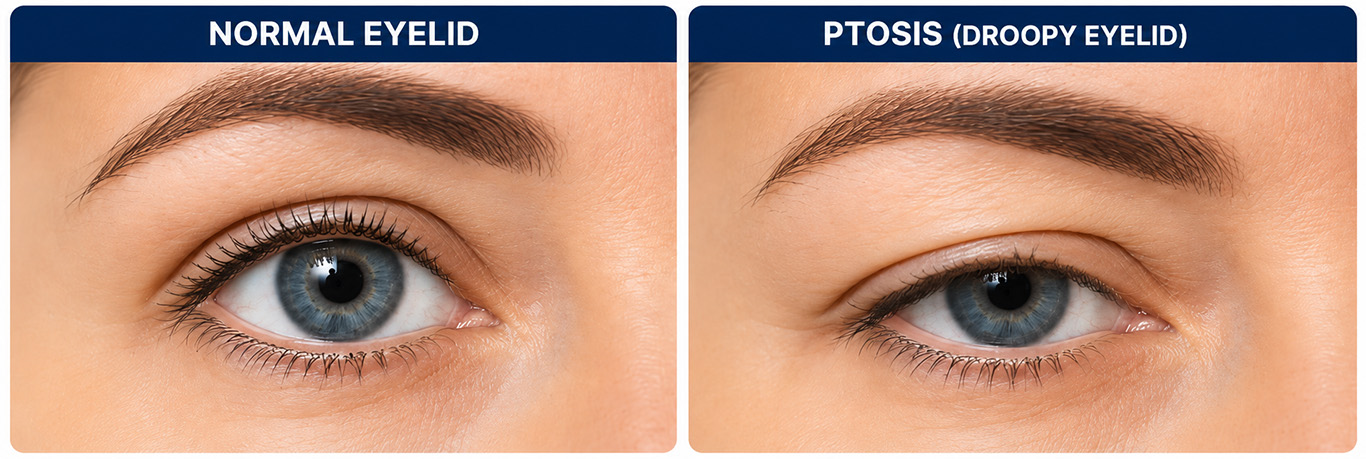
Ptosis is an abnormal lowering of the upper eyelid caused by weakness, stretching, or dysfunction of the muscles or tissues responsible for lifting the eyelid. The medical term is blepharoptosis. Some people notice only a slight difference between their eyelids. In more advanced cases, the eyelid may cover part of the pupil and reduce the upper field of vision.
Patients may compensate by:
- Raising their eyebrows
- Wrinkling their forehead
- Tilting their head backward
- Holding the eyelid up manually
- Opening their eyes unusually wide
These compensatory behaviors may contribute to forehead fatigue or headaches.
Normal Eyelid vs. Ptosis
Ptosis occurs when the upper eyelid droops due to weakness or dysfunction of the muscles that lift the eyelid, which can affect your vision and appearance.
What Does Ptosis Look Like?
Ptosis can appear differently from person to person.
Common signs include:
- One upper eyelid sitting lower than the other
- Both upper eyelids appearing unusually low
- The eyelid partially covering the pupil
- Difficulty keeping the eyes completely open
- A tired or sleepy appearance
- Increased forehead wrinkles from constantly raising the eyebrows
Some patients gradually notice ptosis in photographs before realizing that their eyelid position has changed.
What Causes a Droopy Eyelid?
There are several types and causes of ptosis.
Age-Related Ptosis
The most common form of ptosis in adults is age-related, or involutional, ptosis. A muscle called the levator muscle raises the upper eyelid. With aging, the levator tendon can stretch, thin, or partially separate from its attachment to the eyelid. As a result, the eyelid gradually begins to droop. Age-related ptosis may affect one eye more than the other.
Congenital Ptosis
Some children are born with a drooping eyelid because the levator muscle did not develop normally. Significant congenital ptosis may interfere with normal visual development and can sometimes contribute to amblyopia, or lazy eye. Children with noticeable eyelid drooping should receive a comprehensive eye examination.
Neurologic Ptosis
Certain nerves control the muscles responsible for eyelid position. Neurologic conditions affecting these nerves can occasionally cause sudden or progressive ptosis. A new drooping eyelid associated with:
- Double vision
- Abnormal pupil size
- Facial weakness
- Severe headache
- Difficulty speaking
- Weakness or numbness
may require urgent medical evaluation.
Muscle-Related Ptosis
Conditions affecting the muscles responsible for eyelid movement may also cause ptosis. Some muscle disorders can produce eyelid drooping that changes throughout the day or becomes more noticeable with fatigue.
Ptosis After Eye Surgery
Occasionally, ptosis may develop or become more noticeable following eye surgery. This can occur because of changes to the levator muscle or its tendon. Your ophthalmologist can determine whether the condition is temporary or whether treatment should be considered.
Trauma or Injury
Injury to the eyelid, eye socket, muscles, or nerves controlling the upper eyelid can also result in ptosis.
Ptosis vs. Excess Eyelid Skin (Dermatochalasis)
Ptosis and excess upper eyelid skin are different conditions, although they frequently occur together.
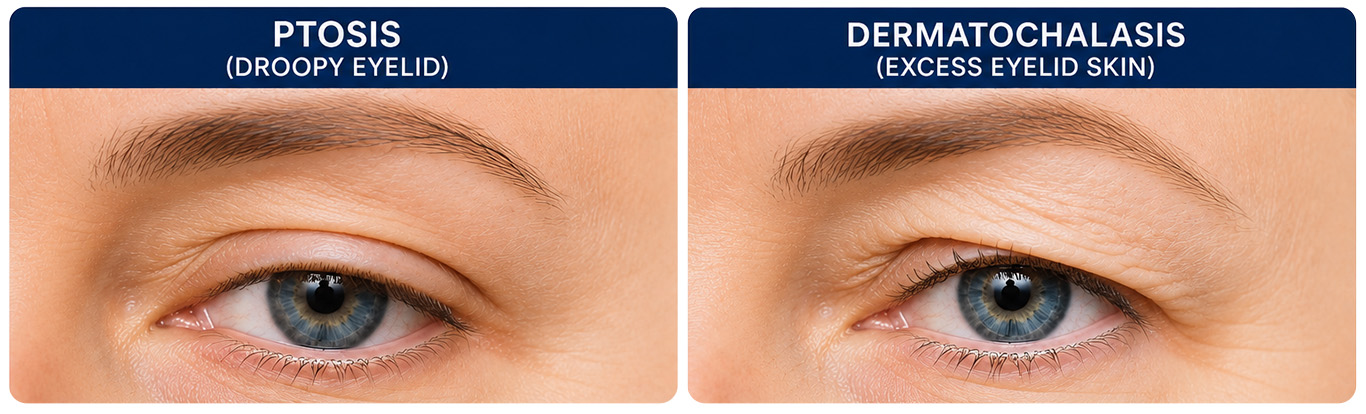
Ptosis
The entire upper eyelid sits too low because the eyelid-lifting mechanism is weakened or stretched.
Dermatochalasis
Excess or loose upper eyelid skin hangs over the natural eyelid crease. Some patients have both conditions. This distinction is important because the treatment for ptosis is different from the treatment performed during a standard upper eyelid blepharoplasty.
Can Ptosis Affect Vision?
Yes. When the upper eyelid drops far enough to cover part of the pupil, ptosis can reduce the superior visual field, meaning the upper portion of a person's vision.
Patients may notice difficulty with activities such as:
- Reading
- Driving
- Looking upward
- Watching television
- Working at a computer
- Seeing objects above eye level
Some patients unconsciously raise their eyebrows throughout the day in an effort to improve their vision.
How is Ptosis Diagnosed?
An ophthalmologist evaluates both the eyelid itself and the health of the eye. Your examination may include:
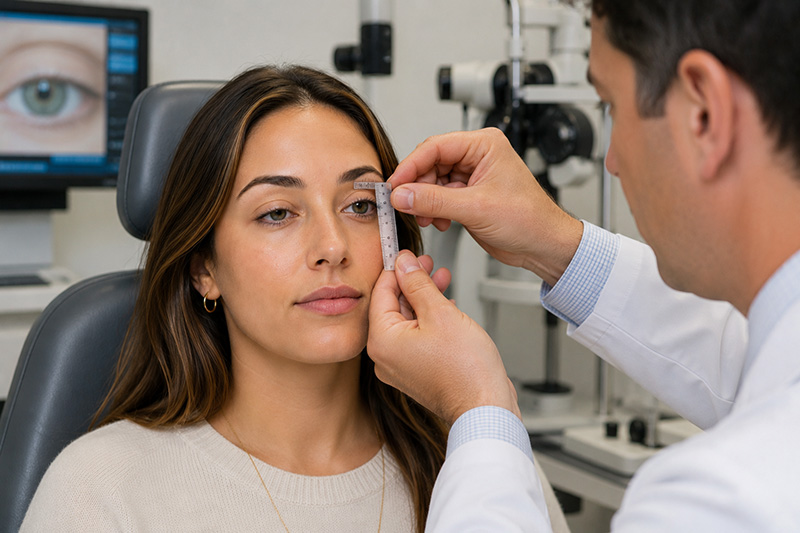
Eyelid Position Measurements
The physician measures the position of the upper eyelid relative to the pupil and other eyelid structures.
Levator Muscle Function
The movement and strength of the muscle responsible for lifting the upper eyelid are evaluated.
Pupil Examination
Differences in pupil size can occasionally provide clues about neurologic causes of ptosis.
Eye Movement Testing
Eye movements may be evaluated to determine whether nerves or muscles controlling the eyes are functioning normally.
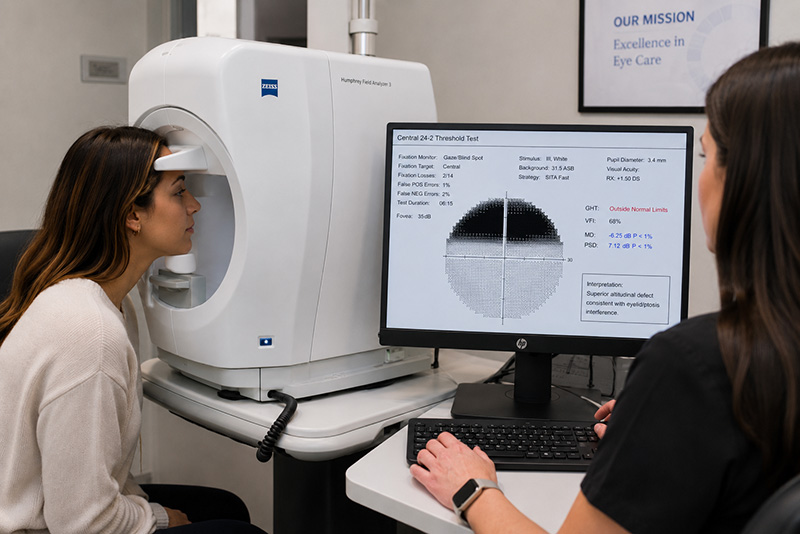
Visual Field Testing
When ptosis is affecting vision, visual field testing may demonstrate how much the upper eyelid is restricting peripheral vision.
External Photography
Standardized photographs may document the degree of eyelid drooping.
When Should a Droopy Eyelid Be Evaluated?
Gradually developing ptosis is often related to aging and typically does not represent an emergency. However, sudden eyelid drooping should be evaluated promptly, particularly when accompanied by other neurologic or visual symptoms.
Seek urgent medical care for new ptosis associated with:
- Double vision
- Severe headache
- Unequal pupils
- Facial weakness
- Weakness or numbness
- Difficulty speaking
- Significant eye pain
How Is Ptosis Treated?
Treatment depends on the cause and severity of the eyelid drooping. Mild ptosis that does not interfere with vision may simply be monitored. When ptosis significantly affects vision or eyelid function, surgery is often the most effective treatment.
Ptosis Surgery
The goal of ptosis surgery is to raise the upper eyelid to a more natural position while preserving normal eyelid function and protecting the surface of the eye.
Several surgical techniques are available. The procedure selected depends on:
- Degree of eyelid drooping
- Levator muscle strength
- Eyelid anatomy
- Cause of the ptosis
- Presence of excess eyelid skin
- Overall eye health
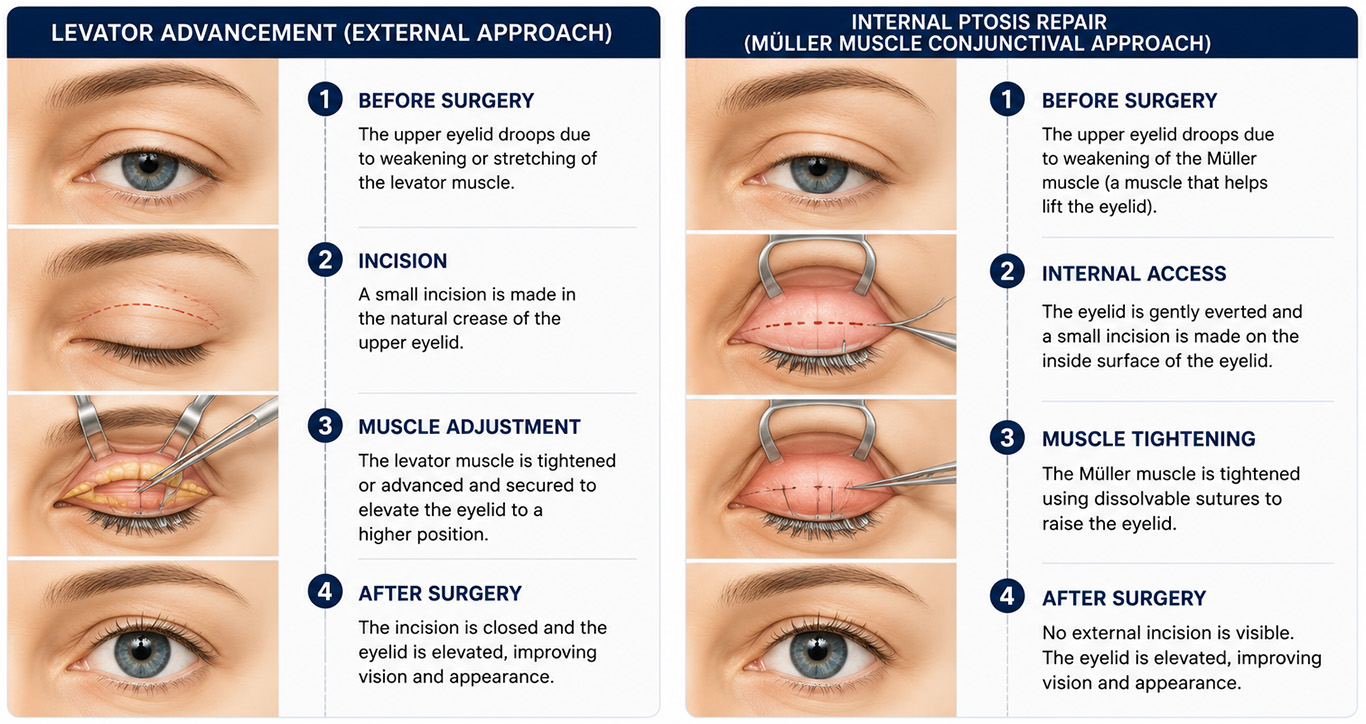
Levator Advancement
One of the most common procedures for age-related ptosis is levator advancement or levator repair. During this procedure, the surgeon adjusts or tightens the tendon of the levator muscle responsible for lifting the eyelid. This allows the eyelid to sit higher.
Internal Ptosis Repair
Some patients may be candidates for an approach performed from the inside surface of the eyelid. Your surgeon will determine whether this technique is appropriate based on your examination and eyelid anatomy.
Can Ptosis Surgery and Blepharoplasty Be Performed Together?
Yes. Many adults have both:
- Drooping of the upper eyelid itself
- Excess upper eyelid skin
When appropriate, ptosis repair and upper eyelid blepharoplasty may be performed during the same surgical session.
Ptosis repair addresses the eyelid-lifting mechanism, while blepharoplasty removes excess skin and, when appropriate, fatty tissue.
Functional vs Cosmetic Eyelid Surgery
Ptosis surgery may be considered functional when eyelid drooping significantly interferes with vision.
Evaluation for functional eyelid surgery may include:
- Eyelid measurements
- Clinical photography
- Visual field testing
- Documentation of symptoms
Coverage requirements vary by insurance plan. When eyelid surgery is performed primarily to improve appearance rather than visual function, the procedure is generally considered cosmetic.
What is Recovery Like After Ptosis Surgery?
Recovery varies depending on the procedure performed.
Temporary symptoms may include:
- Swelling
- Bruising
- Mild discomfort
- Eyelid tightness
- Temporary difficulty completely closing the eyelid
- Temporary differences between the eyelids while swelling resolves
Your surgeon will provide instructions regarding eye lubrication, activity restrictions, wound care, and follow-up appointments.
Who Treats Ptosis?
Ptosis is commonly treated by an oculoplastic surgeon, an ophthalmologist with specialized training in surgery involving the eyelids, tear drainage system, eye socket, and surrounding facial structures.
At NH Eye Associates, patients with drooping eyelids can receive comprehensive evaluation and treatment within an ophthalmology practice where both eyelid function and eye health can be considered.
Why Choose NH Eye Associates for Droopy Eyelid Evaluation?
NH Eye Associates has provided comprehensive ophthalmic care to patients throughout New Hampshire for more than 50 years. Our physicians evaluate both the functional and cosmetic aspects of eyelid conditions, allowing treatment decisions to consider vision, eye health, eyelid anatomy, and appearance. Patients have access to comprehensive eye care, ophthalmic testing, and specialized oculoplastic evaluation within one practice.
Frequently Asked Questions About Ptosis
What is ptosis?
Ptosis, also called blepharoptosis, is an abnormal drooping of the upper eyelid. It occurs when the muscles or tissues responsible for lifting the eyelid do not function normally.
What is the most common cause of ptosis in adults?
One of the most common causes is age-related stretching or weakening of the levator tendon responsible for raising the upper eyelid.
Can ptosis affect vision?
Yes. When the eyelid drops low enough to cover part of the pupil, it can reduce the upper visual field and interfere with activities such as reading or driving.
Is ptosis the same as excess eyelid skin?
No. Ptosis occurs when the eyelid itself sits too low. Excess eyelid skin, called dermatochalasis, occurs when loose skin hangs over the eyelid. Some patients have both conditions.
Can ptosis occur in only one eye?
Yes. Ptosis can affect one eye or both eyes and may be asymmetric.
Why does my droopy eyelid seem worse when I am tired?
Certain forms of ptosis can appear more noticeable with fatigue. Eyelid position that changes significantly throughout the day should be evaluated by an ophthalmologist.
Can Botox fix a droopy eyelid?
Botox is not a standard treatment for age-related ptosis. In fact, temporary eyelid drooping can occasionally occur as an unwanted effect of Botox injections near the forehead or eyes.
Does ptosis require surgery?
Ptosis surgery adjusts the tissues responsible for lifting the upper eyelid. One common technique involves tightening or repositioning the levator tendon.
Can ptosis surgery be combined with blepharoplasty?
Yes. When a patient has both true eyelid drooping and excess upper eyelid skin, ptosis repair and upper eyelid blepharoplasty may sometimes be performed together.
Does insurance cover ptosis surgery?
Insurance may cover ptosis surgery when documented eyelid drooping causes significant functional visual impairment and the insurer's criteria are met. Coverage requirements vary by plan.
Is sudden ptosis an emergency?
Sudden eyelid drooping can occasionally indicate a neurologic problem. New ptosis accompanied by double vision, an abnormal pupil, severe headache, facial weakness, or other neurologic symptoms should receive urgent medical evaluation.
Patient Testimonials
Schedule a Droopy Eyelid Evaluation
A drooping eyelid can be more than a cosmetic concern. When ptosis begins covering the pupil, it may restrict your field of vision and interfere with everyday activities. An ophthalmic examination can determine whether the problem is caused by ptosis, excess eyelid skin, or a combination of both and whether treatment may be appropriate.